
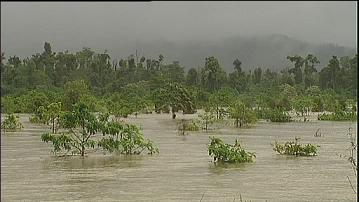
Queensland floods 2013
The floods across Queensland and northern NSW are currently estimated to cost the insurance industry around $126 million so far.
- And while estimates will change over time, these floods need to be put into perspective. The 2010/11 Brisbane floods cost $2.4 billion.
- At this stage CBA insurance analyst Ross Curran believes the cost of the floods is a manageable event for the domestic insurers.
- The impact on crop production is likely to be minimal. In fact CBA commodity analyst Luke Matthews believes the rains will help improve planting moisture for winter crops (wheat, barley chickpeas) which will be planted from April. In addition there is a net benefit for cotton, sorghum, sunflower and sugarcane (despite some losses in some regions), while livestock producers will benefit from increased pasture availability.
- The major negative is likely to be for horticultural crops (melons, tomatoes, berries, leaf crops) which will have been water damaged.
- CommSec expects the Reserve Bank to look through the near-term impact of the floods. We expect no change to interest rates in the early part of 2013 and see no reason to change our GDP growth forecasts of 3- 3¼ per cent for 2013.
What does it all mean?
- One thing we can never escape here in Australia is natural disasters. Whether it is drought, floods, bushfires, cyclones or hail storms, natural disasters are part and parcel of our wide, brown land. And the Queensland floods are no different. While the latest flooding would bring back painful memories of the 2010/11 floods, Australians are dealing with the immediate issues, and when the waters subside, we will deal with the necessary clean up and rebuilding.
- Current insurance estimates put the floods across Queensland and northern NSW at around $126 million. And while estimates will change over time these floods need to be put into perspective. The 2010/11 Brisbane floods cost $2.4 billion.
- First the floodwaters need to subside so that the impact to buildings, farms and infrastructure can be determined. And any estimate of the total cost involves actuarial assessments by insurance companies, builders and valuers.
- It needs to be remembered that we have a $1400 billion economy and the federal government finances are in good shape, so the impact can be absorbed. Floods are also less damaging than cyclones or hail storms.
- At this stage CBA insurance analyst Ross Curran, believes the cost of the floods is a manageable event for the domestic insurers. Prudent policy across the domestic insurers have ensured that over the past couple of years they have increased their natural peril allowance to absorb the costs of the latest floods. Our analysts remain comfortable with the domestic insurers and would be buying on weakness.
- There have been some suggestions that the floods may push up food prices, leading to higher inflation in coming quarters and as a result ensure that the Reserve Bank holds off from providing further rate cuts. And while there is some truth to the matter, it is likely that the Reserve Bank will look through the short-term flood impact. No doubt it will carefully assess the impact of higher food prices on inflationary expectations. However any decision to hold off on further rate cuts will be more likely as a result of the improving global economic conditions and healthy gains in sharemarket indices. We expect no change to interest rates in the early part of 2013.
- The impact on crop production is likely to be minimal. In fact CBA commodity analyst Luke Matthews believes the rains will help improve planting moisture for winter crops (wheat, barley chickpeas) which will be planted from April. In addition there is a net benefit for cotton, sorghum, sunflower and sugarcane (despite some losses in some regions), while livestock producers will benefit from increased pasture availability.
- The major negative is likely to be for horticultural crops (melons, tomatoes, berries, leaf crops) which will have been damaged with the flooding. The disrupted supply of some fruit and vegetable products may result in firmer prices but the shortfalls may be met via imports in some cases, by frozen product or supplies from other regions of Australia. It may be that growers from other regions will lift supplies to meet market demands. And consumers will substitute high-priced or unavailable items for other fruit, vegetables, frozen product – or do without completely.
What about the impact on the economy?
- In the short-term there is the impact of lost production and activity. But in many cases this will be made up over time. Given that the floods have hit early in the quarter, lost production may be made up over February and March, minimising the impact to GDP. There may be a modest reduction in export output in the March quarter that will be recovered over the June and September quarters. Further, any reduction in building and production over the March quarter will be offset by repair and rebuilding activity over the remainder of the year. We see no reason to change our GDP growth forecasts of 3- 3¼ per cent for 2013.
- The cost of the floods will be met by governments, donations, reinsurance and private individuals. But the net cost is a different figure. Some coal and farm producers in other parts of the country will benefit from increased prices and demand. And builders, construction companies and retail operations will face increased demand for services and goods when repair and rebuilding work get underway.
What are the implications for interest rates and investors?
- While the Reserve Bank will carefully assess the impact of higher food prices on inflationary expectations, it is likely that policymakers will look through the near-term impact of the floods.
Overall the Reserve Bank would be more relaxed about interest rate settings at pre - ent. The rate cuts last year continue to work through the economy and while policymakers may consider cutting rates further, a move is unlikely to take place at the next Board meeting in February, given the improving economic outlook.