Q1. With global equities almost back to new highs, should we treat this as a sign of optimism or a cause for concern in 2017?
Some of the key changes that have taken place in markets over recent months are that:
- US growth prospects have improved, with President Trump’s policies likely to result in higher government spending, higher infrastructure investment and a greater propensity for corporates to invest, as the market cycle and changing regulations drive greater business optimism.
- Chinese economic growth has surpassed expectations which, when combined with stronger household consumption in the US, Germany and the UK, should help to drive commodity prices higher, improve trade volumes and increase in industrial production.
- Inflation expectations are picking up from depressed levels, which has driven bond yields higher and ensured equities are now the preferred asset class in this scenario. Despite higher discount rates, equity valuations have risen, implying better growth prospects for company profits (see chart 1).


Rationalising what has happened recently is useful, but assessing what happens now is more critical.
In this regard, we would note that:
- With QE now finished in the US, and under debate in Europe, we should not forget that the majority of equity market gains in recent years have occurred as a result of ZIRP/NIRP policies.
- While profit growth will likely benefit from higher revenue growth as nominal GDP improves, this could be restricted somewhat by rebounding interest costs, rising commodity input prices and tighter labour markets.
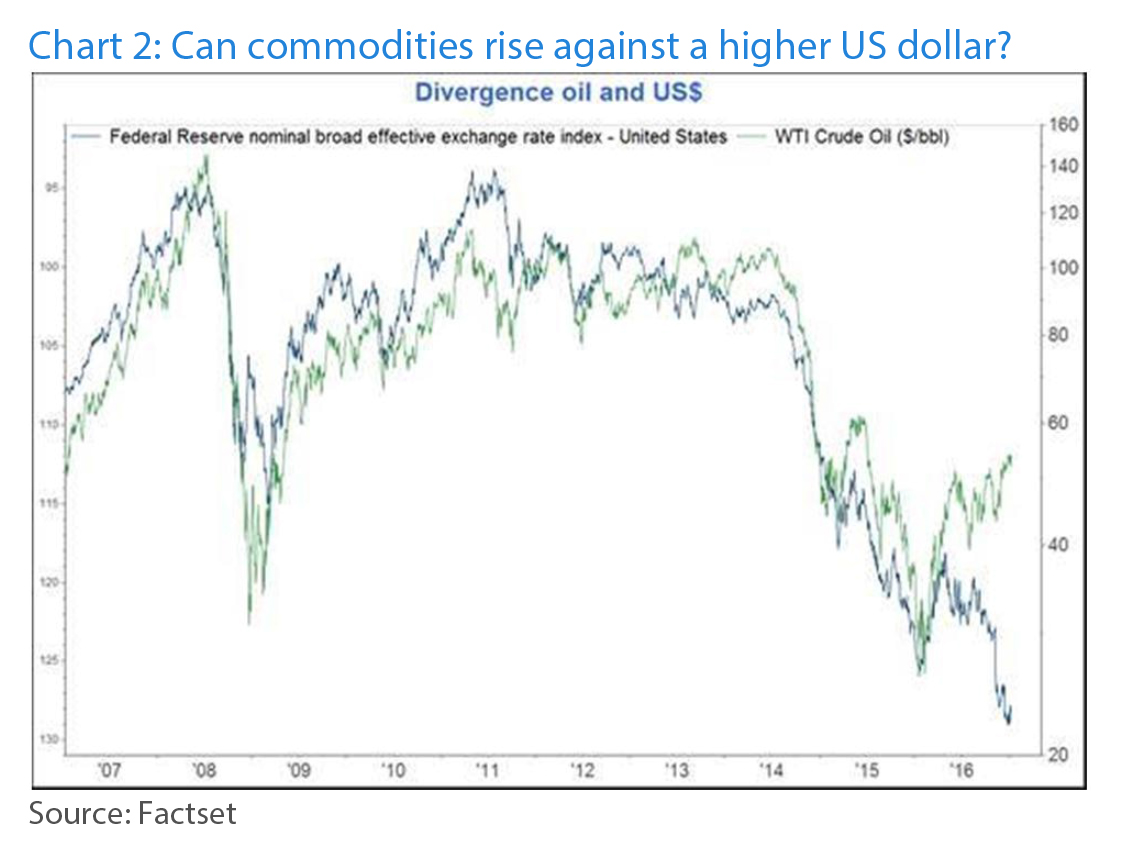
- Although commodity prices have been a notable driver of the energy and materials sectors, the recent US dollar strength has driven a clear increase in commodity costs, as a share of global GDP. While excess inventories remain in place, future commodity price gains are debateable in our view.
- Countries and companies financed by US dollars, but with cash flows in other currencies, are seeing an effective tightening in policy. Certain emerging markets stand out in this regard.

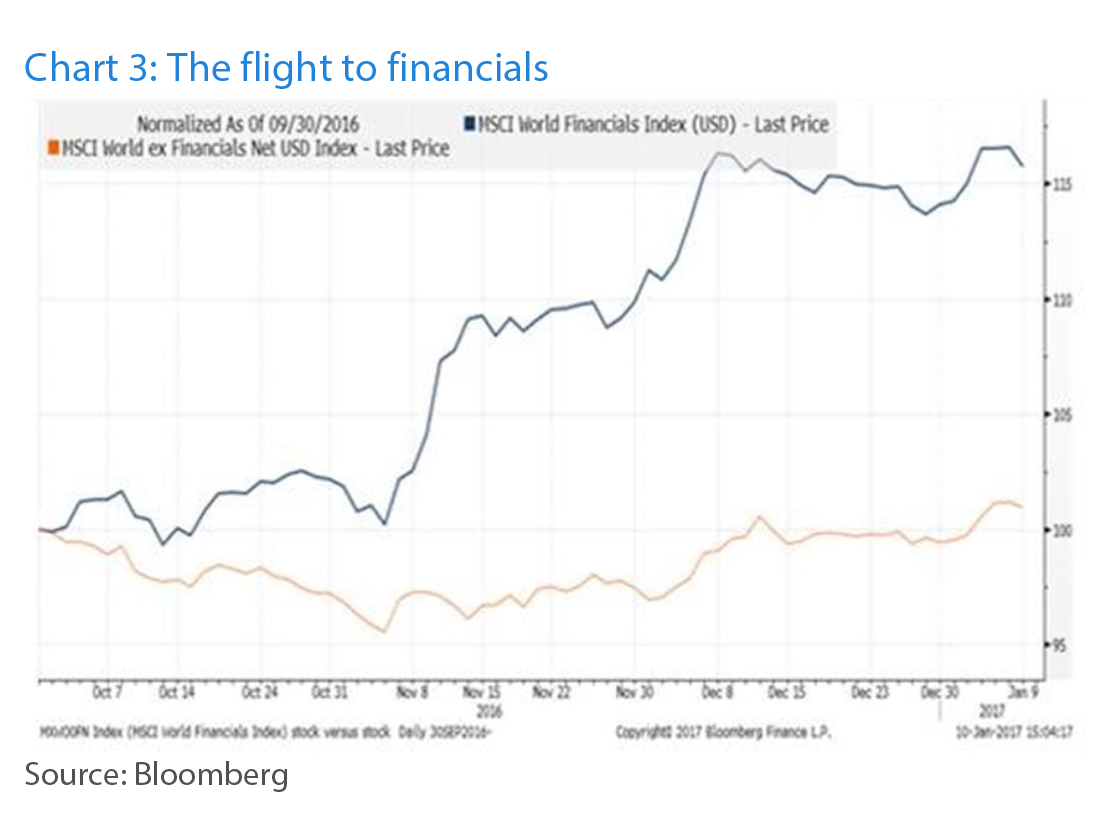
- Investor positioning has dominated relative returns within markets. Rising bond yields have helped to diminish investor desperation for ‘yield at any price’, with many now moving back into cyclicals, due to greater optimism regarding future growth. Financials have been at the vanguard of this move, as seen in chart 3, at the expense of ‘bond proxies’ in sectors like Consumer Staples, Utilities, Telecommunications, Healthcare and REITs.

We would also note that the previous challenges that have hindered growth, such as high debt levels, excess capacity and demographics, have not disappeared.
Our investment rationale
- Better US growth appears logical, however the assumption that it this is a catalyst for notably faster growth elsewhere is more debateable.
- Prudence would suggest that market valuation gains from current levels should not be assumed.
- Continuing delivery of profit growth is essential to supporting company valuations and upside.
- Investor adjustment for a more inflationary world has commenced. As with all squeezes on the consensus, panic buying of laggards tends to front load the pain. The rotational forces will likely last a while longer, given this consensus has built up over many years, but should diminish in power as a factor over time.
- While deflation has diminished as a risk for now, inflationary growth is not locked in as a central scenario. Compound returns from quality growth business remain attractive investments, as the delivery of sustainable profit growth from many cyclical companies will prove to be illusory in many cases.
Q2. Value investing appears to be back in fashion. How is that impacting our investment strategy?
Our definition of value is a share price that does not fully reflect the future growth in cash flows and returns that will be delivered to shareholders.
This is a key component of what we describe as Future Quality and is an essential part of our investment process.
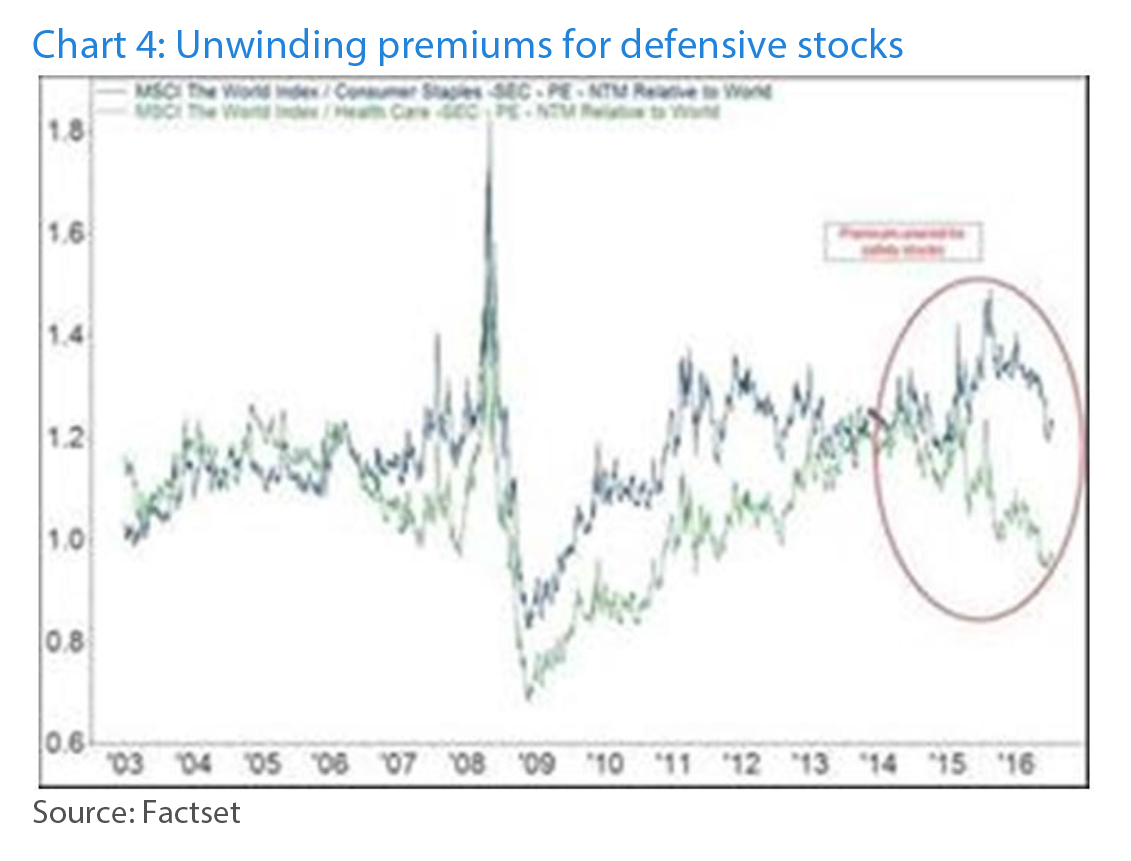
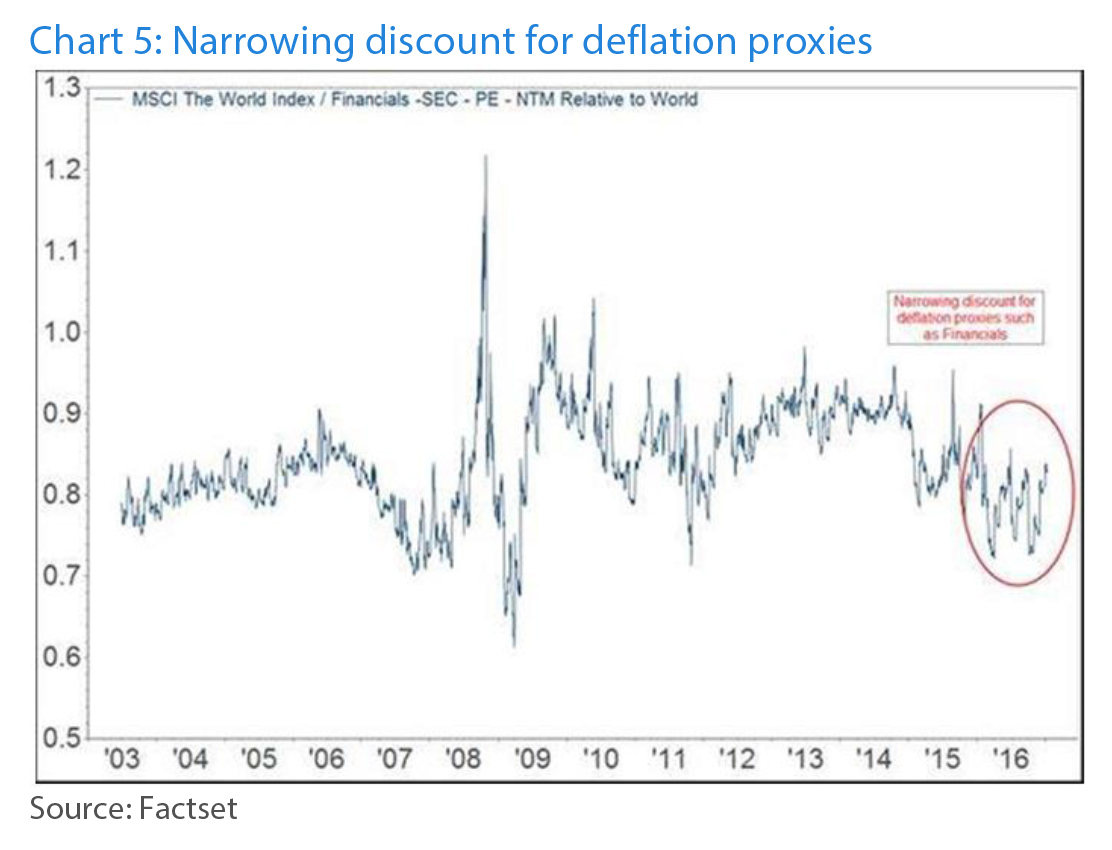
We have been highlighting for some time that valuations for defensive growth and yield stocks have become very richly valued versus the overall market, with the QE environment conditioning investors to behave irrationally.
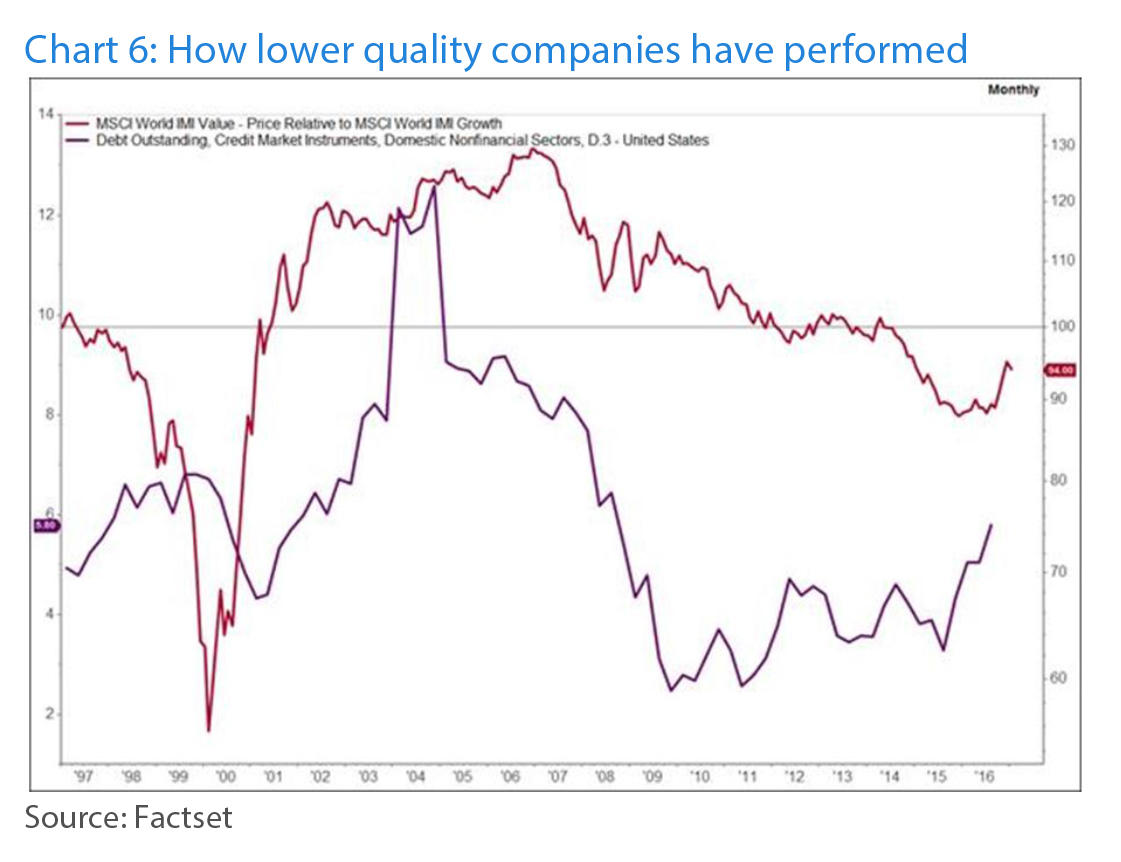
The rise in bond yields in recent months has revealed this reality, with returns being dominated by the convergence of valuations between bond proxies (typically within Consumer Staples, Utilities, Telecommunications, Healthcare and REITS), and those stocks where risk premiums had previously been elevated due to deflation concerns, Financials in particular.

We would also note that significant and sustained returns for the value factor are typically a combination of both valuation gains (lower risk premiums) and growth.
Such a scenario typically prevails when:
- Monetary policy is eased beyond expectations
- Policy is effective and credit growth accelerates notably
- Higher credit growth drives growth in nominal GDP
- Higher nominal GDP results in more revenue for almost all companies, with market share gains being less of a differentiator
- Previously struggling companies see accelerating profits, as revenue growth drives high operating leverage (lower margins, higher fixed costs, larger debt burdens).
This results in episodes of superior returns from lower quality, lower return (ROE) and more indebted businesses.
We would suggest that the early 2000s is a good example of such a phenomenon, although we do not envisage a similar credit-led scenario today.

Our investment rationale
- The US has the greatest potential for a notable uplift in nominal GDP, as President Trump’s policies revive the spirits of consumers and corporates.
- However, our working thesis is that existing debt burdens, the timing of policy implementation, a strong US dollar and rising interest rates will ensure that this growth is more moderate than robust.
- Outside of the US, currency is a positive factor as exports to the US could increase, although the current protectionist rhetoric may debunk this thesis.
- In the other G7 economies, domestic consumption is the key to growth, however political uncertainty (UK and Europe), a willingness to provide credit (Europe) and the fewer Trump-type policy changes, will all be headwinds to faster growth. In emerging markets, the dependence on US dollar financing will be the key constraint on growth.
- From an investment style perspective, the power of compounding has not changed, and we do not foresee a growth environment that enables higher sustainable returns for businesses as a result of the removal of excess capacity and greater pricing power. Instead, many industries will remain challenged by an abundance of competition that will benefit from a diet of cheap central bank-sponsored financing.
- Quality of growth (market share gains, innovation), quality of returns (Returns above WACC, strong franchise) and quality of management are all enduring merits in our view. We remain focussed on companies that we believe will exhibit these features in the future, with valuations that do not fully reflect these merits. Future Quality is how we describe such companies.
- As a true-to-label manager, our process (and hence our quality/growth bias) remains the same, and we continue to believe that this approach is optimal for long-term investors seeking excess returns in an evolving world.
Q3. What have we changed in our portfolios and what stocks are likely to be key to our performance in 2017?
Picking stocks is our priority and any changes in our global equity portfolios reflect our investment process for identifying, researching and weighting these individual stock picks.
Given all of our ideas are what we call Future Quality, this mix typically results in portfolios that have both a quality and growth bias, and this continues to be the case.
When we assess the changes in our stock picks, there are some general conclusions that can be made at the aggregate portfolio level.
If we use the end of September 2016 as a starting point, our strategy involved:
- reducing exposure to stocks that exhibit more ‘bond proxy’-type characteristics, with holdings in Coca-Cola, AbbVie and AvalonBay being sold
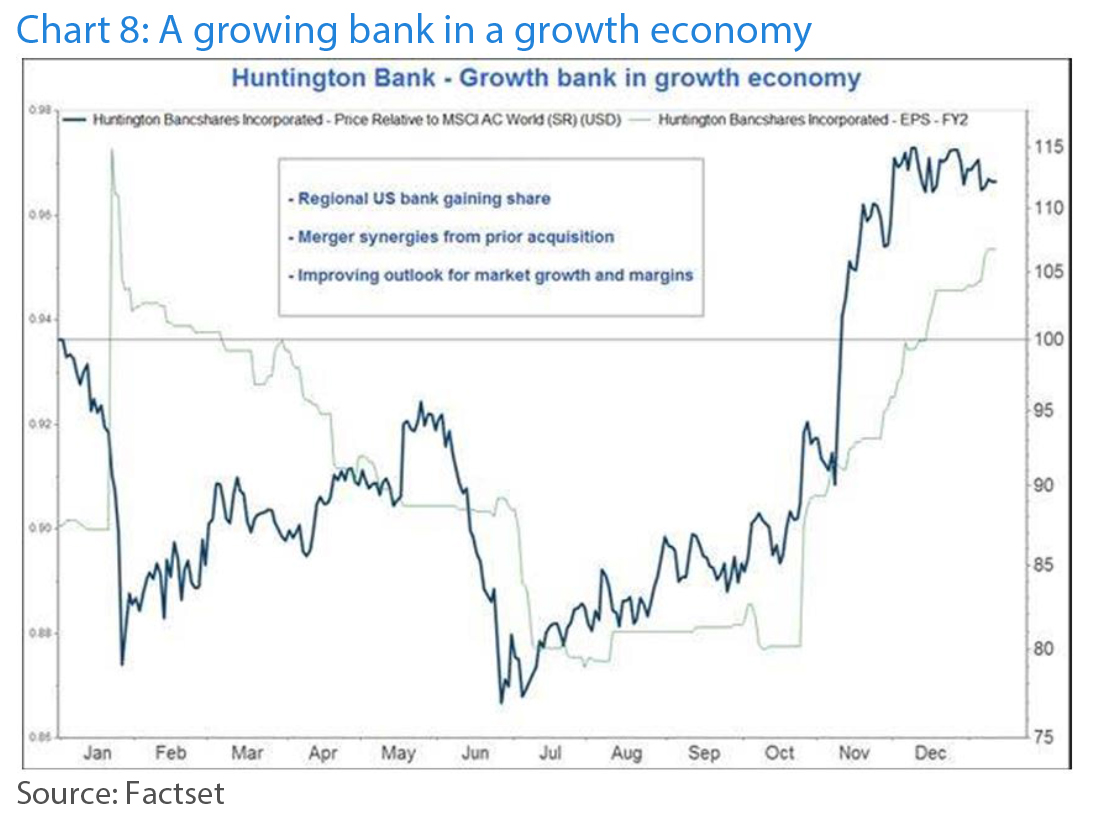
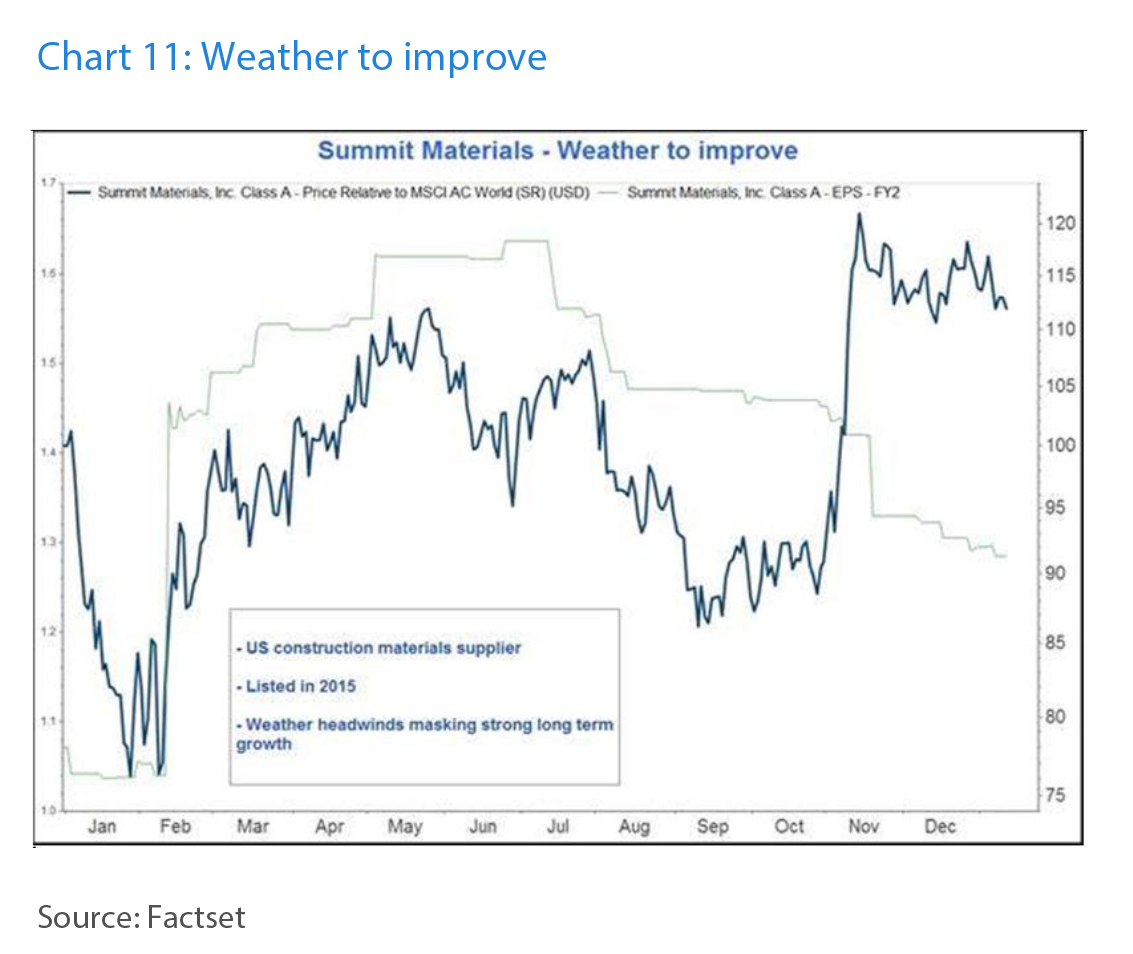
- adding stocks that are more exposed to cyclical demand, with new holdings established in SVB Financial Group, Siemens and Summit Materials.
By sector, this has reduced our underweight to Financials (now -5.6%), which was financed by reduced weightings in the defensive sectors of Consumer Staples, Telecommunications, Utilities, REITs and Healthcare.
Changes to our geographical exposure have been modest, with active allocations in the major regions being small at this time.
Our portfolio’s beta has also increased from 0.92 to 1.01 (as at 31/12/16).
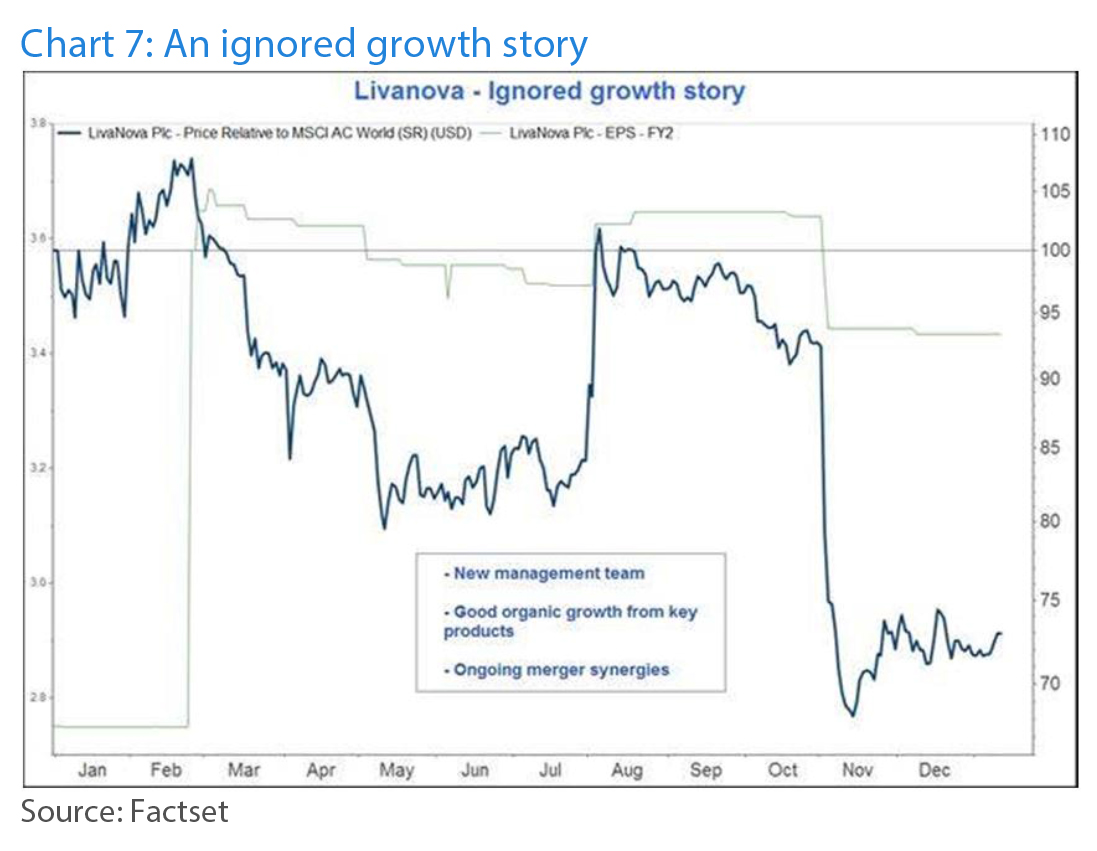
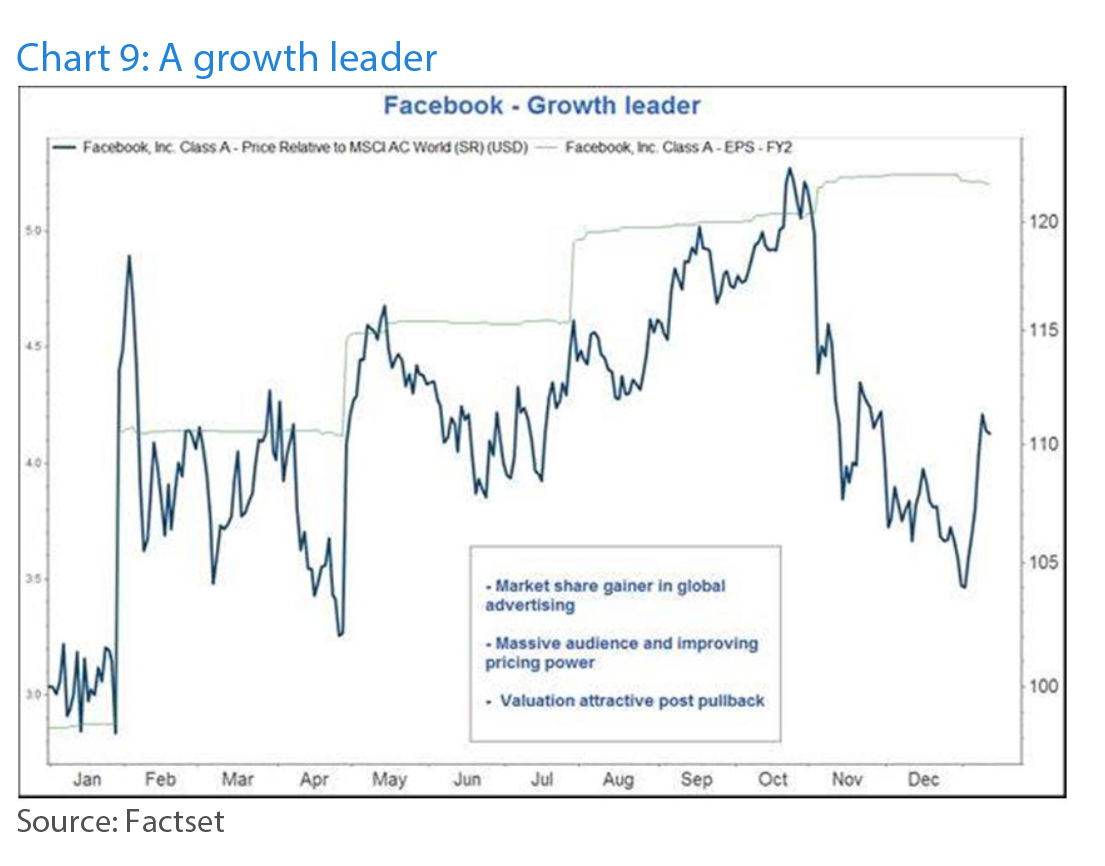
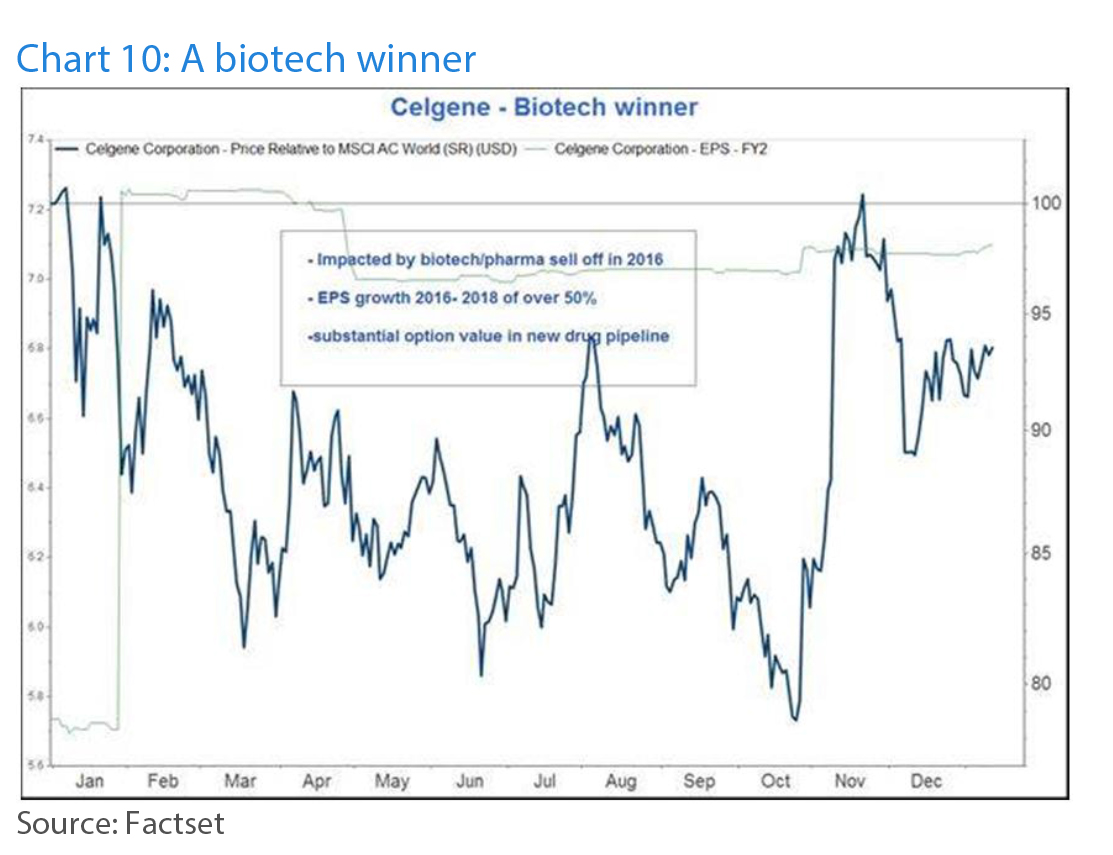
Here are some key holdings that we believe will drive our global equity performance in 2017 and beyond:

Our focus on Future Quality
In the current environment, we continue to believe that having an active share, high-conviction portfolio is more likely to deliver superior returns to our investors.
We will continue to use our proven investment process to identify and invest in what we call Future Quality businesses.
For it is these quality, under-appreciated businesses – those with a strong franchise, sound balance sheet and quality management – that we believe will generate consistent returns for our investors over the long term.
———–