Superannuation is arguably one of the most important investments we can make. The May 2016 Budget presaged significant changes to the superannuation system that come into effect from 1 July 2017, some with far-reaching strategy implications.
In this article, Centuria looks at the importance of saving for retirement, and considers some strategies outside of superannuation that can be used for bolstering retirement savings.
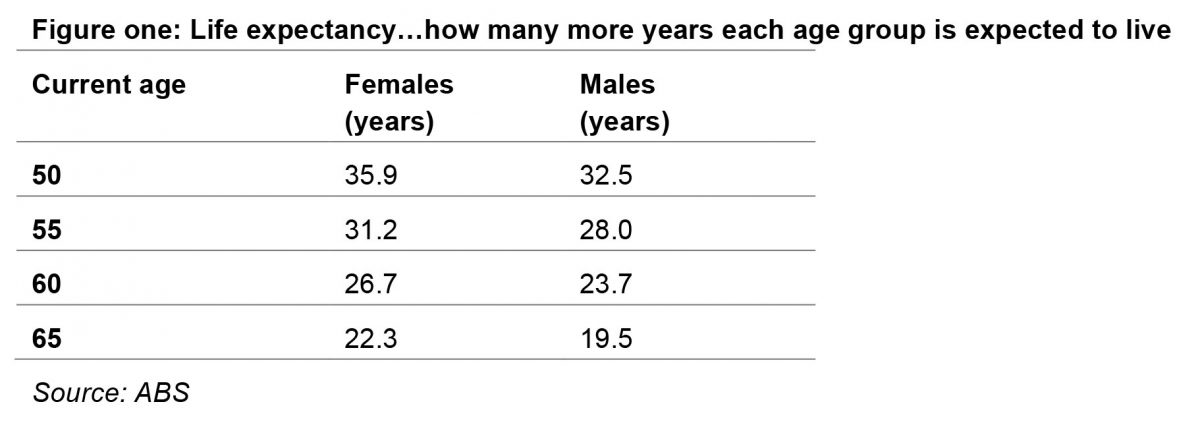
It’s no secret that Australia’s population is ageing and, at the same time, life expectancy is increasing. The Australian government’s most recent intergenerational report[1] projects that by 2055, the number of people aged 65 and over will double. Australians are enjoying the longevity that results from advancements in healthcare and a higher standard of living. Figure one outlines today’s life expectancy for a range of ages.

Will your clients have enough super?
Superannuation assets, in aggregate, amounted to $2.2 trillion as at the 31 December 2016 quarter, an all-time historical record. Despite this, there is plenty of media coverage suggesting that many Australians will not have sufficient savings to fund their retirement. According to the ABS, the average superannuation balance for Australians aged between 55-64 is $321,991 for men and $180,013 for women.[2]
Figure two outlines the retirement lump sums required to fund a ‘comfortable’ retirement according to ASFA. The calculation assumes the retiree owns their home outright, draws down all their capital and receives a part Age Pension. These sums are significantly higher than the average balances projected by the ABS.
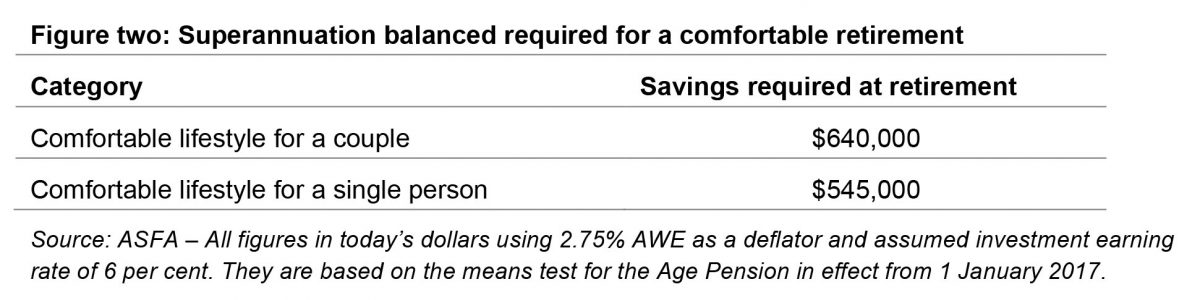

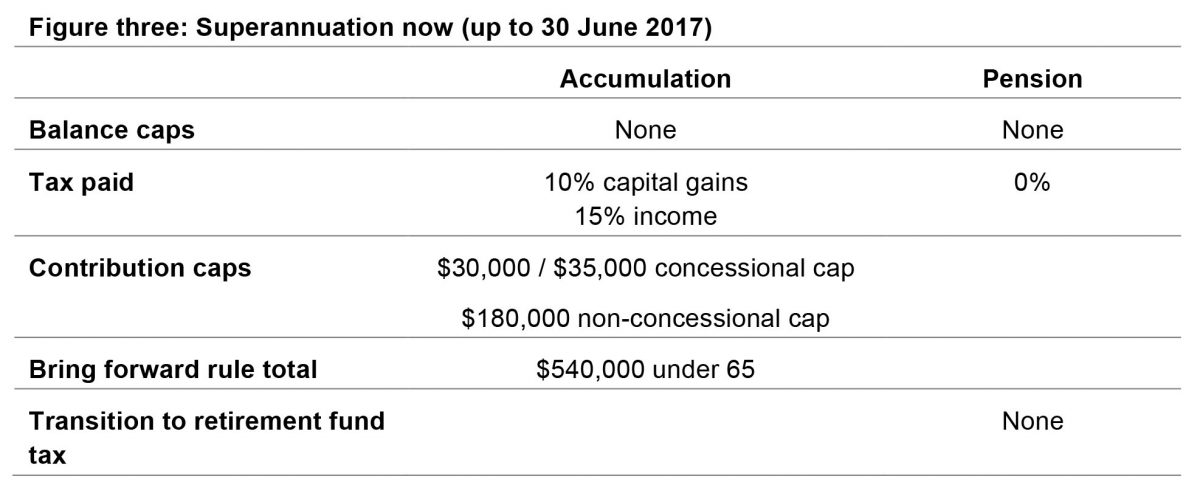
There is an evident disconnect between the savings required for a comfortable retirement and reality for many people. The superannuation changes that come into effect from 1 July 2017 are not going to help people increase their superannuation balance as substantially as they may require.
Super pre-and post-1 July 2017
Superannuation offers a range of tax benefits. From 1 July 2017, the federal government has put limits on the amount that can be contributed to super in each financial year before extra tax is payable.


These changes will affect your clients if they have a balance up to/over $1.6 million in superannuation or they need to contribute more to super to boost their savings to have, at least, a ‘comfortable’ retirement.
How can investment bonds supplement super?
An investment bond is a tax effective structure. Like superannuation, tax is paid within the investment bond rather than personally by the investor. The maximum tax paid on the earnings and capital gains within an investment bond is 30%, although franking credits and tax deductions can reduce this effective tax rate. This makes them an attractive investment option for high income earners.
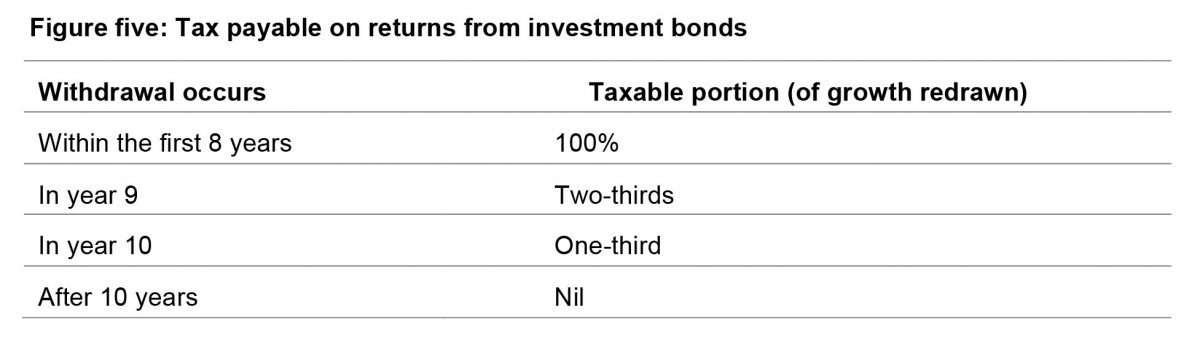
A key feature of investment bonds is that if the investment is held for 10 years, no personal tax is paid by the investor. However, if the investment is redeemed within the first 10 years, the investor will pay tax on the assessable portion of growth as shown in figure five.
There are clear benefits of using investment bonds to supplement superannuation:
Limited contributions
To contribute to superannuation an investor needs to meet eligibility rules. This requires the investor to be under age 65 or, if aged 65 to 75, they need to meet a work test. If eligible, contribution caps will limit the amount of contributions that can be made to superannuation.
There is no limit on the amount that can be invested to establish an investment bond, and investors can make subsequent investments up to maximum of 125% of the previous year’s contribution without restarting the ten-year period. Investors can choose to start a new investment bond if higher amounts are to be subsequently invested.
Investment bonds can provide a tax effective means of investing and avoid excess contributions tax that may otherwise apply in the case of superannuation contributions post 1 July 2017.
Access restrictions
Unlike superannuation investments, investment bonds are not subject to preservation. This means that investors can access savings before age 55, ideal if they are looking to fund an early retirement.
Beneficiaries
Investment bonds provide investors with freedom to nominate anyone as a beneficiary in the event of their death. Beneficiaries are not limited to ‘dependants’, as is typically required for superannuation investments.
Case study
What next once superannuation contributions have been maximised?
Anthony is 45 years old and has invested wisely in the property market. He believes property returns have plateaued and has sold his inner-city investment property, realising a healthy capital gain. He has paid off his mortgage and maximised his concessional and non–concessional contributions to superannuation.
Anthony is considering options to invest the surplus proceeds of $200,000 in a tax effective manner. Because he earns a good income and does not need access to his funds, Anthony can adopt a long-term investment time horizon of 10 years plus.
He first considers investing in Australian shares, either directly or through a managed fund. Franking credits are important to him as they can help him reduce the tax paid, given he is on the highest marginal tax rate.
Anthony’s adviser suggests investing in an investment bond because he is able to benefit from franking credits from Australian shares within the investment bond. The investment bond pays tax at a maximum rate of 30% per annum.
Anthony can also afford to invest additional amounts of $20,000 per annum into the investment bond for the first three years; he is unable to direct any surplus funds into superannuation without exceeding his contribution cap.
In 3 years’ time, he plans to reduce the contribution he invests to $5,000 per year.
His adviser confirms he can redeem his investment bond and pay no additional tax after 10 years.
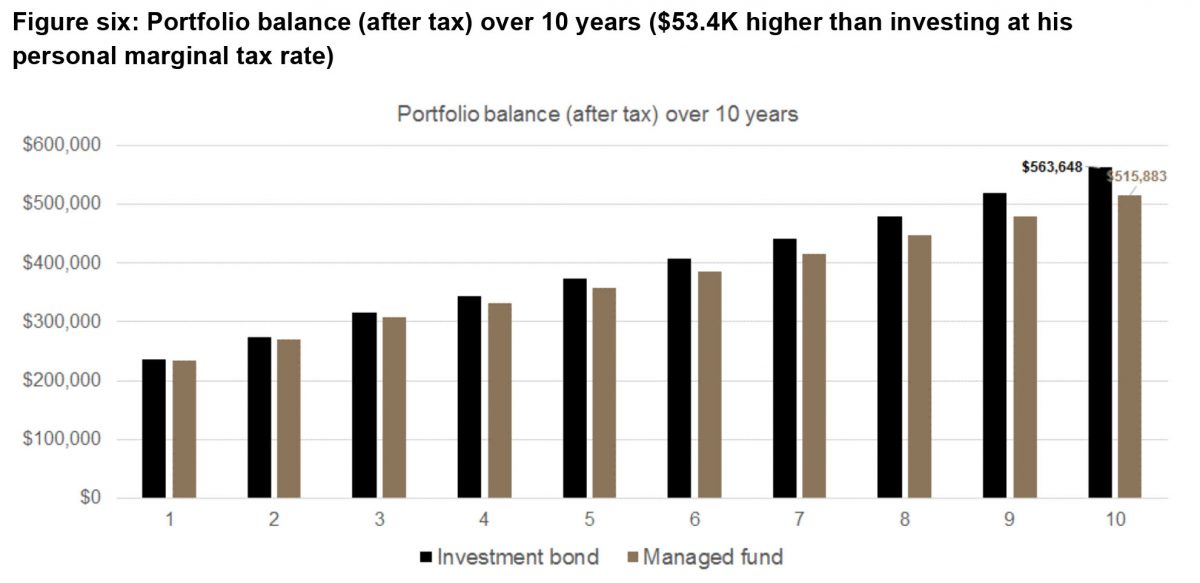
When Anthony reaches age 55, the investment bond has accumulated to approximately $563,648 (tax paid). This is estimated to be $53,000 higher than the alternative of investing at his personal marginal tax rate.

What other choices could Anthony have made?
Anthony could have chosen to invest the $200,000 into a discretionary family trust or invest the funds in a managed fund in his own name – the result of either option would potentially be the same. Because the discretionary trust does not pay tax, the earnings are passed onto the beneficiaries and they pay tax at their marginal rate.
A benefit of a discretionary family trust is that it provides the ability to choose who receives the distributions if there are multiple beneficiaries on different marginal tax rates. However, in this scenario, Anthony was the only beneficiary, so a discretionary trust is not as attractive an option, especially when the initial and ongoing costs of establishing and running the trust are considered.
[1] 2015 Intergenerational Report, Australia in 2055
[2] ABS 4125.0 – Gender Indicators, Australia, August 2015
———