
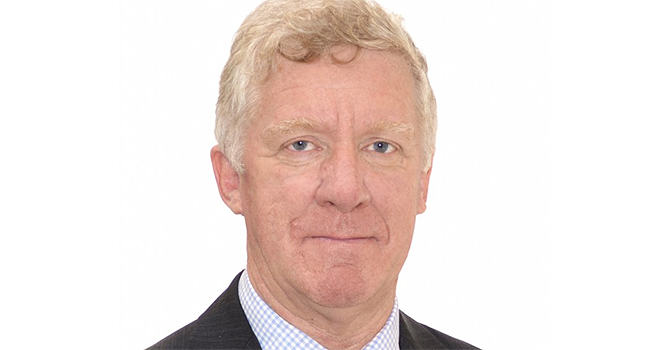
David Sackett
Drought in New South Wales and Queensland is becoming increasingly severe but overall, Australia’s farming sector is holding up well, a leading farmland investor says.
Growth Farms Australia Managing Director David Sackett says farmers have had good operating results and land appreciation over the past few years, which has given them the opportunity to go into the drought in good shape.
According to the Australian Farmland Index, since 2014 farm sector income has grown by 6.2 per cent a year and capital appreciation has grown by 6.8 per cent a year, contributing to a total return of 13.2 per cent a year for the sector.
Mr Sackett says there is evidence that farmers have used returns in the good years to put a significant amount of their earnings aside to help them through difficult times. At June 30, the total holdings in the Farm Management Deposits scheme were $6.62 billion. FMD savings have grown from $4.14 billion in June 2014. In June 1999 total deposits were just $200 million.
The Farm Management Deposits scheme is a risk management tool designed to help primary producers deal with uneven cash flows, allowing them to claim a deduction for deposits that are held in the account for a minimum of 12 months.
The farm sector outlook may not be as bad as many fear. The Australian Bureau of Agricultural and Resource Economics and Sciences has forecast that the value of farm production will increase by 1.5 per cent to $61 billion in the 2018/19 financial year. The value of livestock production is forecast to increase by 3 per cent, while the value of crop production is forecast to remain unchanged, although these forecasts may be hard to achieve given how the current season is unfolding.
Mr Sackett says drought is a normal part of the cycle and many farmers have developed “very good strategies” for coping with it.
“We have seen a lot of government reviews of drought policy; there has been a lot of work on this and there have been plenty of good ideas. The problems seems to be that once we get into the drought, we get all sorts of pressure and we go back to developing policy on the run. We confuse the issue of supporting people who are doing it tough and need welfare, with supporting businesses. The first should be given, the second is a retrograde step.”
When it comes to investing in the sector, Mr Sackett says that as with any market, there are areas that are more prone to volatility and commodities that produce different returns over time.
Managing this volatility requires an understanding of production correlations across regions and price correlations of commodities. For example, southern Queensland and western Victoria have a negative production correlation historically, while prices for beef and wheat also have a negative correlation.
“It is never the case that all regions and all commodities are affected by environmental factors in the same way at the same time,” he says.
“As a portfolio manager, one of the things we look for is flexibility of land use, as it creates options for farming enterprises.
Growth Farms Australia has recently launched the Australian Agricultural Lease Fund, open to wholesale investors, with a minimum investment of $100,000. It is a closed-end unit trust with a term of 10 years, although unitholders will have an opportunity to vote on continuing the fund or winding it up after five years.
The fund will acquire farmland and water rights in higher rainfall regions, including North Queensland, Northern New South Wales, the Southern Murray Darling Basin, Victoria and Tasmania and South Australia.