Vacancy Rates for residential properties across Australia rose to 1.1% in November
This upturn was driven by 3,164 additional vacant properties nationwide, bringing the total to 33,471. The market conditions remain challenging for renters.
In the preceding month, most capital cities saw a marginal rise in Vacancy Rates. Specifically, Sydney, Melbourne and Darwin reported increases, registering rates of 1.4%, 1.3%, and 1.8%, respectively. Conversely, Hobart was the only city to experience a decline, with Vacancy Rates decreasing to 1.2%.
The Rental Vacancy Rate in Sydney CBD rose 0.8% to 4.6% in November. Similarly, Melbourne CBD and Brisbane CBD also witnessed increases in their Rental Vacancy Rates, now standing at 5.1% and 2.2%, respectively.
Most regional areas recorded stable rental vacancy rates during the period. The North Coast NSW steadied after recent rises to stand at 1.2% and the Sunshine Coast also remained steady at 0.9%. In contrast, Blue Mountains recorded a decrease to 1.0%.
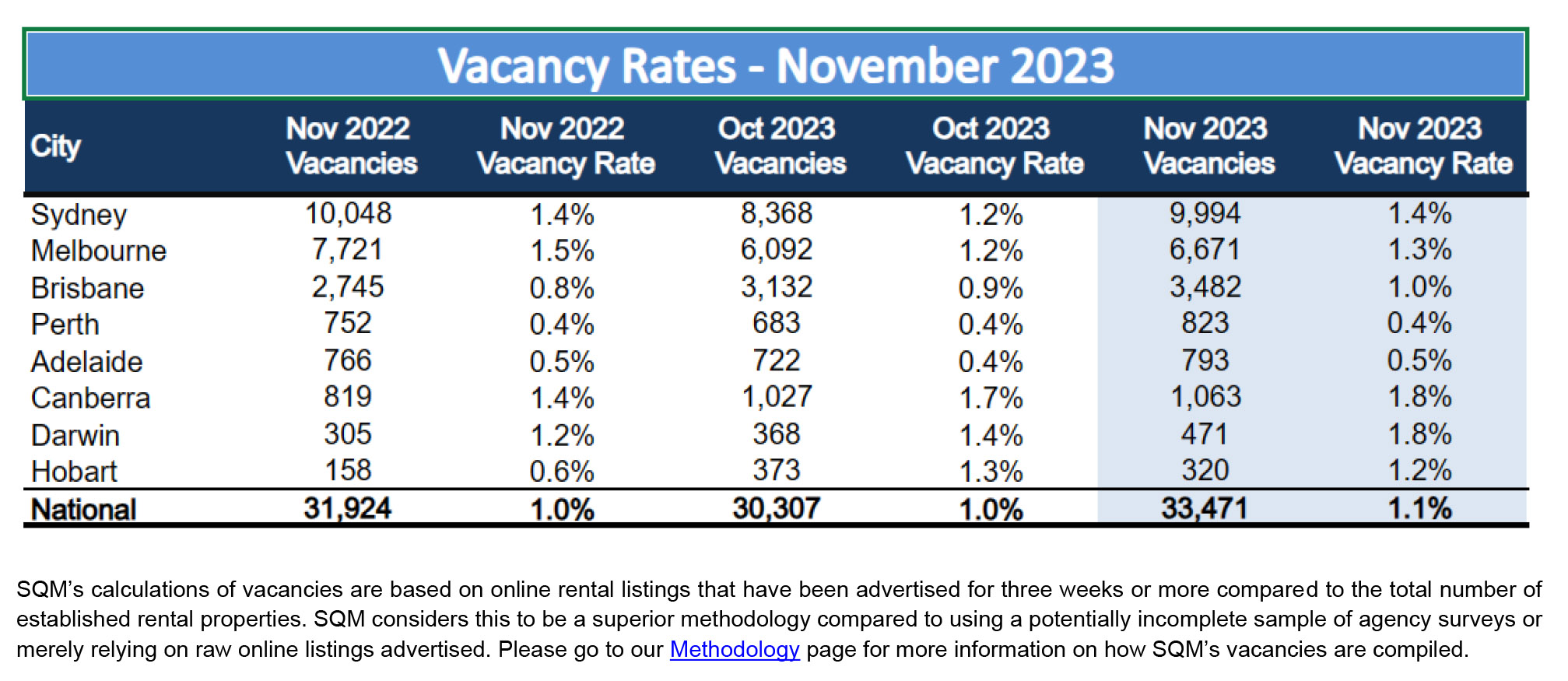

SQM’s calculations of vacancies are based on online rental listings that have been advertised for three weeks or more compared to the total number of established rental properties. SQM considers this to be a superior methodology compared to using a potentially incomplete sample of agency surveys or merely relying on raw online listings advertised. Please go to our Methodology page for more information on how SQM’s vacancies are compiled.
Asking rents
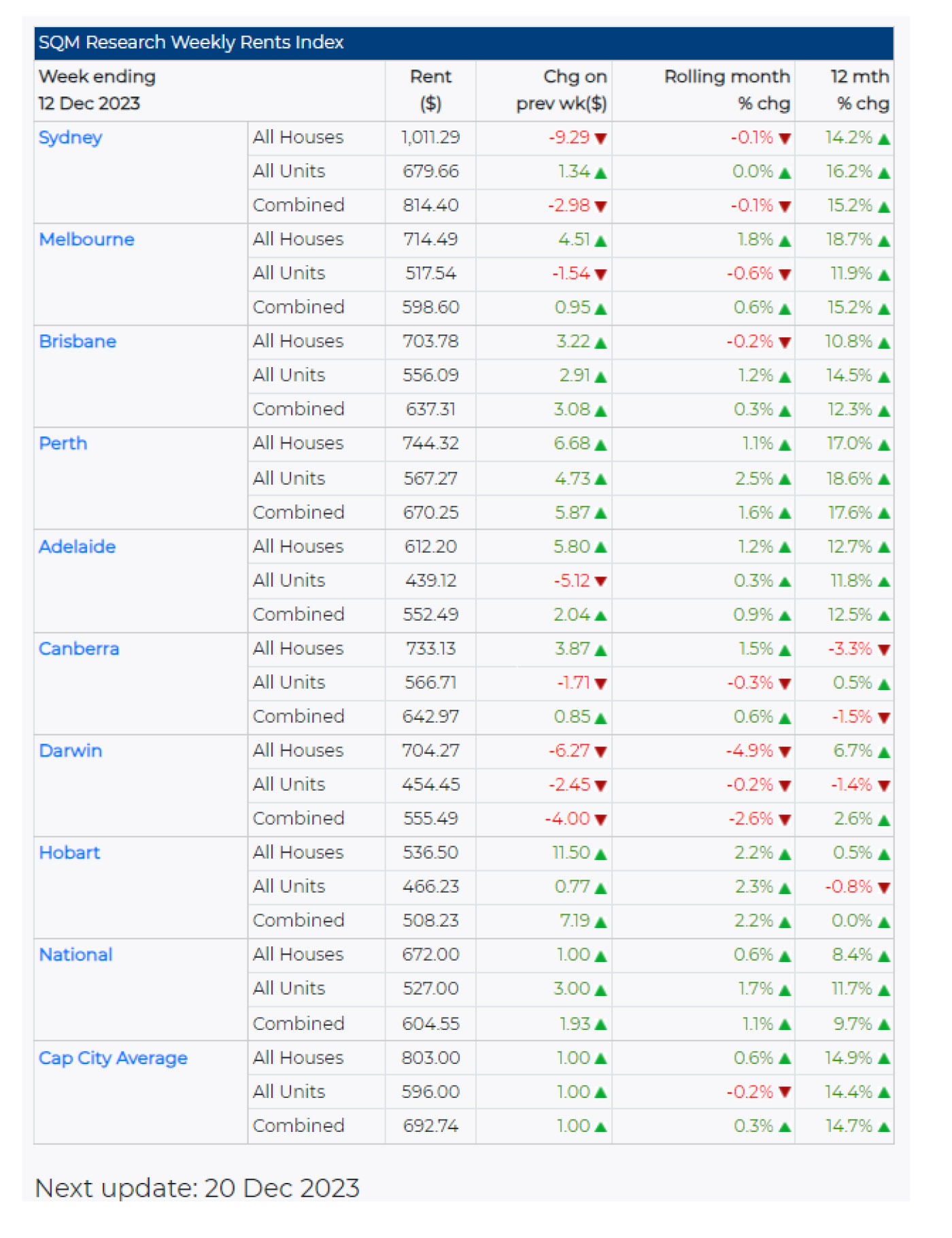
In the 30 days leading up to December 12, 2023, asking rents in capital cities increased by 0.3%, contributing to a notable 14.7% rise over the past year. Specifically, house rents in capital cities rose by 0.6%, with a 12-month increase of 14.9%, while unit rents showed a decline of 0.2% over the last 30 days and a 14.4% rise over the past 12 months. Page 2 of 3
The national median weekly asking rent for all dwelling is $604.55 a week. The capital city asking rent for all dwelling is $692.74 a week. The median rent for a capital city house is $803 a week while the rent for a capital city unit is $596 a week.
The most expensive rent is Sydney houses at $1,011.29 a week. Units in Adelaide remain the most affordable at $439.12 per week.
Sydney has seen a slight dip in rents, with a decrease of 0.1% for all properties in the last month. Moreover, asking rent for combined dwellings in Darwin has continued to drop by 2.6%, mainly influenced by a notable decline of 4.9% in the rent for all houses.

Harry Bawa, Head of Property and Business Analytics said: At this time of year, we usually see more properties become available for rent, spearheaded by inner city apartments. This year was no exception as international student departures put more rentals on the market in the CBD areas.
There has been little to no change outside the inner-city ring with Bankstown/Canterbury remaining below 1% vacancies in Sydney, similar to East Brisbane, and Northern areas of Melbourne.
Black Friday discounts weren’t applied to asking rents across Australia, which increased slightly, but not from the demand in capital cities. The North Coast in QLD, Goldfields in WA and the South Coast of NSW lead the way, showing strong growth over the month. Rising Iron Ore prices seem to be sparking more activity in the mining regions.
Market conditions for renters remain tight and competitive, and we see no signs of that changing without more housing supply.