

Shane Oliver
Key points
- Australia monthly retail turnover declined 2.7% in December, more than reversing the 1.6% rise in November.
- The fall was concentrated in discretionary spending items more than reversing their Black Friday driven boost in November.
- The trend in retail sales remains weak with real retail sales looking like they fell again in the December quarter.
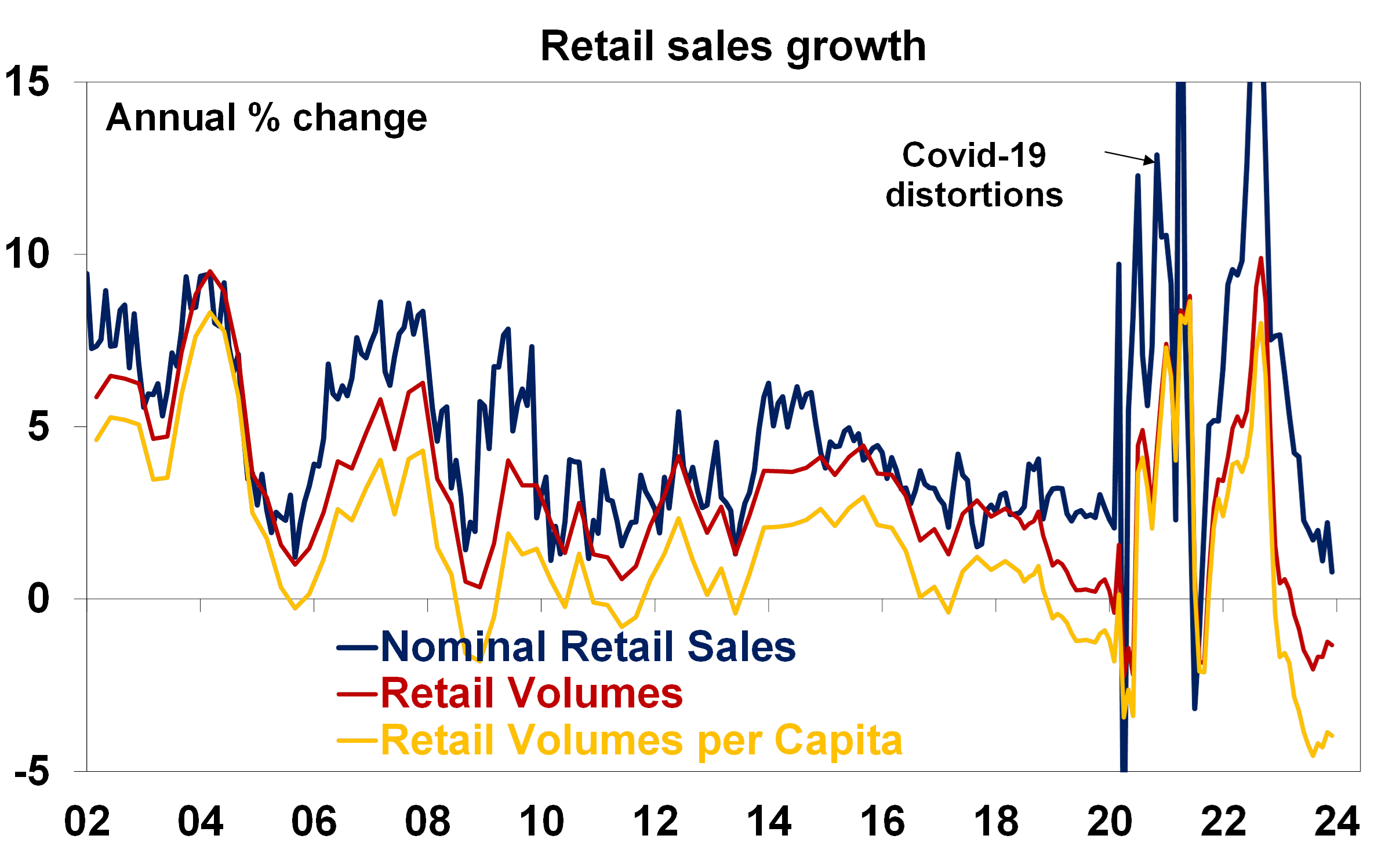
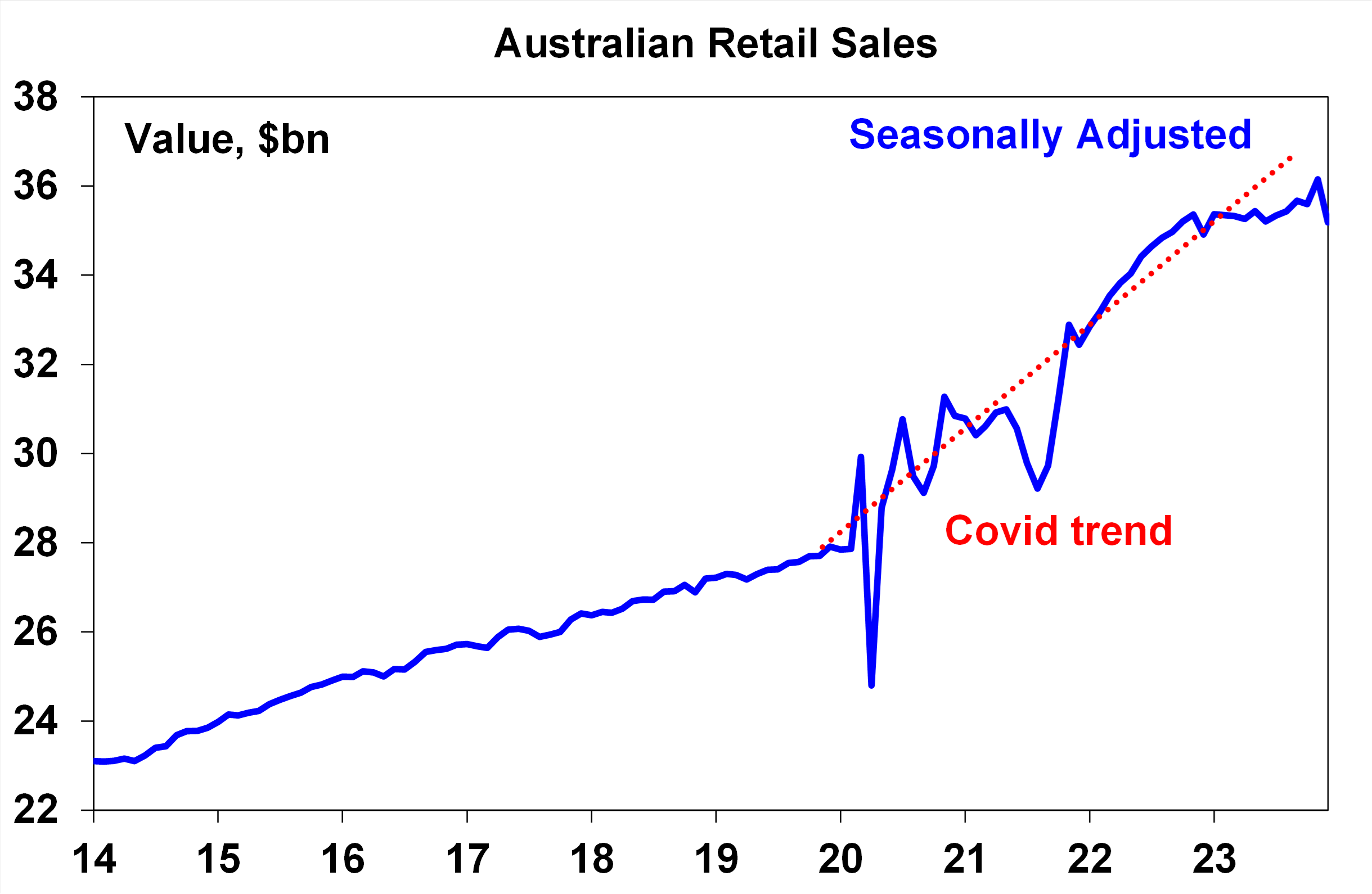
Australian nominal retail sales declined 2.7% in December, which was much weaker than consensus expectations for a 1.7% fall and our estimates of -1.8%. Retail revenues have been volatile especially around the holiday season, as consumers brought forward their Christmas shopping to the Black Friday sales in November. Thus, this large monthly fall can be partially explained as a reversal of the pickup in the previous month along with ongoing weakness flowing from cost-of-living pressures.
However, November retail sales growth was also revised down to 1.6%mom from 2.0% and nominal retail trade over the whole December quarter (+0.5%qoq) paints a similarly subdued picture. Given that inflation is still running at a high pace, we are likely to have seen a fifth consecutive quarter of retail volume contraction. Real retail spending per capita remains around 4% down over the year.


Source: ABS, AMP estimates
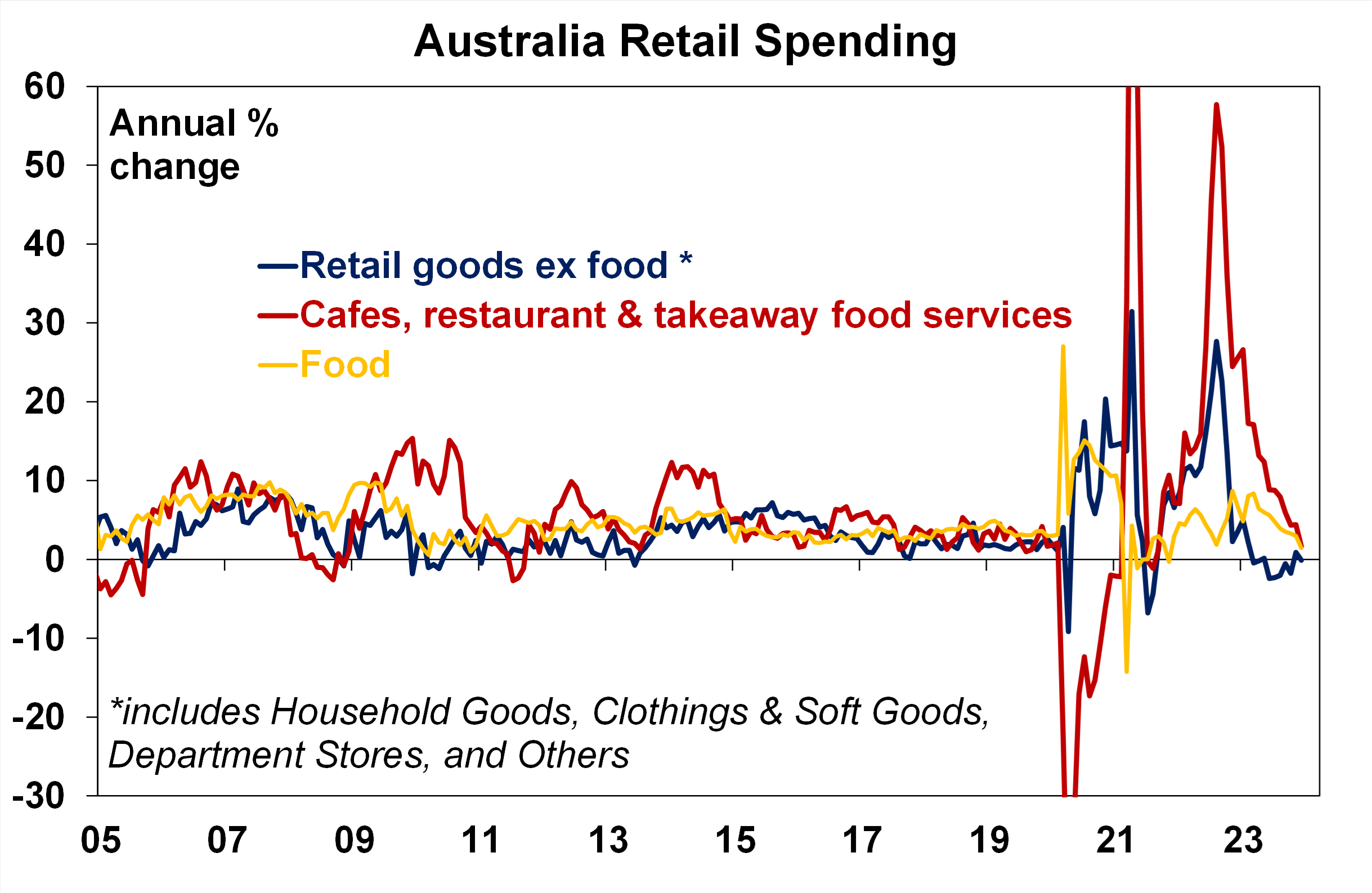
Retail turnover fell across all categories except for food in the month. While the monthly fall was mainly driven by a reversal of Black Friday sales in discretionary spending – in household goods, clothing and department stores, on a quarterly basis households have cut back spending the most in clothing (-1.6% qoq) and dining out & takeaway (-1.2%qoq). Even food purchases, which tend to be stable given it’s a nondiscretionary item, have trended down.

It is likely retail sales will remain weak in the months ahead in response to ongoing cost-of-living pressures. In fact, the noisy data over the past few months has partly reflected the growing trend of consumers seeking out bargains and discounts which is a sign of weakness in household consumption. Overall, lower consumer demand will help keep firms from raising prices and thus help inflation to moderate further.
The softness in retail sales coming on the back of weak December jobs data and falling inflation data for October and November are consistent with the RBA leaving rates on hold at its meeting next week and we continue to see it starting to cut rates from around mid-year.
By Shane Oliver (with assistance from My Bui, Economist)