
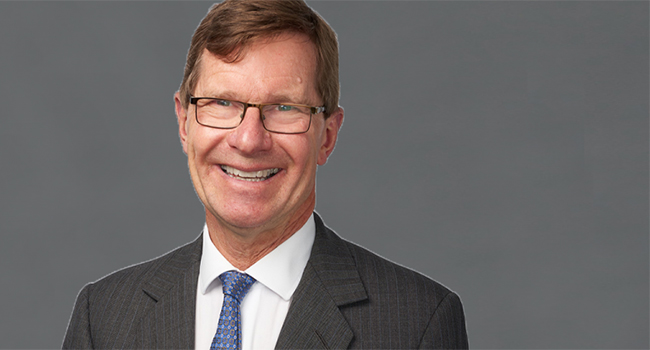
Will Baylis
Corporate Australia is struggling to meet Net Zero goals, with significant challenges hindering progress according to Martin Currie Australia, a leading equities investment manager. Even though the firm has committed to aligning its Sustainable Equity and Sustainable Income Funds with the Net Zero Asset Managers Initiative (NZAMI) goal of 100% verified Science-Based Targets (SBTs) by 2040, the journey is proving far more complex than anticipated.
“Achieving Net Zero is not a straightforward path,” says Will Baylis, Portfolio Manager at Martin Currie. “It’s a multi-dimensional challenge with stringent requirements, technological hurdles and competing corporate priorities slowing progress. Many companies are finding it difficult to balance regulatory compliance with meaningful climate action.”
Since the firm began tracking SBTs in 2022, only 11% of S&P/ASX 200 companies by market capitalisation have achieved fully verified SBTs, and a further 15% are publicly committed to doing so. Alarmingly, 73% of the index remains without clear commitments to verified climate action, signaling a significant gap in corporate Australia’s Net Zero ambitions.
On a sector-by-sector basis, companies in the real estate, consumer staples, communications and industrials sectors have progressed the most with verification, while healthcare companies are largely committed to the process. Unsurprisingly, utilities, metals & mining and energy are the laggards.
Martin Currie Australia’s recent outreach to large ASX-listed companies revealed a troubling trend: rather than embracing science-based frameworks, many companies are scaling back or delaying commitments. “The reasons are multi-faceted, but the end result is clear — we’re not moving fast enough,” Baylis says.
Martin Currie Australia’s research uncovered several critical obstacles impeding corporate Australia’s climate journey:
- Regulatory burdens: Australia’s new Sustainability Reporting Standards, overseen by ASIC, require large businesses to disclose climate-related information. While these rules are a positive step for transparency, they do not mandate external verification like SBTi. As a result, many companies are prioritising compliance over proactive climate action.
- Stringent SBTi requirements: SBTi’s alignment with a 1.5-degree pathway demands rigorous measurement of Scope 3 emissions and ongoing recalibration of targets — a hurdle many firms are ill-equipped to handle. Hard-to-abate sectors like resources and energy face even greater difficulty due to technological limitations, particularly the slow progress in green hydrogen and renewable energy access.
- Sector-specific challenges: Australia’s resource-heavy economy presents unique challenges. Many companies in non-resource sectors question the necessity of SBTi validation when larger emitters in mining and energy lag far behind. In the resources sector, Fortescue is one of the few major players to achieve SBTi verification.
- Alternatives diluting focus: Companies are turning to alternative frameworks, such as the Australian government’s Climate Active Carbon Neutral Certification, which emphasises transparency but lacks the science-based rigor of SBTi. In industries like property, NABERS Energy ratings and GRESB scores provide sector-specific benchmarks but don’t fully align with global climate science standards.
“Our findings also highlight emerging trends that could further derail climate progress. Companies are resisting the ‘all-or-nothing’ 1.5-degree pathway, arguing that a below 2-degree scenario might be more realistic and encourage wider adoption. There are growing community objections to renewable energy projects, such as wind farms, which are slowing infrastructure development critical for emissions reductions. And rising scepticism towards ESG topics and protectionist policies are diverting corporate priorities, further complicating the transition to Net Zero.”
Despite these challenges, Martin Currie remains committed to its goal of verified SBTs for 100% of its portfolio holdings by 2040. However, the firm acknowledges the need for flexibility and a non-linear trajectory.
“Our ambition is clear, but we must balance it with adaptability,” says Baylis. “A rigid pursuit of perfection may alienate companies instead of driving progress. By fostering engagement and dialogue, and supporting realistic transitions we can encourage broader industry participation and meaningful climate action.”