
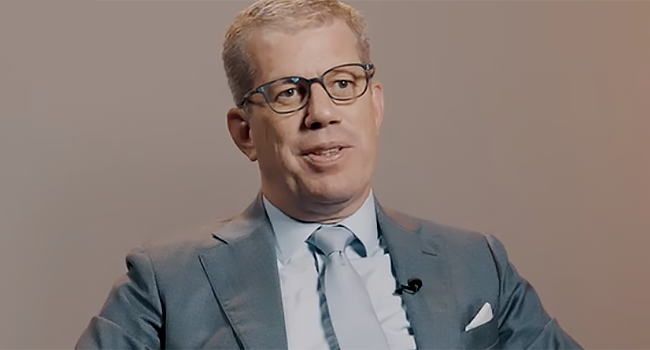
Benjamin Cavalli
UBS has published its annual Global Family Office Report 2025, with insights from 317 single family offices across more than 30 markets around the globe. The average net worth in the survey was USD 2.7 billion, with family offices managing an average of USD 1.1 billion, confirming the report as the most comprehensive and authoritative analysis of this influential group of investors.
About a quarter of family offices we spoke to globally were from APAC, the second largest region surveyed. The survey was conducted from 22 January to 4 April 2025. Further, the survey findings were supplemented by in-depth interviews which took place between 9 April and 7 May 2025 and focused on key topics such as the impact of the recent market developments on the asset allocation and portfolio construction of family offices.
“At a time of increased volatility, global recession fears and following a near unprecedented market selloff in early April, our latest report serves as a good reminder that family offices around the world are first and foremost pursuing a steady, long-term approach, as they focus on preserving wealth across the next generations,” said Benjamin Cavalli, Head of Strategic Clients at UBS Global Wealth Management. “Even with the survey largely conducted in the first quarter, family offices were already acutely aware of the challenges posed by a global trade war, identifying it as the year’s greatest risk. Yet in interviews conducted following the market turmoil that erupted in early April, they reiterated their diversified, all-weather strategic asset allocation.”
“We’re pleased to say that the size of our dataset has allowed us to conduct deeper regional analysis than ever before,” said Yves-Alain Sommerhalder, Head of GWM Solutions at UBS Global Wealth Management. “While the global macroeconomic and political environment continues to be marked by rapid changes and a high degree of uncertainty, this survey offers a glimpse of what we can expect over the coming five years. And most importantly, it provides a snapshot into the thinking of family offices around the world, their objectives, preferences and concerns.”
“More than half of APAC family offices plan to increase their investments in APAC (excluding Greater China) and 30% to Greater China in the next five years. As we navigate through a period of heightened uncertainty, our role to support family offices in managing risks and identifying opportunities globally becomes even more pivotal, said LH Koh, Head of UBS Global Family and Institutional Wealth, APAC. “Furthermore, close to six in ten of APAC family offices will involve their next generation on their boards, and almost half of APAC family offices will involve their next generation in management roles, significantly higher than their global peers. Our expertise in advising clients on succession planning can play a key role in ensuring the longevity and success of these family offices.”
Asia Pacific
APAC (excluding Greater China) is the region where most family offices globally (35%) plan to increase their investments to in the next 5 years. In fact, 55% of APAC family offices themselves are planning to increase their investments to APAC (excluding Greater China) and 30% to Greater China.
Over the next 12 months, 22% of APAC family offices are also planning to increase their exposure in India and Taiwan, and 39% of APAC family offices are planning to increase their exposure in Mainland China. The preferred asset classes for APAC family offices are equities and bonds from developed markets. In 2024, on average, an APAC family office allocated 24% to equities and 20% to bonds from developed markets. In terms of asset allocation, 48% of APAC family offices are looking to increase investments in equities – developed markets, and 40% in equities – emerging markets over the next 5 years.
Succession planning is a big topic for many APAC family offices. Close to six in ten of APAC family offices will involve their next generation on their boards and almost half of APAC family offices (49%) will involve their next generation in management or executive roles in the family offices, higher than that of their global peers (31%).
Global trade war is the biggest concern for 2025
When asked about threats to their financial objectives over the next 12 months, more than two thirds (70%) of family offices highlighted a trade war. The second biggest concern for more than half (52%), was major geopolitical conflict, followed by higher inflation. Looking five years ahead, those worried about a major geopolitical conflict increased to 61% and 53% were anxious about a global recession likely off the back of potentially serious trade disputes.
Despite concerns, at the time the survey was conducted, 59% of family offices planned to take the same amount of portfolio risk in 2025 as they did in 2024, staying true to their investment objectives. However, 38% highlighted the difficulty in finding the right risk offsetting strategy when managing portfolio risks, while 29% pointed out the unpredictability of safety assets due to factors such as unstable correlations. Off the back of this, 40% see relying more on manager selection and/or active management as an effective way to enhance portfolio diversification, followed by hedge funds (31%). Almost as many are increasing illiquid asset holdings (27%), and more than a quarter (26%) are using high-quality, short duration fixed income. Precious metals, used by almost a fifth (19%) globally, have seen their use grow most of all compared with the previous year, with 21% anticipating a significant or moderate increase in their allocation over the next five years.
Other regional findings: United States
Alternative investments make up 54% of U.S. family office portfolios, with 27% in private equity, 18% in real estate and 3% in private debt, according to the survey. By comparison, 46% of portfolios were invested in traditional asset classes, with the largest share in equities (32%), followed by fixed income (9%) and cash (5%). Their portfolios had the highest geographic tilt towards North America (86%), with just 7% in Western Europe and 3% in APAC (excluding Greater China). Amongst family offices with equity investments, forty-seven percent of equity portfolios are managed actively.
Latin America
Traditional asset classes constitute 71% of Latin American family office portfolios, with 33% in equities and 31% in fixed income. The share of alternative asset classes was 29%, with the largest investments in private equity (17%) and real estate (6%). Sixty-four percent of their regional asset allocation focused on North America, followed by Latin America (15%), Western Europe (11%) and APAC (excluding Greater China) at 5%.
Switzerland
Traditional asset classes account for 56% of Swiss family office portfolios, with 34% in equities and 13% in fixed income. Forty-four percent were invested in alternative asset classes including 16% in private equity, 12% in real estate and 5% in hedge funds. Western Europe was the preferred regional asset allocation (53%), followed by North America (39%) and APAC (excluding Greater China) at 4%. More than two thirds (68%) of equity portfolios were managed actively.
Europe (excluding Switzerland)
Traditional asset classes make up 51% of European family office portfolios, with the largest share in equities (30%), followed by fixed income (15%) and cash (6%). The share of alternative asset classes was 49%, led by private equity (27%) and real estate (11%). Like their U.S. peers, they had a preference towards their home market, with 44% of their investment portfolio allocated to Western Europe, followed by the U.S. (43%) and APAC (excluding Greater China) of 5%.
Middle East
In the Middle East, portfolios are evenly split between alternative and traditional asset classes (50%), with the largest share in equities (27%), followed by private equity (25%), fixed income (16%) and real estate (14%). North America was the preferred region in terms of asset allocation (55%), followed by Western Europe (21%) and the Middle East (14%). While Greater China currently ranks fourth (4%) in terms of geographical tilt in portfolios.