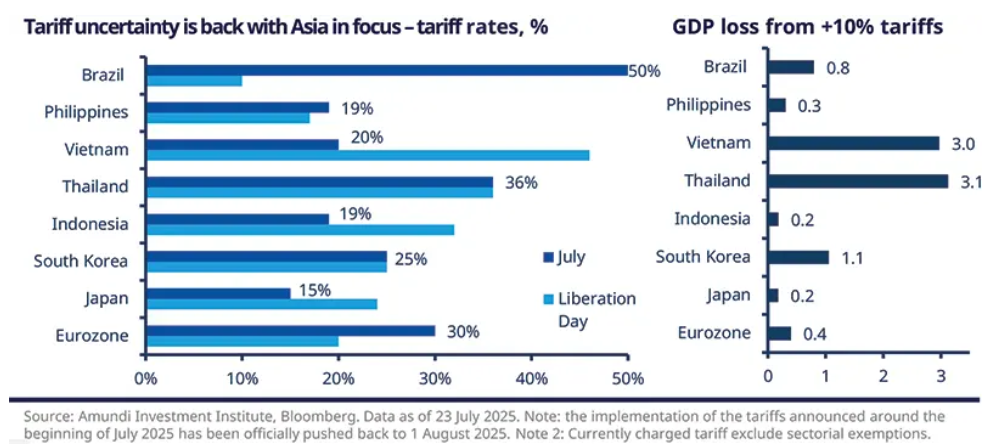
In July, the US administration surprised by announcing higher-than-expected tariffs on some major counterparts, notably 30% on Europe and 50% on Brazil, while extending the tariff pause until August
Clarity regarding the administration’s tariff plan with China should instead arrive in mid-August. Additionally, the recent tariff letters include, explicitly or implicitly, a clause imposing higher tariffs on transshipping. For example, Vietnamese-origin cargo considered to be transshipped goods will be subject to a 40% tariff – the current level applied to China.
“While final tariff levels remain highly uncertain, it is worthwhile to begin assessing their impact on growth through trade channels across countries,” notes Alessia Berardi, Head of Emerging Macro Strategy at the Amundi Investment Institute.
“Asia is particularly affected. Despite the challenges in enforcing transshipping tariffs, medium and small open economies in the region face significant growth impacts, as they bear among the highest tariff rates in the new letters of intent.
“However, the situation remains fluid. Indonesia is a case in point, seeing a tariff reduction from 32% to 19% on the back of a deal to lower its own tariffs on the US and reduce its trade surplus. Japan also managed to reach a deal a few days after its upper house election, lowering the tariff from 25% to 15%.
“Regarding Europe, the implementation of higher tariffs from 1 August is likely to cause a contraction in economic activity, potentially reducing growth by an additional 0.3% to 0.4% through the trade channel between the second half of 2025 and the first half of 2026.
“With the latest tariff letters, the effective average tariff rate in the US is expected to rise from the current 15% to a range of 17% to 20%. This increase could negatively impact US GDP by approximately 0.4% and raise the core Personal Consumption Expenditures inflation rate by about 0.2%. Concerning inflation in the rest of the world, in the absence of significant retaliatory measures, persistent supply chain disruptions, and weak currency trends, price dynamics are expected to remain subdued due to weaker demand,” she said.