
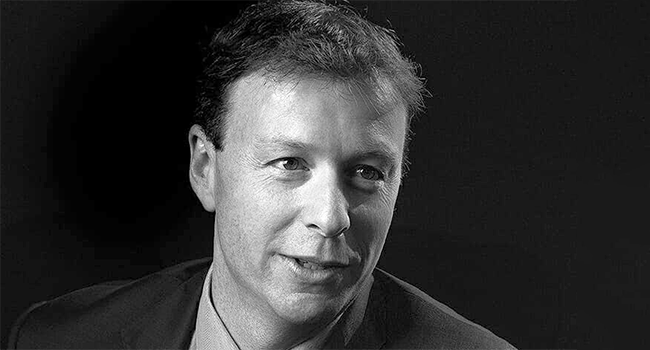
Ed Brooke
In an environment marked by persistent geopolitical uncertainty, Escala Partners investment advisor and partner Ed Brooke has underscored the importance of preserving liquidity and ensuring portfolios remain nimble enough to adapt quickly to changing conditions. Brooke believes investors must avoid complacency and focus on portfolios that can withstand multiple scenarios, with particular attention paid to the defensive side of investments.
“The key message for our clients is to be diversified so that your investment portfolio can do well in a lot of different scenarios. And make sure you understand what’s in the defensive part of your portfolio. Because that’s what will matter most if things do turn around- you don’t want to see the defensive part of your portfolio down 15 per cent when equity markets are down 30 per cent,” Brooke said.
He warned against overconcentration, especially as recent market gains may have pushed equity allocations beyond original targets. “If Aussie equities are now 5 to 10 per cent above your strategic asset allocation, our recommendation at the moment would be bring it back to at least neutral weight,” Brooke said.
He noted that such conversations with clients can be challenging, particularly when asking them to rotate from an asset class delivering outsized returns into others that appear less compelling in the short term. “I’d say the hard conversation is when you talk about Australian equities, and it’s up 20 per cent year to date, and we want you to diversify into some assets that are up 10 to 12 per cent year to date. So that conversation can be interesting,” he added.
Brooke emphasised the need to think long term over a horizon of five years or more, warning that equity markets could correct if price gains are not underpinned by earnings growth. “It’s better to start reducing now and rotating into some of those asset classes that will, likely, over the next five years, provide a much better risk return,” he said.
On the defensive side, Brooke highlighted the role of cash and investment-grade bonds as a stabilising buffer. He said a diversified portfolio of floating rate corporate bonds has historically offered around 2.5 per cent above cash, with minimal volatility and high liquidity even during periods of stress. “We typically use corporate bonds as the anchor in portfolios either through direct positions, good quality funds, or a blend of the two. The key is to avoid over concentration in this part of a portfolio and understand how the portfolio will perform during times of stress. Stick with high quality,” Brooke said. When reviewing bond funds, his team scrutinises the share of sub-investment grade holdings and any exposure to private debt as those can underperform or freeze liquidity in a downturn.
While corporate bonds remain a core anchor, Brooke pointed out that clients comfortable with sacrificing some liquidity are increasingly turning to alternative assets. Global private debt, private equity, hedge funds, and uncorrelated strategies such as royalties are generating strong risk-adjusted returns.
He noted that although the balance between growth and defensive assets remains broadly unchanged, growth allocations are becoming less equity heavy as private market assets gain prominence.
Diversification within growth allocations, he said, can significantly reduce volatility in times of policy shifts, inflation shocks or recession risks. “We saw this play out in April this year, in the week post “Liberation Day” when our growth portfolios were less than half as volatile as pure direct equity portfolios,” he said.
Escala’s asset allocation framework typically advocates around 30 per cent in diversified alternatives, 30 to 35 per cent in defensive assets such as cash and investment-grade bonds, and about 35 per cent in equities with a global tilt.
For Brooke, this balanced and diversified approach is the foundation for protecting wealth while retaining the agility to adjust in uncertain times.