

Niamh Brodie-Machura
Key points
- 55 per cent of Fidelity analysts expect companies’ cost inflation to rise over the next 12 months as a result of the renewed Middle East conflict
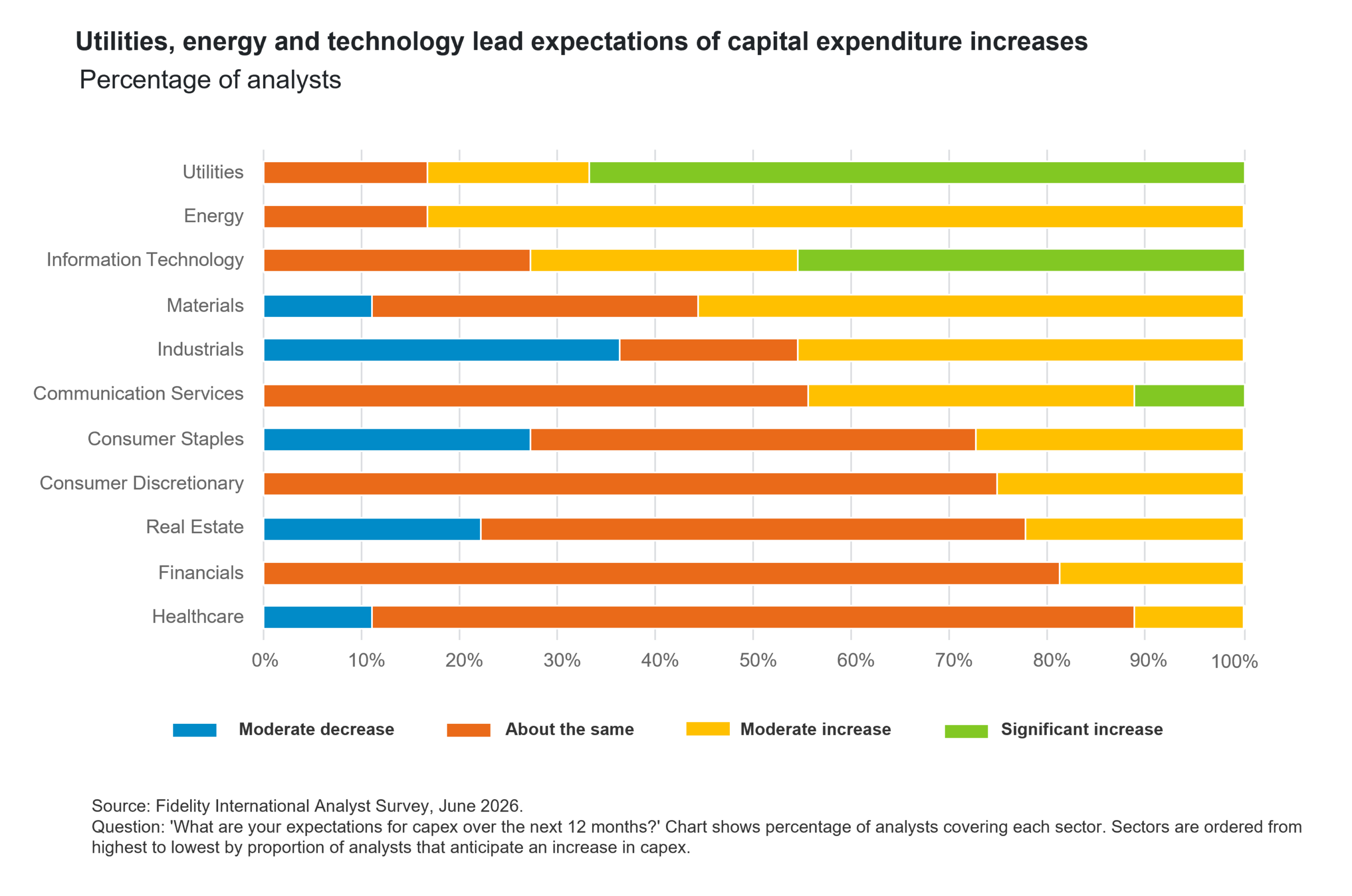
- Analysts expect capital expenditure to increase, with the strongest expectations in utilities, energy and information technology
- Most analysts expect corporate profitability to remain resilient over the next 12 months despite higher expected cost
The resumption of hostilities in the Middle East has renewed concerns over inflation and supply chain disruption, but many businesses have yet to feel the full impact on their costs, according to Fidelity International’s latest Analyst Pulse Survey.
The quarterly survey of almost 100 of Fidelity’s equity and fixed income analysts, conducted in June and informed by the team’s ongoing meetings with company management teams, found that 55 per cent expect inflationary pressures within the companies they cover to increase over the next 12 months as a result of the Middle East conflict.
While many businesses have so far been protected by energy hedging programmes and existing inventories, analysts believe higher energy, freight and raw material costs are likely to become more visible as those protections expire. Consumer, industrial and utilities companies are expected to experience the greatest increase in cost pressures, although analysts anticipate higher input costs across every sector and region.
Niamh Brodie-Machura, CIO, equities at Fidelity International, said: “The renewed conflict is adding to an already uncertain backdrop for businesses. While many companies have yet to feel the full impact on their cost base, our analysts expect inflationary pressures to become more apparent over the coming months as existing buffers begin to unwind. The extent to which companies can manage those pressures is likely to become an increasingly important differentiator.”
Sam Heithersay, portfolio manager, Fidelity International adds: “For Australia, the picture is one of broad resilience but rising dispersion. Australia remains relatively well placed as a net exporter of energy and commodities, which helps to support ongoing capital investment and cushions the economy at an aggregate level. But higher energy, freight and raw material costs will add to an already persistent domestic inflation backdrop, with greatest pressure likely to fall on domestically exposed companies that lack the pricing power to pass on costs without sacrificing margins or market share.”
Companies continue investing despite rising cost pressures
Despite this more challenging environment, analysts expect companies to continue increasing capital expenditure. Expectations are strongest in utilities, energy and information technology. These sectors are expected to play a central role in supporting continued investment in artificial intelligence (AI) infrastructure, from power generation and networks to semiconductors and data centres.

Analysts also expect corporate profitability to remain resilient over the next 12 months. Despite higher expected costs, more analysts expect profitability to improve than deteriorate, suggesting many companies remain well placed to manage inflationary pressures despite a more uncertain operating environment.
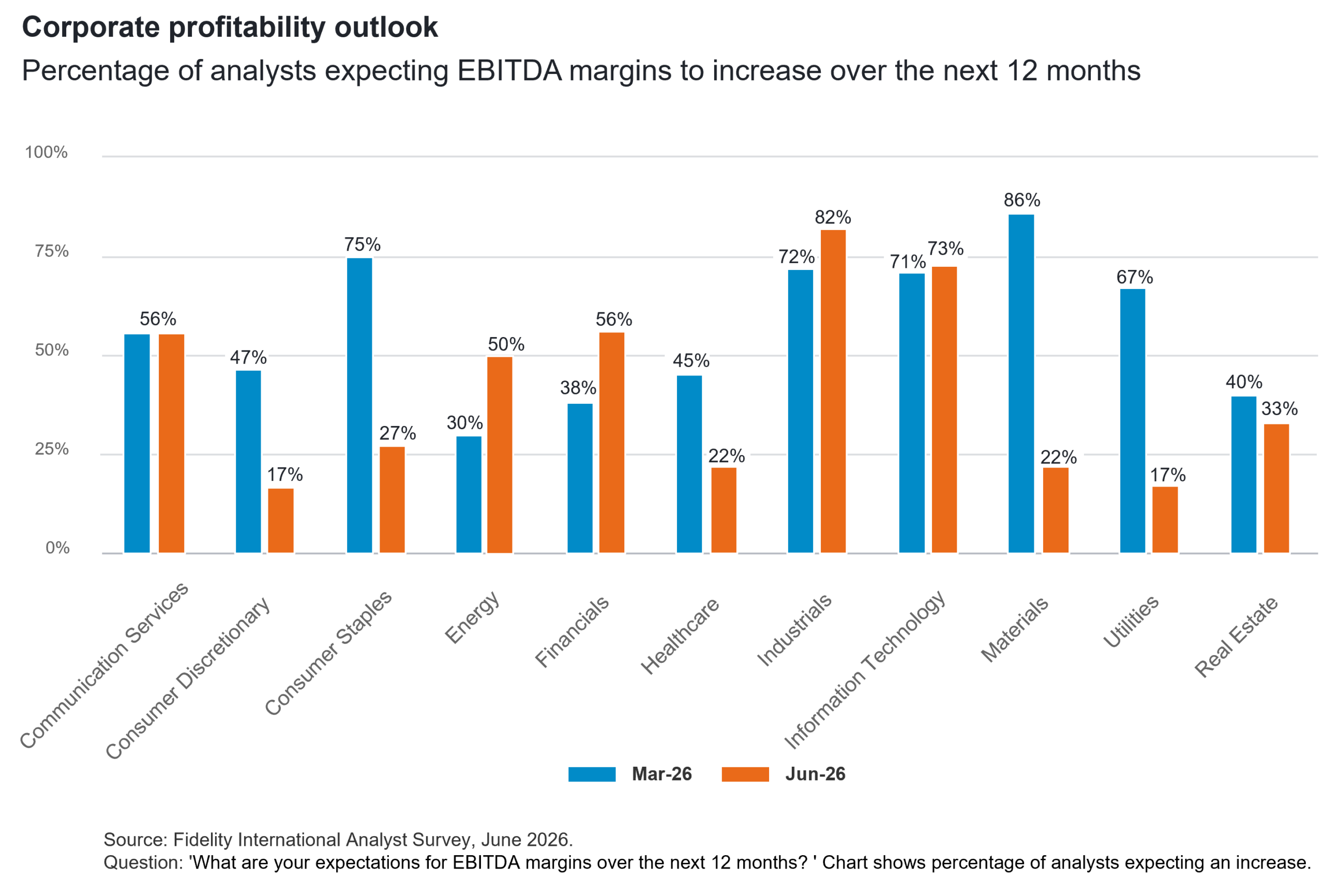

Heithersay comments: “Corporate profitability in Australia should remain relatively resilient, underpinned by strong balance sheets and double-digit earnings growth at a market level. Recurring geopolitical disruption has made corporate resilience more than just a defensive attribute and increasingly a competitive advantage. The strongest companies will likely be those that can preserve margins through the current cost shock while maintaining the operational discipline and cost flexibility to absorb the next one.”
Brodie-Machura concludes: “Taken together, the survey highlights three themes shaping markets today: persistent inflation pressures, rising capital expenditure and resilient corporate profitability. While geopolitical uncertainty is creating new challenges, many businesses appear well placed to navigate them. For investors, identifying those companies that can continue investing while maintaining profitability will remain critical.”
———-