
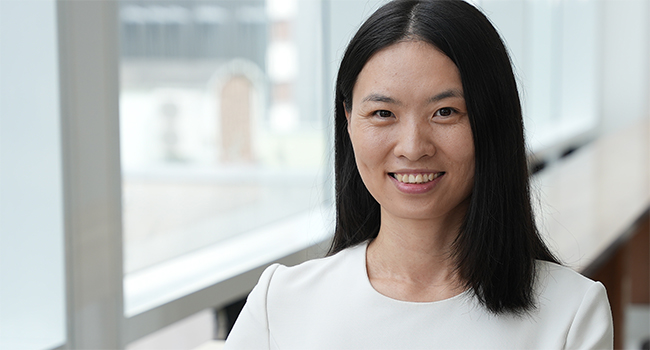
Fei Huang
Australians’ life expectancies can vary by more than a decade depending on their income, home ownership, marital status and where they live, revealing a “longevity divide” across the country.
A new Dialogue Paper* published by the Actuaries Institute, Bridging the Longevity Divide, identified an 11.5 year difference in life expectancy at age 60 between men in the most and least advantaged socio-economic profiles examined. Among women, the gap was 9.1 years.
The paper analysed linked, de-identified microdata from the Australian Bureau of Statistics’ Person Level Integrated Data Asset (PLIDA). It examined differences in life expectancy across socio-economic groups using mortality rates observed in 2016–17.
“We know life expectancy differs across the population, but what is striking is just how large those differences actually are,” says paper co-author Dr Fei Huang, Associate Professor at the School of Risk and Actuarial Studies at UNSW Business School.
“Our analysis shows that life expectancy can differ significantly when we consider the combination of people’s circumstances. For example, single, lower-income non-homeowners in disadvantaged areas had considerably shorter life expectancies than married, higher-income homeowners in more advantaged areas.
“These findings provide an important evidence base for individuals, communities and society at large to better understand longevity differences. They are also useful for informing discussions on retirement income, superannuation and broader policy,” says Dr Huang.
As paper co-author Philip Clark, Actuarial Consultant at Azuria Partners, says, “How much someone can comfortably draw down from their superannuation depends in part on how long they can expect to live. As our analysis shows, applying the same life expectancy assumptions to everyone can overlook very different retirement needs and outcomes.
“We encourage the industry to consider how it could use this new evidence to explore expanding the range of retirement income strategies and products that speak to a greater spectrum of Australians. As highlighted in the recent Intergenerational Report from the Government, the retirement income system is expected to play a growing role in the decades to come.”
In addition to retirement income solutions, the findings could also inform public information resources, superannuation fund calculators, and adviser conversations. These could help people in and approaching retirement to better understand their own longevity risk – their personal risk of outliving their savings.
The paper was also co-authored by Andrés Villegas, Associate Professor in the School of Risk and Actuarial Studies at UNSW Business School; Francis Hui, Associate Professor of Statistics in the Research School of Finance, Actuarial Studies, and Statistics at the Australian National University.
———-