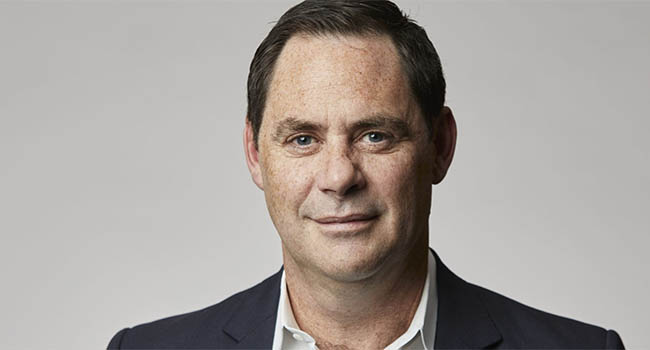

“Capital once went where it was treated best. But now, it is starting to go where it is told,” Selby-Smith says. “For three decades, globalisation gave the world one large pool of cheap, mobile capital. That pool is now breaking apart. Countries are seeking to rebuild defence, secure energy independence and bring industry back onshore but this is costly, and the burden falls hardest on governments that are already heavily indebted.
“That money has to come from a finite pool of savings, which makes a fight for capital unavoidable.”
Selby-Smith says heavily indebted governments have few easy ways out. If they are unable or unwilling to grow their economies fast enough, cut their deficits or default, they are left to co-opt domestic savers, and one of the main tools available to them is financial repression.
Financial repression describes measures that channel domestic savings towards government priorities, such as encouraging or compelling savers to hold government bonds at very low or negative real yields.
Selby-Smith says versions of this are already playing out around the globe.
The UK’s Pension Schemes Act, passed in April, gives ministers a “backstop” power to compel pension funds to hold UK assets. Japan’s Finance Minister has urged households and the Government Pension Investment Fund, the world’s largest pension fund, to invest much more at home, while US Treasury Secretary Scott Bessent has described allied investment commitments as a US “sovereign wealth fund”. In Australia, there has been debate about whether superannuation funds should direct investments towards “nation building” initiatives such as affordable housing.
“The result of this is that capital becomes less free to move around the world in search of the best returns,” Selby-Smith says.
“Investors assume the choice of where their capital goes is theirs to make but once politics starts making that choice, even the most careful valuation may be irrelevant.”
Selby-Smith says France and the US, both among the world’s largest net debtors, are the most vulnerable major economies. Close to 60 per cent of French government debt is held by foreigners, and inside the eurozone, France has little room to respond.
“The US looks stronger, but it is still vulnerable. When savings are called home, American securities are the deepest pool to sell, because that is where so much of the world’s savings sit,” Selby-Smith says.
“Investors can be hit twice. The assets they are directed to own at home are likely to have unattractive real yields, and the forced sale of assets abroad may drive prices lower.”
In this environment, Talaria favours short duration, strong balance sheets, real assets and genuine diversification.
“Short duration is a liquidity choice as much as anything else. When savings are being directed, you want your capital back sooner,” Selby-Smith says.
“On government bonds, investors should hold as little as they dare, at the shortest duration they can justify.
“A company that can fund its own ambitions doesn’t have to compete with governments for capital, and it can invest when others can’t.”
Real assets have a better chance of keeping pace with inflation, although many remain vulnerable to taxation or regulation.
In addition, diversification is key.
“Most portfolios are far less diversified than they look. The share of global assets strongly correlated with the US market has risen from about a quarter thirty years ago to more than 90 per cent today,” Selby-Smith says.
“Genuine low correlation has become harder to find and increasingly resides in areas like volatility strategies and trend following.
“We’re not arguing financial repression is good policy. But when the political economy, not the market, is deciding where capital goes, investors need to be prepared for it.”