
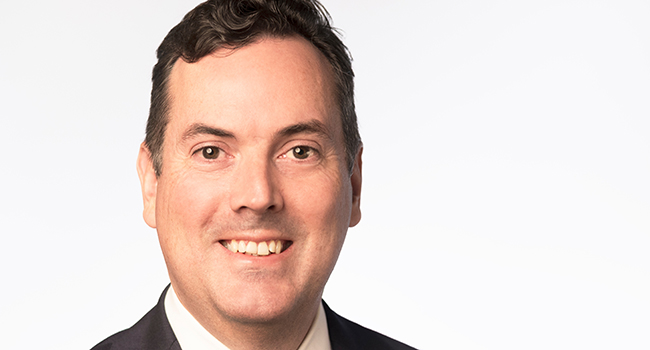
Danny King
Australian superannuation funds are entering 2027 with greater caution than their global counterparts, bracing for persistent inflation, fewer rate cuts and a softer economy, according to the 2027 Institutional Investor Outlook from Natixis Investment Managers.
In collaboration with CoreData, Natixis IM surveyed superannuation funds and Australian institutional investors* representing over $1.7 trillion AUM to understand their outlook on the economy, markets and portfolio strategy for 2027.
Following a fifth rate hike it’s no surprise that inflation is the dominant concern for superannuation investors, with 67% nominating it as a top portfolio risk and almost two-thirds (63%) expecting between one or two rate cuts in the new year.
Investors are also preparing for signs of economic stress as almost two-thirds (63%) expect unemployment and corporate defaults to rise in 2027.
Yet, at a portfolio level caution is not translating into a retreat from risk. Super funds remain broadly positive on equities, with 46% planning to increase allocations to emerging market equities in 2027. In addition, Australian institutions remain bullish on the opportunity in private markets and infrastructure.
Despite this cloudy outlook, super funds are under invested in fixed income compared to their global peers, with on average 25% of the portfolio allocated to fixed income well below the global average of 34%.
Danny King, Managing Director – Head of Australia & New Zealand at Natixis IM said: “Superannuation funds are heading into 2027 with their eyes wide open. They remain confident in the long-term opportunity set, but there is clearly greater caution around inflation, interest rates and the potential for a softer economic environment.
“What’s interesting is that caution is not translating into investors simply stepping back from markets. Instead, we’re seeing investors become much more deliberate about where they take risk, looking for diversification and opportunities that can perform through a more uncertain economic environment.
“Super funds have always had a long-term mindset, and that is particularly evident in their approach to private markets. With inflation proving sticky and the path for rates less certain, investors continue to look beyond traditional public markets in search of attractive returns and diversification.”
Private markets remain firmly in favour
Private markets continue to be a significant area of conviction. More than four in five (83%) super funds believe the return potential in private markets continues to be higher than in public markets, a much more bullish outlook than the global average (70%).
Current allocations stand at 16.5% of portfolios, ahead of 14.2% globally, and are expected to increase to 17.6% in 2027. Looking further ahead, 57% of Australian institutions expect to increase allocations to private markets over the next 10 to 15 years, compared with 49% globally.
Diving into the opportunity over nine in ten (93%) see private equity secondaries as offering attractive return potential beyond their role as a source of liquidity.
Infrastructure is another standout as 62% of Australian respondents expect to increase their allocation in 2027. It currently accounts for 24% of Australian institutions’ alternatives allocations, substantially higher than the 16% global average.
AI: opportunity comes with a healthy dose of scepticism
Almost nine in ten (87%) believe the broader growth of AI will create more investment opportunities, while 80% are focused on AI-adjacent opportunities for new private market investments, well ahead of 54% globally.
But Australian super funds are also notably more concerned about its potential consequences. Almost three-quarters (73%) expect AI to contribute to higher unemployment, compared with 57% globally, while 67% believe AI-driven layoffs could force investors and policymakers to rethink how a recession is defined, compared with 49% globally.
Concerns extend well beyond markets. An overwhelming 97% of Australian respondents expect rising AI backlash to force governments to respond, compared with 77% globally, while 77% believe the AI industry has already demonstrated that it cannot contain its technology, compared with 52% globally.
Overall, 90% believe AI will open a new avenue of geopolitical risk for investors in the new year.
———