Survive and Win in the Inflationary Eighties by Howard J. Ruff was a truly disastrous book for anyone that followed its advice.
At the time it would have been popular with an audience that had picked up the habit of tracking the price of pretty much everything on a weekly basis but its bad timing was exquisite. Published in 1981 it coincided with the election of Ronald Reagan who gave then Federal Reserve chairman Paul Volcker the platform to finally kill-off the inflationary curse that had beset the US and much of the developed world. If Ruff had stuck to shopping tips the damage would have been limited but most of his advice centred on the merits of buying inflation hedges such as gold and silver.
Unfortunately for his followers, inflation was well and truly priced into the market and when it finally started falling gold fell and stocks and bonds took off. A decade later gold had gone backwards while stocks, which in his words “remained a guaranteed loser to long-term inflation”, were up some five-fold. A further irony is that in real terms gold lost half its value over the next decade as inflation levels, although declining, remained significant. Stocks were still up almost 300% in real terms over the same period.
From where we stand now a book on surviving a Japanese-style deflationary spiral would most probably sell better than an update to Ruff’s book, which is exactly why now could be as good a time as any to start thinking seriously about the impact of future inflation on portfolios.
Certainly there are many that believe that an extended regime of financial repression starting sometime in the not too distant future is the only feasible way for many governments to reduce debt to manageable levels. Very low or negative real interest rates mean that we are already there but inflation somewhere above 5% is seen by many as a necessary ingredient if the deleveraging process is to start in earnest. This is just one scenario that might never happen but, with markets already pricing in deflation (much as they priced in inflation in 1981) it is one that we have to think about even more seriously.
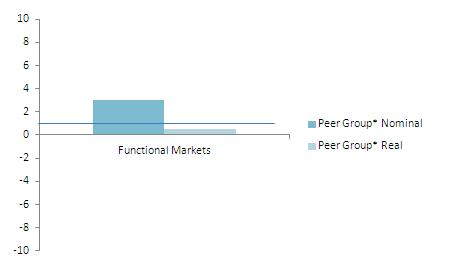
Take the following simulations using our valuation-driven asset allocation model under different inflation scenarios. As fixed income investments are the most vulnerable to inflation we have shown the impact of higher inflation on a conservative portfolio over 3 years, given current market pricing.

Functional markets
Even if inflation stays where it is and we see reasonably strong real GDP growth of 3% per annum there is a strong likelihood that a typical conservative portfolio is going to miss its objective of CPI plus 1% per annum over the next 3 years, given current market pricing.

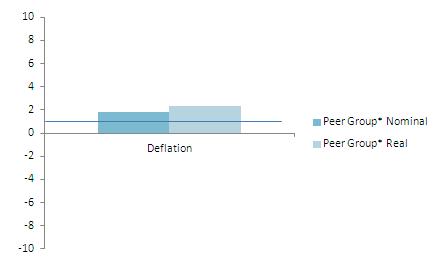
Deflation
This is because fixed income markets are priced for deflation. In simple terms this means that most conservative options will only provide satisfactory performance if we see a period of sustained price deflation and 3 years of negative GDP growth of -1.5%. While this might happen, thankfully most people are still applying a low probability to this scenario – a good thing generally but not great news for conservative investors.

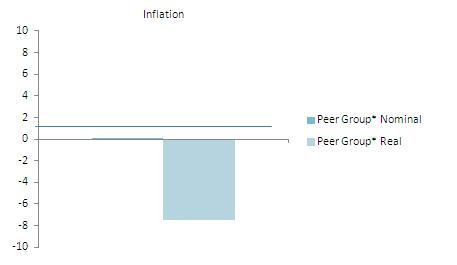
Inflation
In nominal terms, even 7.5% inflation with respectable 3% per annum real GDP growth means a flat return from the conservative portfolio. However, this takes us into a regime that many of us have lost the habit of dealing with. After a sustained period of high inflation investors and consumers become highly adept at mentally discounting the impact of inflation but an unexpected inflation shock now would leave them vulnerable, especially older investors. While a typical conservative portfolio might retain its value in nominal terms, in real terms the conservative investor would have lost 25% of their purchasing power in this scenario over three years.

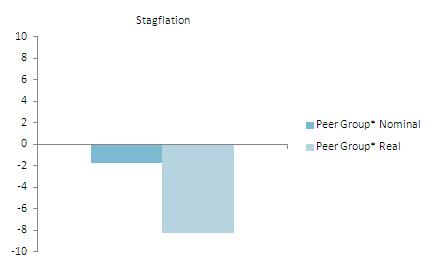
Stagflation
The situation gets worse in the stagflation scenario where inflation is elevated but real GDP growth is negative (-1.5% per annum). Interestingly though, this reduces returns only slightly compared to the high inflation/high nominal growth strategy. Even if the difference between recession and strong growth is hugely important for most people’s welfare and wealth generally, for their investments inflation will have a much greater impact, again, especially if they are a relatively vulnerable conservative investor.
Even if the high inflation scenarios remain a distant possibility we believe that the stakes are high enough that it is worth doing some scenario analysis with clients, especially given how markets are currently pricing those scenarios. With that in mind we will soon be providing an update to our tactical asset allocation tool on iRate to let our subscribers examine the impact of inflation on their portfolio in real terms. We will also be conducting an interactive session during our annual conference in March aimed at helping the audience analyse these issues with clients using our online tool.
The article first appeared in the January issue of The van Eyk View, which can be downloaded here.