

Simon James
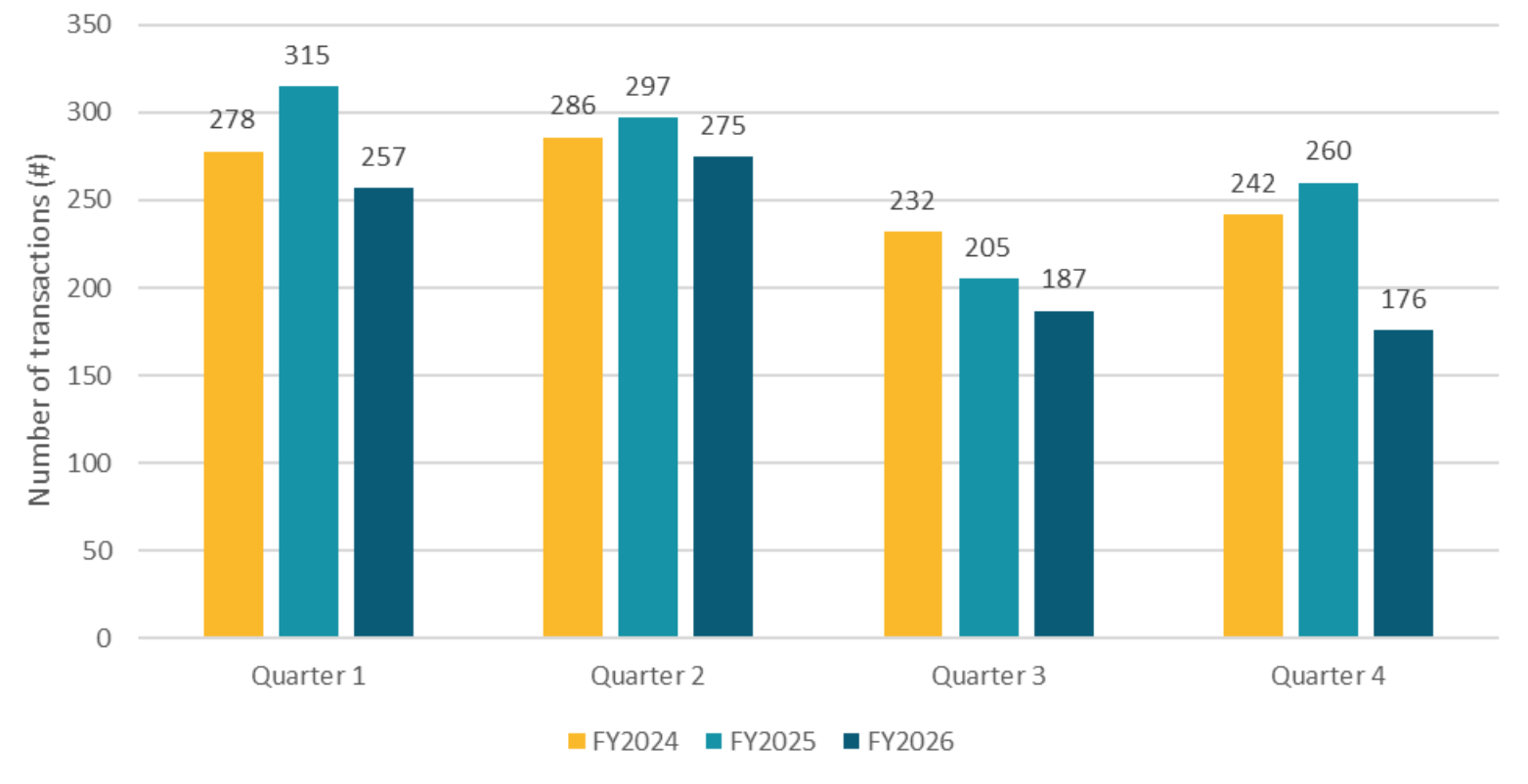
Merger and acquisition (M&A) activity in Australia softened in the year to 30 June 2026, with total numbers down 17 per cent from 1,077 in FY2025 to 895 in FY2026, according to the latest HLB Mann Judd M&A report.
However, despite fewer deals, the average transaction size grew from $133 million in FY2025 to $162 million in FY2026.
Simon James, partner at HLB Mann Judd Sydney and co-author of the report, says behind the numbers, a clear trend emerges – dealmakers are prioritising quality over quantity.
“We’re seeing a market where, despite the overall drop in deal numbers, the appetite for quality assets remains robust. Buyers are more discerning, and that’s reflected in the rising average transaction size. There’s a clear willingness to pay a premium for businesses with strong fundamentals, resilient earnings, and a clear growth story.”
Deal activity peaked at 275 deals in Q2, likely reflecting a push to finalise transactions before calendar year-end, before easing to 176 deals in Q4, as heightened geopolitical tensions weighed on confidence. Despite these challenges, the average transaction value has now risen for the second consecutive year – from $126 million in FY2024, to $133 million in FY2025, and now $162 million in FY2026.
Larger deals are driving this growth, with the average value of transactions over $100 million rising to $751 million, up from $587 million last year, even as the number of these deals fell from 104 to 87.
At a sector level, consumer discretionary, information technology, and materials all recorded higher average valuation multiples in FY2026, reflecting a strong appetite for innovation and growth. More traditional sectors like energy, telecommunications, and industrials faced greater valuation pressure.
“These trends show dealmakers are backing scale and strategic rationale over volume,” says James. “It’s a disciplined, forward-thinking approach, one that’s setting the stage for future growth.”
Financial buyers, including private equity, accounted for a modest 9 to 13 per cent of transactions across FY2025 and FY2026. Slower fundraising, delayed exits, and ongoing uncertainty have made it tougher for financial buyers to compete with strategic acquirers, who remain focused on integration and long-term outcomes.
“While overall M&A activity has slowed amid ongoing geopolitical, trade, and economic uncertainty, higher average transaction values point to attractive, value-accretive opportunities in the mid-market for those ready to move,” James says.
“The outlook remains positive, underpinned by Baby Boomer retirements, significant dry powder among private capital investors, and growing interest in renewable energy and AI-first sectors.
“In a market that rewards resilience and vision, the best opportunities are there for those who know where to look and are ready to act.”


