Investment markets and key developments
Global share markets mostly rose again over the last week rising to new recovery highs on the back of more signs that inflationary pressures may be peaking & central banks becoming a bit less hawkish amidst optimism about an easing in Covid rules in China. The positive global lead saw Australian shares rise around another 0.5% for the week and they are now down by just 2% for the year to date. The gains in Australian shares were led by materials, IT, Telco and health stocks, with miners benefiting from signs China is easing its Covid rules as did oil, metal and iron ore prices. Bond yields fell further and the $A made it back above $US0.68 as the $US fell.
The past week saw more positive signs on inflation and interest rates:
- Fed Chair Powell’s comments were far less hawkish than feared and if anything leaned a little dovish, explaining the relief bounce in share markets mid week. While he said there was “still some ways to go” on inflation and that the terminal rate will likely be “somewhat higher” the latter was a downgrade from “higher” early in November and he provided a strong indication that the pace of hikes will slow and said that this is “a good way to balance the risks” to the economy.
- US core personal consumption deflator inflation slowed again in October to 5%yoy from a high of 5.4%yoy in February.
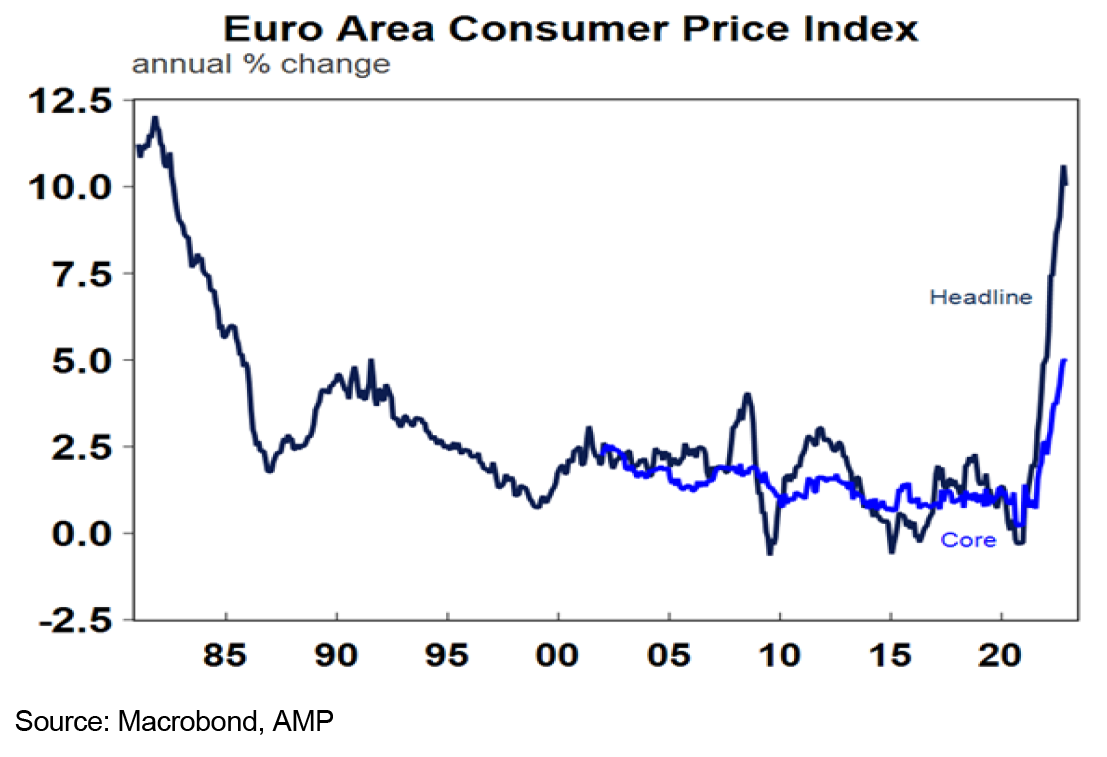
- Eurozone CPI inflation also slowed in November with core inflation stable, possibly enabling the ECB to slow the pace of rate hikes this month.

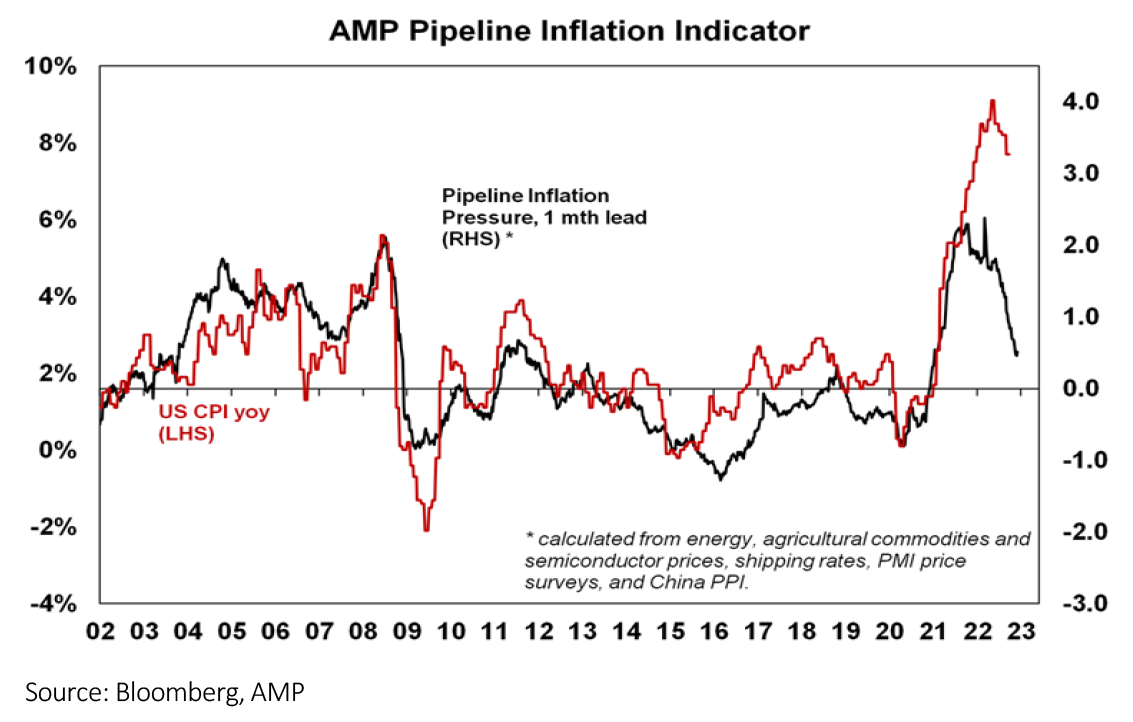
- Our Pipeline Inflation Indicator rose slightly in the last week, with a rise in some commodity prices, but remains in a downtrend.

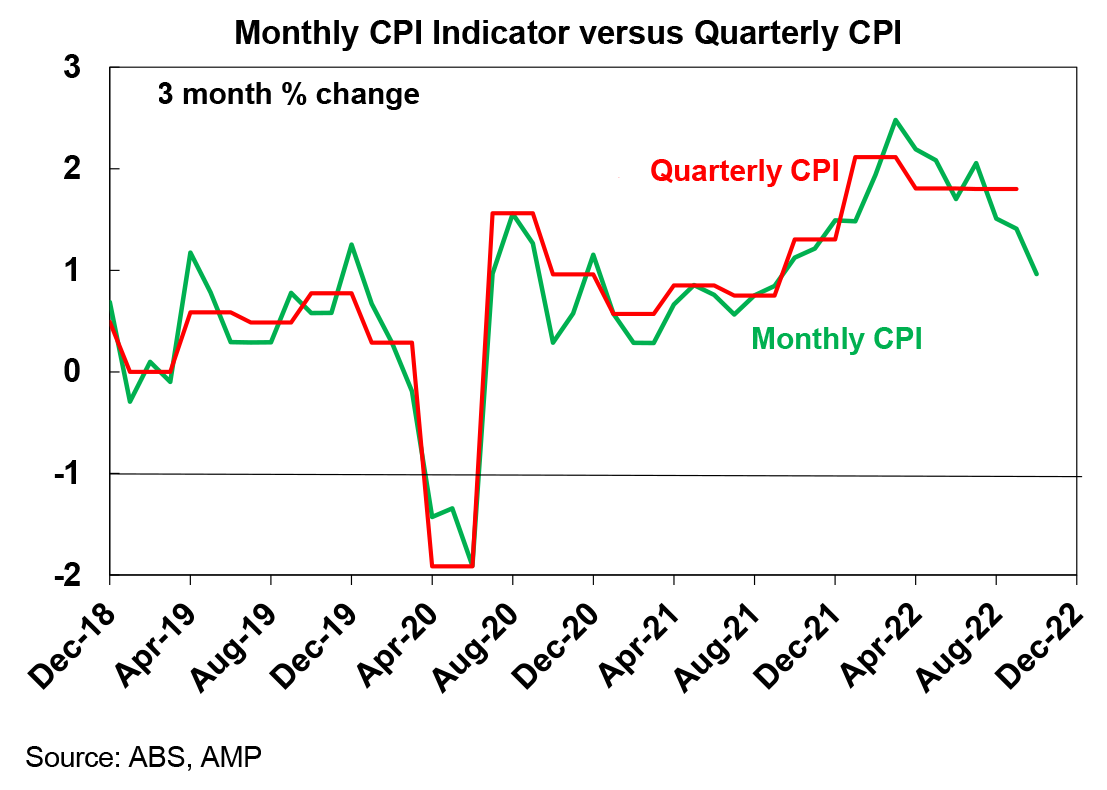
- Australia’s new monthly CPI Inflation Indicator also showed more signs of having peaked.
There is likely more to go yet for central banks, and labour markets still remain too tight for comfort, but the increasing evidence of easing inflation pressures suggest we may be nearing the peak in the rate tightening cycle.
Australian inflationary pressures peaking too? With US inflation leading that in Australia by around six months, the signs of a slowing in the US – highlighted by our Inflation Pipeline Indicator – augur well for Australia too. But there are a range of domestic signs as well pointing to a peak in inflation here, probably this quarter.
- First, as noted above the ABS’s new monthly CPI Indicator is showing signs of slowing. To be sure it needs to be interpreted with lots of caution, particularly as it excludes 30% of items included in the quarterly CPI including gas and electricity which will boost the quarterly CPI this quarter and as such the RBA is unlikely to read too much into it just yet. But it does appear to be slowing and if 70% of the quarterly CPI is cooling down that has to be a positive sign. The 3-month rate of change in the monthly CPI Indicator peaked in April at 2.5% and it is now 1%.

- Second, Australian business surveys of cost and price pressures remain high but are trending down.
- Third, petrol prices look to have peaked reflecting a rollover in world oil prices, a stronger $A and the absence of a major boost flowing from the return to normal fuel excise tax rate.
The main flies in the ointment are wages, rents and energy prices, but these signs provide confidence that inflation will fall next year.
While its possible the RBA may elect to pause rate hikes this Tuesday given signs of a peak in inflation, our base case remains for another 0.25% hike, particularly given the risks of a “prices-wages” spiral on the back of the still very tight labour market and passage into law of the Federal Government’s industrial relations laws permitting multi-employer bargaining. But the increasing evidence of a peak in inflation pressures and a slowdown in the economy add to our confidence that we are getting near the peak in the cash rate and the debate on Tuesday at the RBA Board meeting is likely to be between a pause or a 0.25% hike and not between a 0.25% hike or a 0.5% hike. Maybe the RBA should just hike by 0.15% taking the cash rate to a neat 3%! (See the “What to watch over the next week” section below for more.)
The main concern remains the rising risk of recession in the US as this would drag down global and Australian growth and profits, but if inflationary pressures continue to show signs of easing allowing a peak soon in interest rates this will boost confidence that recession can be avoided or will be mild. Another offset to the global recession risk is that China appears to be increasingly relaxing its Covid rules and heading to an exit from zero-Covid. If so Chinese growth will likely rebound next year providing an offset to slower conditions in US & Europe and providing support for Australia.
The bottom line for investment markets is that short term risks remain high and could keep share markets erratic – with the main risk being a US/global recession – but providing any recession is mild we remain of the view that the combination of improved valuations, central banks easing up on the brakes and anticipation of stronger growth in 2024 will enable share markets to rise on a 12-month view. We are now entering a seasonally strong time of the year for shares – so a playout to watch would be for shares to rally into January, pull back into around February but remain above recent lows and then for the rally to resume.
To borrow from David Williamson there was a time when some believed “peace would guide the planets and love would steer the stars” as we entered the Age of Aquarius. Some still do. although Astrologers are debating whether we have even entered it. If we did then it was late arriving in Australia, but some may have thought it did arrive with the election of the Whitlam Government 50 years ago. While that Government’s 3 short years was an economic mess, the Whitlam era set (or rapidly accelerated) Australia down a path – in terms of education, race & gender equality, multi-culturalism, health insurance, the environment, the arts, family law, our relationship with our near neighbours and foreign policy – that left us far better off and catapulted Australia into the modern era. Its Time is one of the most inspiring campaign songs of all time.
Coronavirus update
New global Covid cases and deaths rose further over the last week, albeit from a low level.
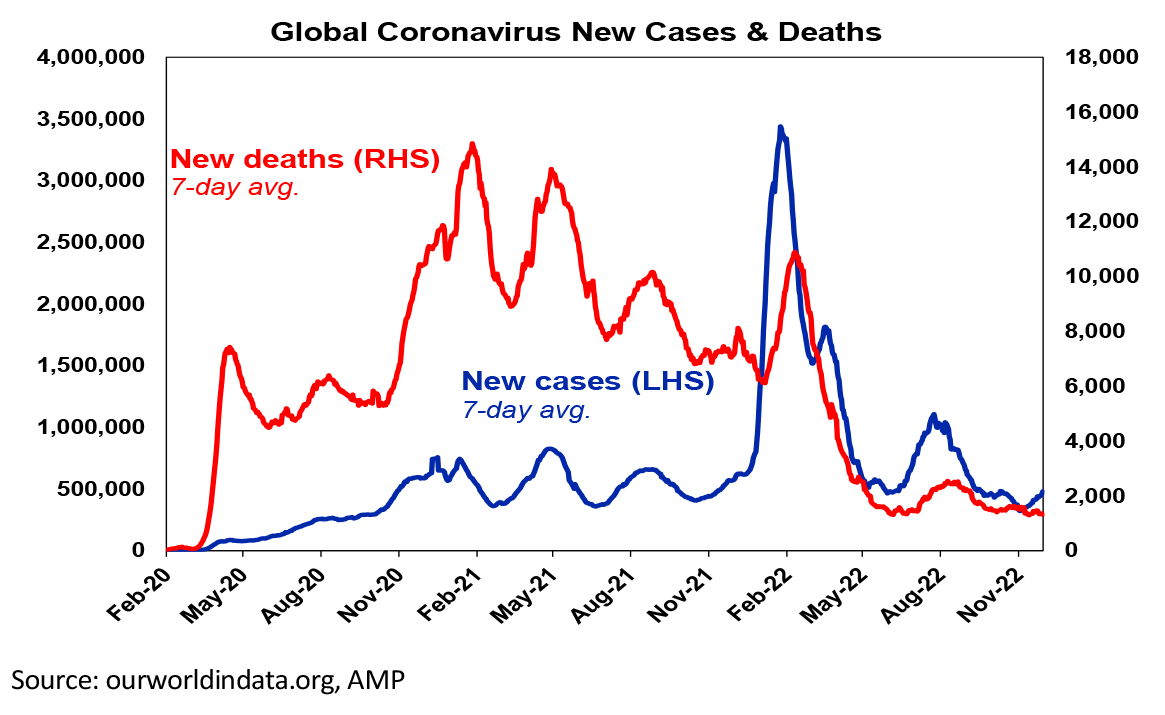

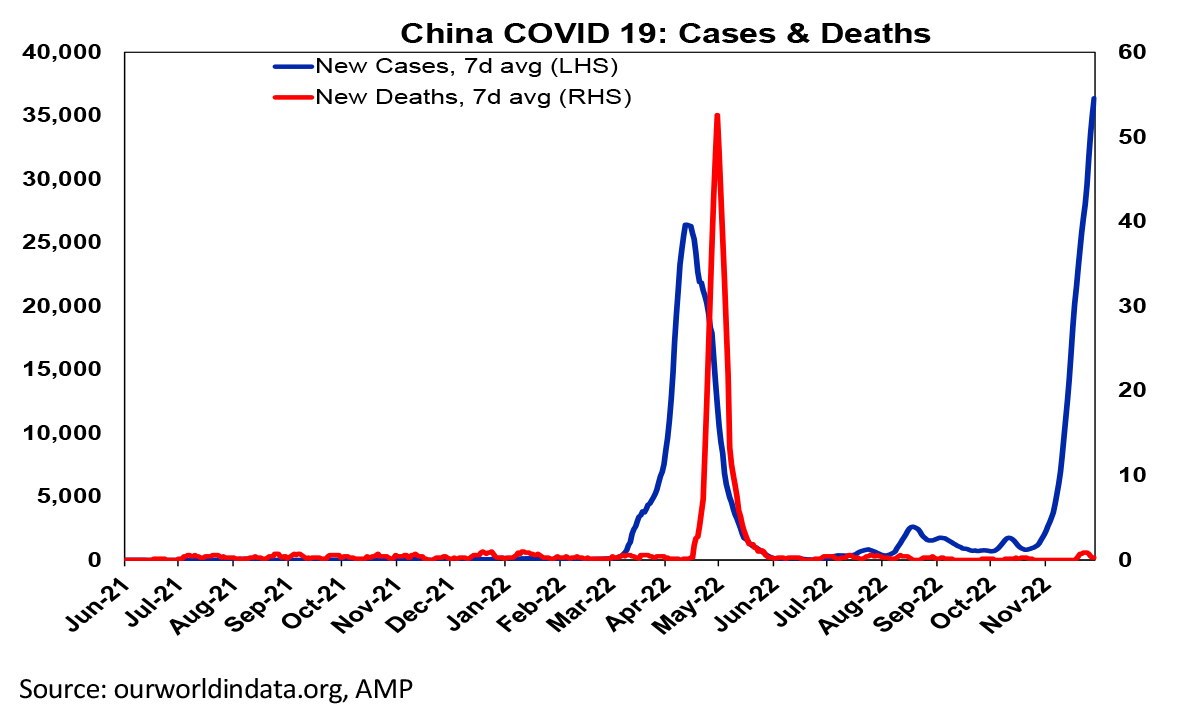
China is relaxing its Covid rules. New cases in China have continued to surge and while this and widespread protests against China’s zero-Covid policies have added to uncertainty about the Chinese economic outlook, so far the protests along with stretched resources and a desire to minimise the economic cost are driving an acceleration in the relaxation of Covid rules. In particular, the Government appears to be accelerating the vaccination of the elderly, China’s top Covid fighting official said that its strategy was entering a new phase with Omicron less harmful and more Chinese getting vaccinated, Guangzhou eased its zero-Covid rules as did Beijing letting some infected people isolate at home.

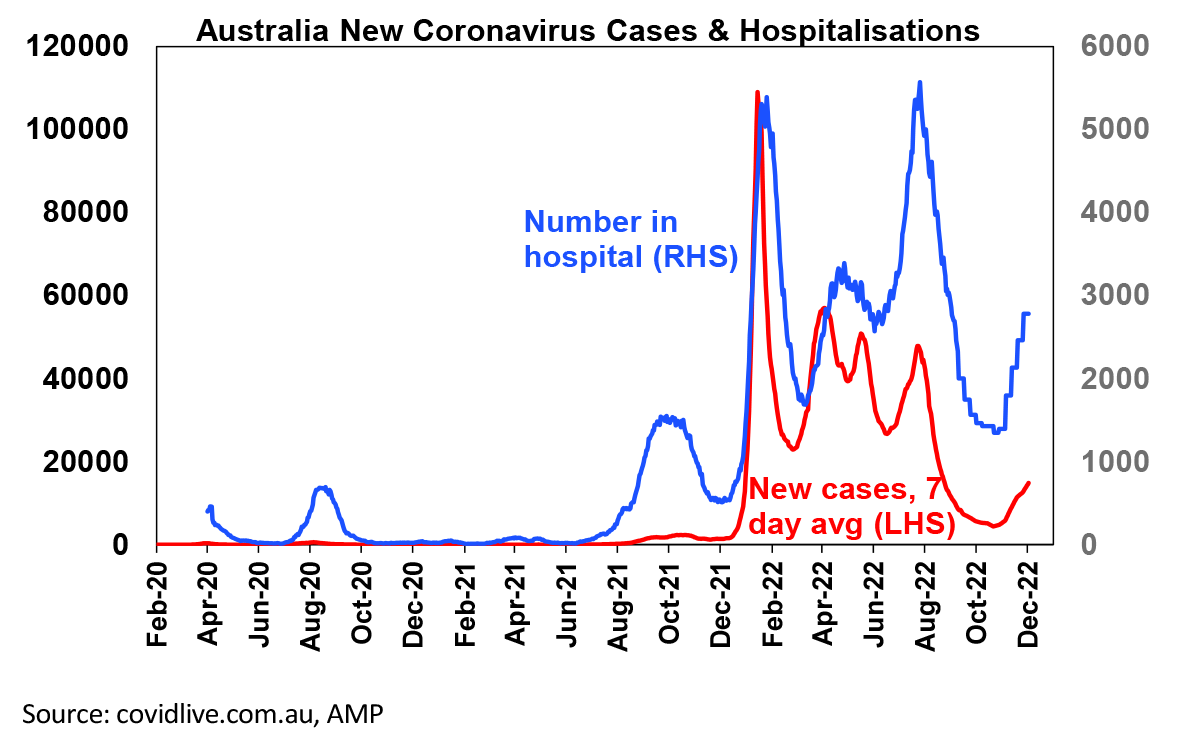
New cases and hospitalisations are still rising in Australia, but the new Omicron variants do not appear to be more harmful.

Economic activity trackers
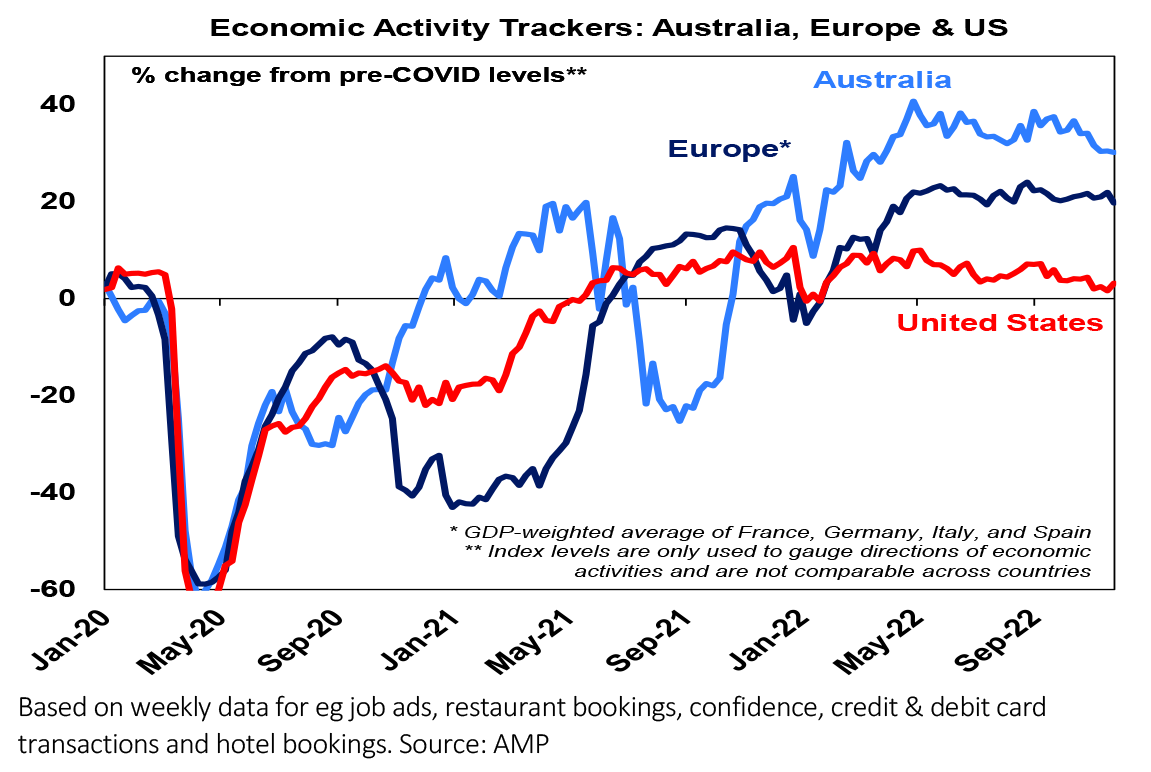
Our Australian and European Economic Activity Trackers fell over the last week, but our US Tracker rose. Economic momentum continues to show overall signs of slowing.

Major global economic events and implications
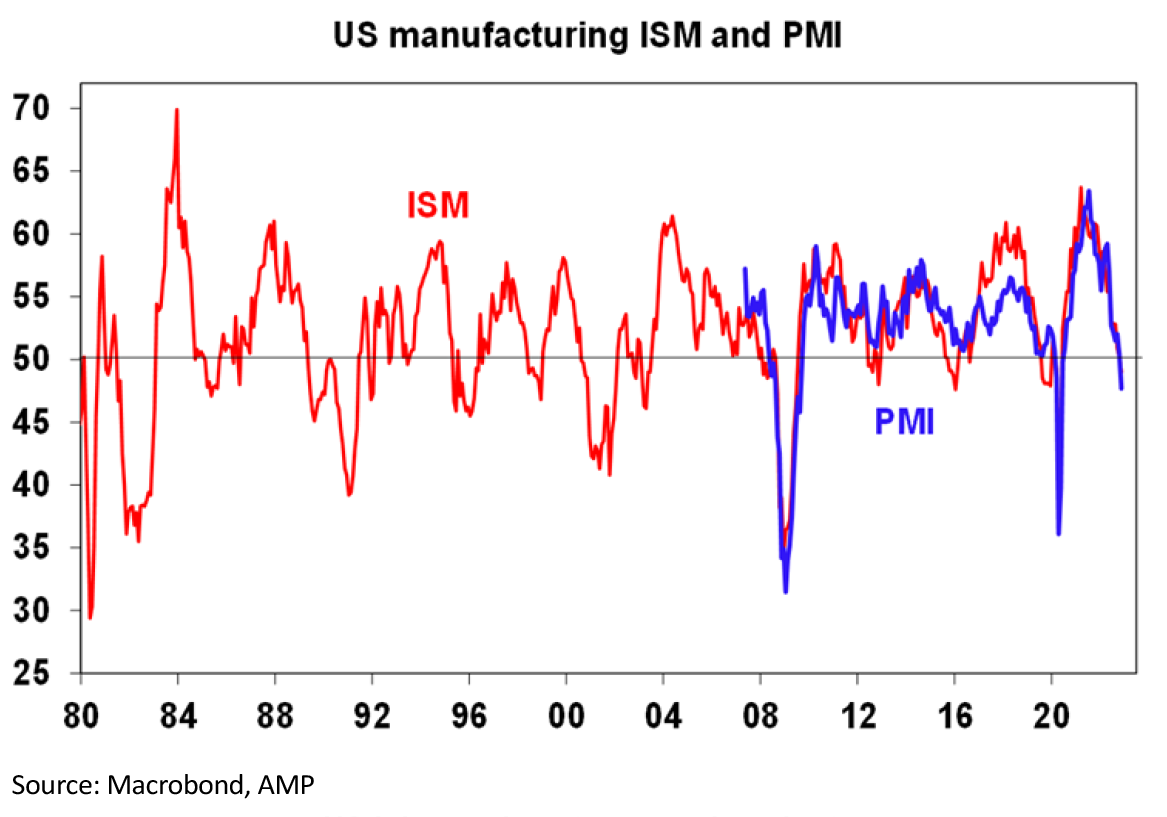
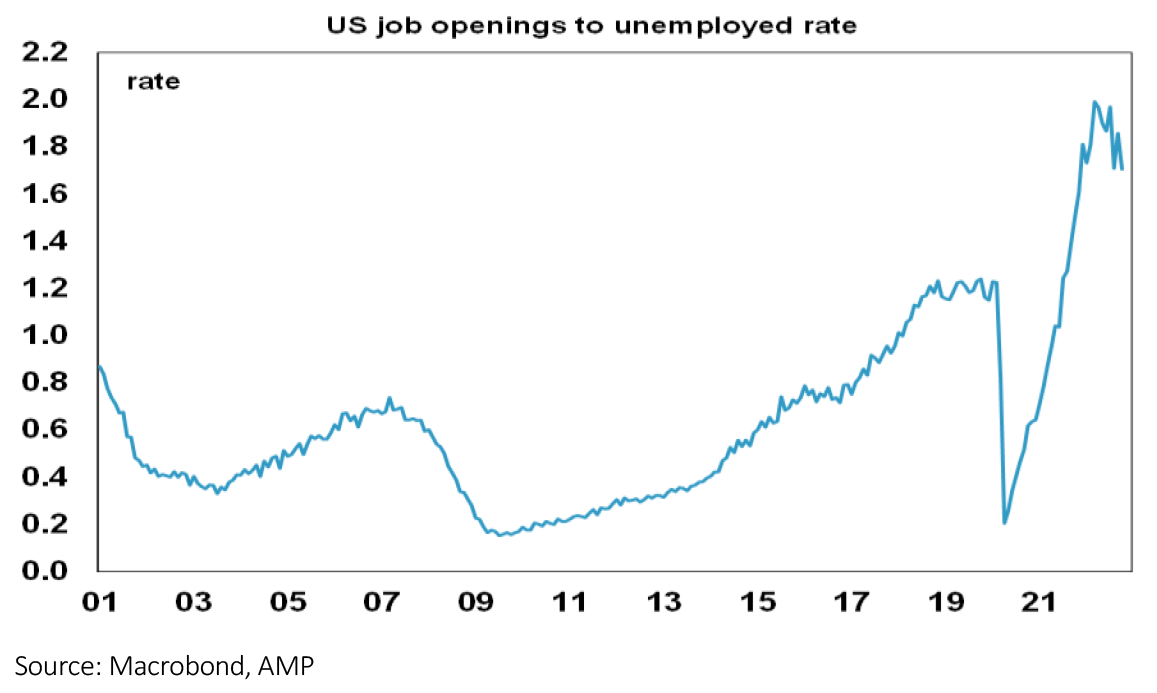
US economic data was mostly weak. June quarter GDP growth was revised up slightly & October consumer spending was strong, but falls were seen in consumer confidence, the November ISM manufacturing conditions index, pending home sales and home prices. Job openings, quits and new hiring fell and while initial jobless claims fell continuing claims rose as did the Challenger survey off layoffs, all of which suggests the jobs market is cooling, albeit it’s still tight. Core personal consumption deflator inflation fell further to 5%yoy adding to confidence that inflation has peaked as did a further fall in price and cost pressures in the ISM survey.


Eurozone economic confidence improved slightly in November, consistent with other data indicating Europe is holding up a bit better than expected. Meanwhile, CPI inflation fell back to 10%yoy (from 10.6%yoy), its first slowing in 18 months, helped by lower energy prices, but core inflation was flat at 5%yoy. This may see the ECB drop back to a +0.5% hike this month (from +0.75%).
Japanese October jobs data was little changed, but retail sales, consumer confidence and industrial production were weaker.
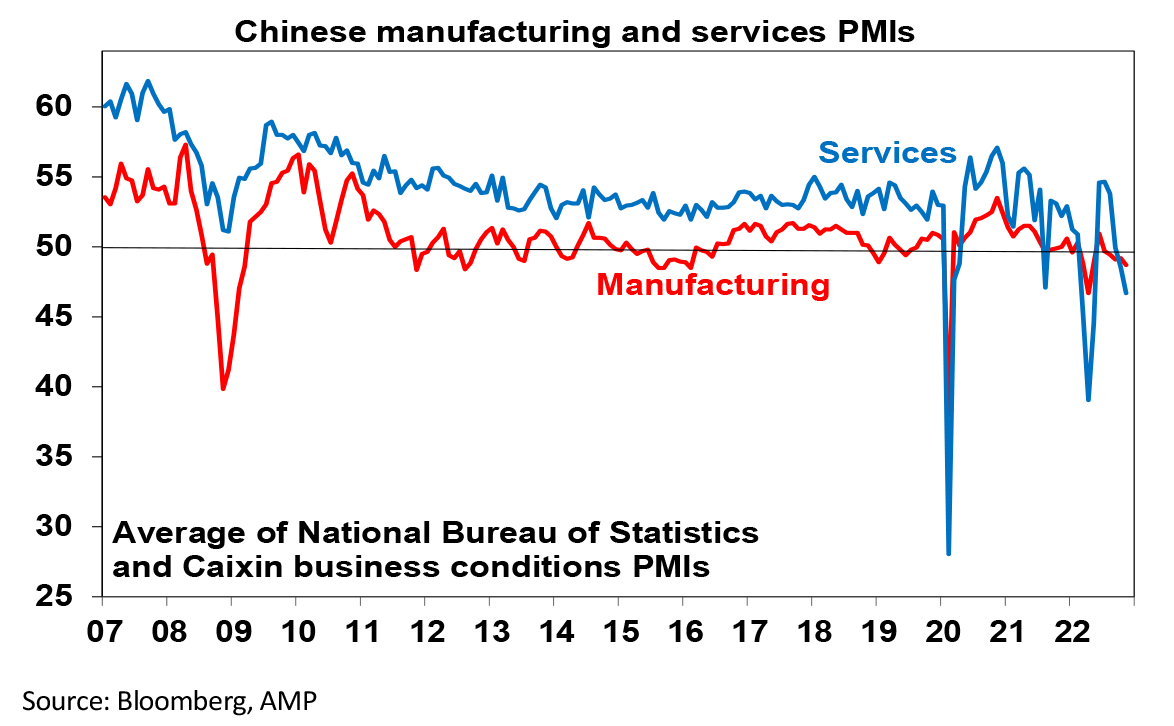
Chinese business conditions PMIs fell further on average in November as rising Covid cases and restrictions impacted.

Australian economic events and implications
Australian economic data points to a slowing in economic growth. While September quarter construction rose 2.2%qoq, a 0.6% fall in business investment along with soft real retail sales and a likely detraction from net exports point to soft September quarter GDP growth. On top of this, retail sales fell in October and are now falling in real terms (albeit Black Friday and Cyber Monday sales might provide a temporary boost, but some reports suggest they have been soft), building approvals fell sharply in October, housing finance is continuing to fall, credit growth is slowing and ongoing falls in home prices will drive a negative wealth effect for consumer spending next year. This is all consistent with a slowdown in GDP growth to around 1.5%yoy next year.
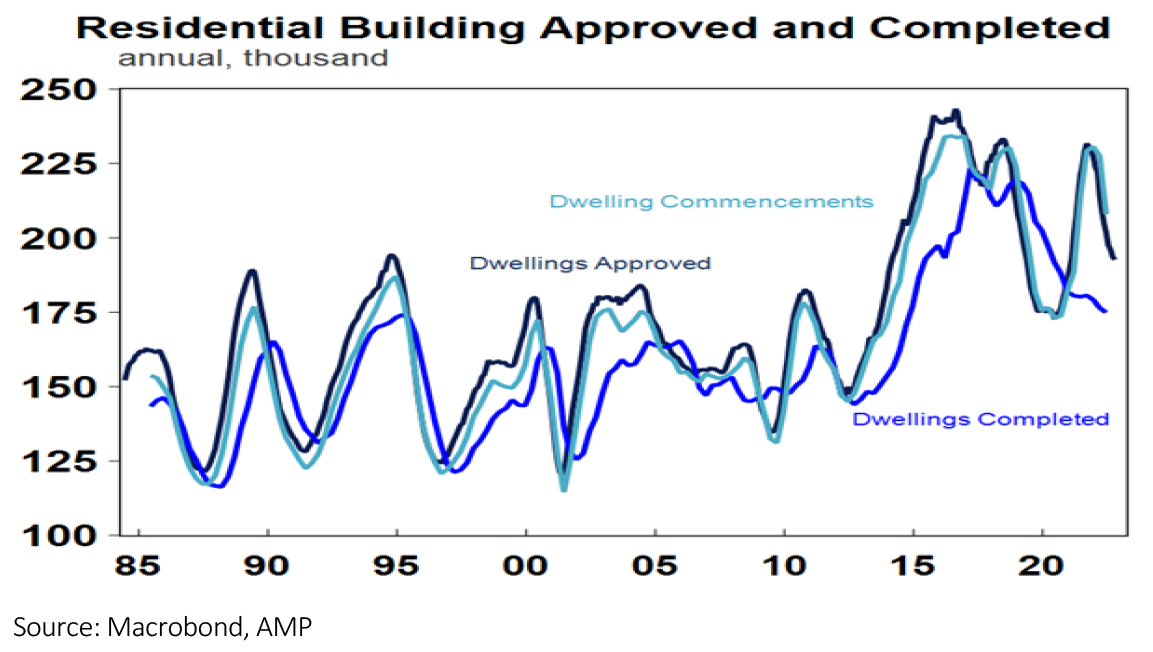
However, we remain of the view that recession will be avoided partly because there remains a large pipeline of dwelling approvals yet to be completed which means that while residential construction may slow a bit it probably won’t collapse.

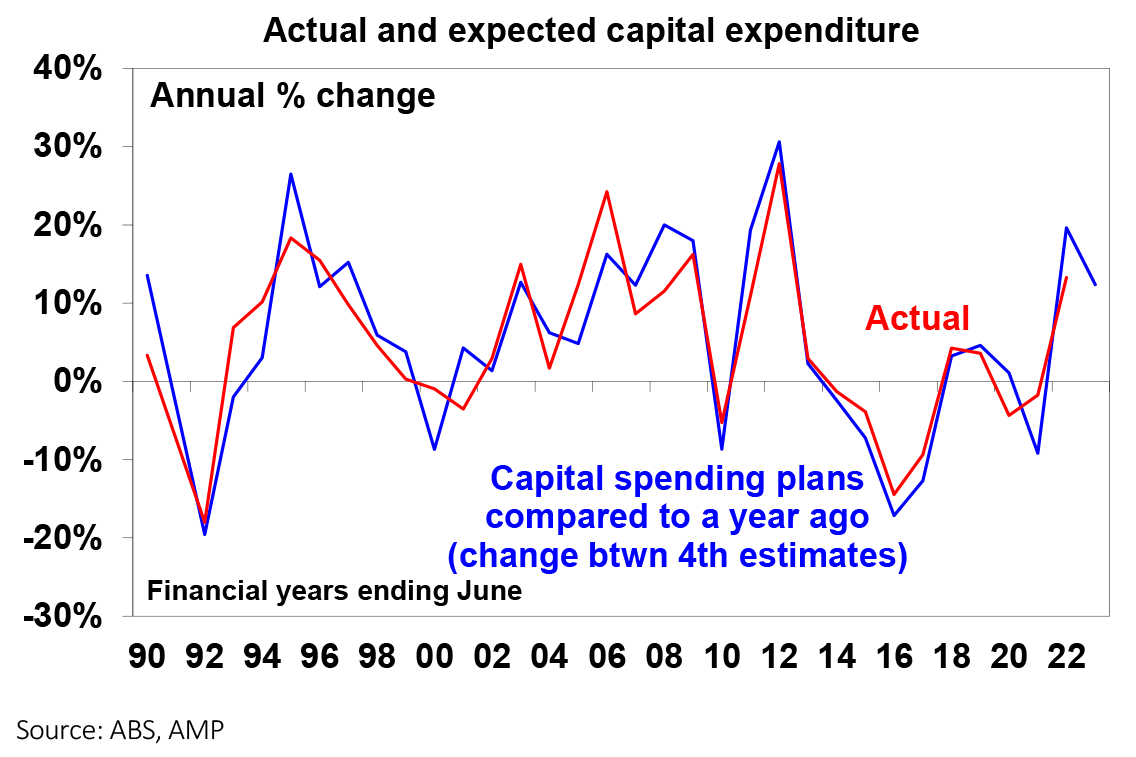
Second, the business investment outlook remains positive with capex plans pointing to a solid rise in investment over the next year.

Third, tentative signs of a peak in inflation referred to earlier in this note add to confidence that the RBA won’t have to crash the economy and that the cash rate is near the peak.
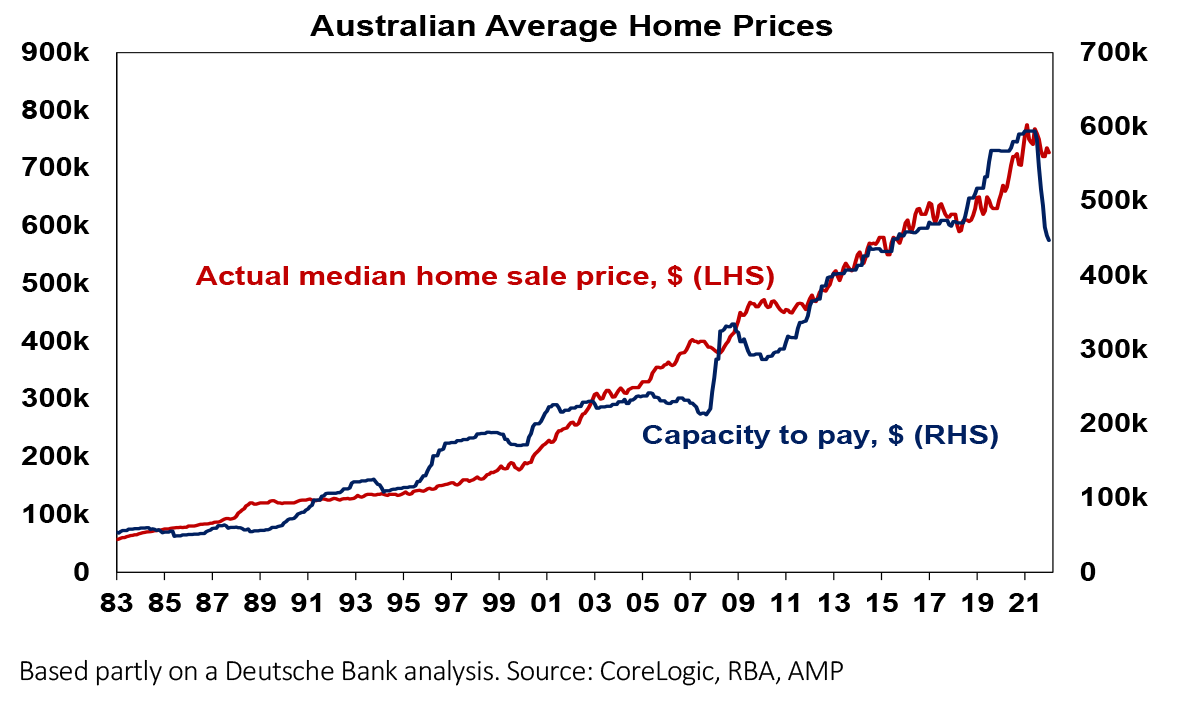
Home prices fell another 1% in November based on CoreLogic data, with more falls likely to come. While some cities have seen a slowing in price falls it’s doubtful that this this signals an imminent upswing in property prices. Its common for price falls to wax and wane in downturns, the impact of rate hikes is still feeding though with a bit more to go and the “fixed mortgage rate cliff” next year along with a sharp slowdown in the economy and rising unemployment risks a rise in distressed selling with demand remaining weak. Property prices are yet to fully catch down to the 25% or so plunge in new buyer’s capacity to pay for a property. The next chart shows actual home sales prices compared to an estimate of what a buyer – with a 20% deposit, average full-time earnings and mortgage payments assessed at 28% of their income – can afford to pay for a home. Its clearly fallen very sharply this year after years of improvement on the back of the falling trend in interest rates. As a result, we continue to expect a 15 to 20% top to bottom fall in national average home prices out to the September quarter next year, of which we have so far seen about 7%.

What to watch over the next week?
In the US, the services conditions ISM index for November (Monday) is likely to slow (from 54.4 in October) and producer price inflation for November (Friday) is likely to show a further easing in inflation pressures.
Chinese trade data for November is likely to see a further slowing in exports and imports & inflation data (Friday) is likely to slow further.
In Australia, the RBA is expected to hike rates again on Tuesday by another 0.25% taking the cash rate to 3.1%, making it eight rate hikes in a row totalling 300 basis points. This will exceed the 1994 tightening cycle (of 275 basis points but spread over 5 months) and will equal the 2002-2008 tightening cycle (which amounted to 300 basis points but spread over 71 months). The RBA has referred to the prospect of a pause in rate hikes on six occasions in the last month and the dip in monthly inflation in October means that a pause is possible and would not be surprising. But another rate hike is more likely because: the RBA has said that it expects to raise rates further; recent wages and jobs data have been stronger than expected; while the October CPI rise was softer than expected it doesn’t include the impact of rising gas and electricity prices and so likely understates inflation; there is a rising risk of a “prices-wages spiral”; and the RBA doesn’t meet in January which argues against a pause in December. But given RBA concerns about the lagged impact of rate hikes, next year’s “fixed rate mortgage cliff” and increasing evidence of slowing global and Australian growth (with rising recession risks) another 0.25% hike is most likely as opposed to a reversion to a 0.5% hike. A pause remains likely from early next year with the cash rate likely to peak in the low 3’s – our base case is that 3.1% is the peak, but the risk is 3.35% given the rising risk of excessive wages growth. But either way, by early next year there should be enough evidence indicating growth is slowing sharply and inflation is peaking enabling the RBA to go on hold. Consistent with this we expect the RBA to soften its forward guidance to allow for further tightening as well as a pause going forward.
A 0.25% rise in the cash rate, if passed on to mortgage holders as we expect, will add roughly another $80 to the monthly payment on a typical $500,000 mortgage which will take the total increase in monthly payments since April to $910 a month or $11,000 a year. A 0.5% hike will add about $160 a month taking the total increase since April to $995 a month or $11,940 a year. This will likely hit spending in the months ahead.
On the data front in Australia, September quarter GDP (Wednesday) is likely to show a slowing in GDP growth to 0.3%qoq (from 0.9%qoq in the June quarter) reflecting reasonable growth in business and dwelling investment but a slowdown in consumer spending and a negative contribution from net exports. Annual GDP growth will spike to 5.9%yoy but this is due to the base effects flowing from the contraction in the economy a year ago due to lockdowns. Trade data for October (Thursday) is likely to show a lower but still large trade surplus.
Outlook for investment markets
Shares are not completely out of the woods yet as central banks continue to tighten, uncertainty about recession remains high and geopolitical risks continue. However, we are now in a favourable part of the year for shares from a seasonal perspective and we see shares providing reasonable returns on a 12-month horizon as valuations have improved, global growth ultimately picks up again and inflationary pressures ease through next year allowing central banks to ease up on the monetary brakes.
With bond yields likely having peaked for now, bond returns should continue to improve.
Unlisted commercial property may see some weakness in retail & office returns & the lagged impact of higher bond yields is likely to drag down unlisted property and infrastructure returns.
Australian home prices are expected to fall 15 to 20% top to bottom into the September quarter next year as poor affordability & rising mortgage rates impact. This assumes the cash rate tops out in the low 3’s but if it rises to around 4% as the money market is assuming then home prices will likely fall 30%.
Cash and bank deposit returns remain low but are improving as RBA cash rate increases flow through.
The $A remains at risk of a pull back in the short term as global uncertainties persist and as the RBA remains a bit less hawkish than the Fed. However, a rising trend is likely over the medium term as commodity prices ultimately remain in a super cycle bull market.
By Shane Oliver