
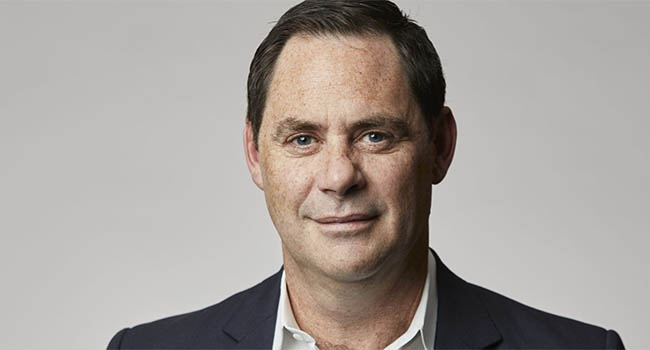
Hugh Selby-Smith
Market optimism is increasingly fuelled by rising debt and the belief that authorities will insulate investors from harm, rather than economic durability, yet opportunities remain for investors willing to rethink portfolio construction, Hugh Selby-Smith, co-CIO at Talaria Capital says.
As the global economy moves away from decades of deep globalisation and into a new monetary regime characterised by higher debt and greater government intervention, investors should prioritise short duration equities, companies with strong balance sheets, investment in real assets and ensuring portfolio diversification.
“The defining theme for financial markets is the transition in monetary regimes,” Selby-Smith says.
“Earnings growth in large-cap US equities has driven optimism, but that optimism is increasingly disconnected from the realities sustaining those profits.”
Governments are playing a more interventionist role in managing their economies, often pursuing political objectives at the expense of long-term economic discipline.
Selby-Smith says the scale of deficit spending and debt accumulation is frequently overlooked, despite its significant role in supporting growth in the corporate profit pool.
In the United States, interest payments on public debt are nearing USD 1 trillion, while total corporate tax receipts amount to just USD 452 billion. Selby-Smith says once with mandatory programs consuming most of the budget, even the most prominent policy initiatives face severe constraints.
“The gap between the ambitions of the now defunct Department of Government Efficiency (DOGE) and its limited achievements highlights how difficult it is for governments to meaningfully reduce spending,” he says.
“It’s less Department of Government Efficiency, and more Dead On Arrival.”
Despite these pressures, US equity valuations sit at the extreme end of their historical range, prompting investors to resist conformity and reassess how portfolios are constructed.
“Valuation is one of the few indicators with demonstrable explanatory power for long-run returns,” Selby-Smith says.
“From a shorter-term perspective, headline valuations for the S&P 500 are stretched.”
Over the past decade, the US corporate profit pool expanded by approximately USD 1.7 trillion, with almost ninety percent of that increase explained by growth in the deficit. Of nearly 35 million businesses, the 500 largest listed US companies captured around 70 percent of that growth, or roughly USD 1.2 trillion.
Selby-Smith says this concentration has been building for decades and reflects a market increasingly reliant on a narrow set of companies.
“Current conditions represent a classic peak-on-peak set-up, with elevated earnings multiples resting on unusually high profit margins,” he says.
“Governments are more likely to respond to rising debt through financial repression than austerity or growth, keeping interest rates below inflation to reduce the real value of government debt.”
Despite this backdrop, Selby-Smith says investors can still build portfolios with reasonable prospective risk-adjusted returns.
“At a minimum, elevated valuations and high concentration should prompt investors to ask where diversification is possible,” he says.
“There is value beyond expensive headline indices and mega-cap stocks. Even before drilling down into individual securities, the opportunity set outside US large caps offers a materially better trade-off between risk and expected real return than headline US indices today.”