

Specialised advice strategies can manage the challenges associated with running a private practice.
Private practice is a common – and in many cases dominant – career path for members of many traditional professions, including the law, medicine, accounting, and architecture. To the extent that many professionals are effectively small business owners, and often high earners, they face a number of unique and complex challenges which in turn demand more specialised life insurance advice and solutions.
In this article, we will examine the nature of risks faced by professionals in private practice, and the strategies that can be employed to help mitigate these risks, and which in turn allow individual professionals to enjoy the fruits their labour as their practices flourish.
Private practice – a popular path
For many professionals, private practice is the ultimate career goal, and a deserved reward for the years of study, internships, and the formative years of doing the hard yards.
Some professions lend themselves more to private practice than others. For example, a 2020 report prepared for the Law Society estimated that, of 83, 643 practicing solicitors, 67% worked in private practice[1]. This compares with the 49.7% of medical practitioners who worked in the private sector, according to 2018 figures from the Department of Health[2]. Both CPA Australia[3] and the Institute of Chartered Accountants[4] each have more than 100,000 members, many of whom would be represented in the 35,000 businesses providing accounting services in Australia. And of the 12,000 members of Australian Institute of Architects[5], one imagines a significant proportion would be in private practices.
Many of these private practices are likely to be small too (for example 92% of private practicing solicitors are in firms with 1 – 4 partners[6]), meaning as clients they are not only members of strictly regulated professions, they are not only high-income earners, but they are also small business owners, bringing forth a whole extra layer of complexity.
High level life insurance considerations as high earning professionals
To the extent that the earning potential of professionals would – on average – exceed most non-professional individuals, securing appropriate cover in the right amounts can be challenging. This is particularly true of income protection, where the impact of APRA mandated restrictions on product and benefit design will be more keenly felt by those protecting higher incomes.
Across the market, different insurers have interpreted APRA’s guidelines differently, and wide variations can be found in both the replacement ratios (the maximum proportion of annual income you are allowed to insure) and maximum monthly insurable benefit.
Replacement ratios as low as 50% and 60% are not uncommon, with 70% being the usual maximum. Additionally, some products only allow a maximum insured benefit of $30,000 per month, and for many professionals this will fall well short of their income requirements.
For professionals with annual incomes of $550,000 or more, advisers will need to seek out more specialised offerings (some of which are only available to members of strictly defined professions), with higher monthly benefits, and, in some cases, time limited ‘boosted’ replacement ratios for pre-defined events.
The merits of keeping existing, legacy, income protection policies in force, may also warrant special consideration in these circumstances, even in the face of dramatic premium increases.
Any gaps in protection are amplified for higher income earners, which is why business expenses cover become even more important for professionals running their own practice (as a sole practitioner or in partnership with others).
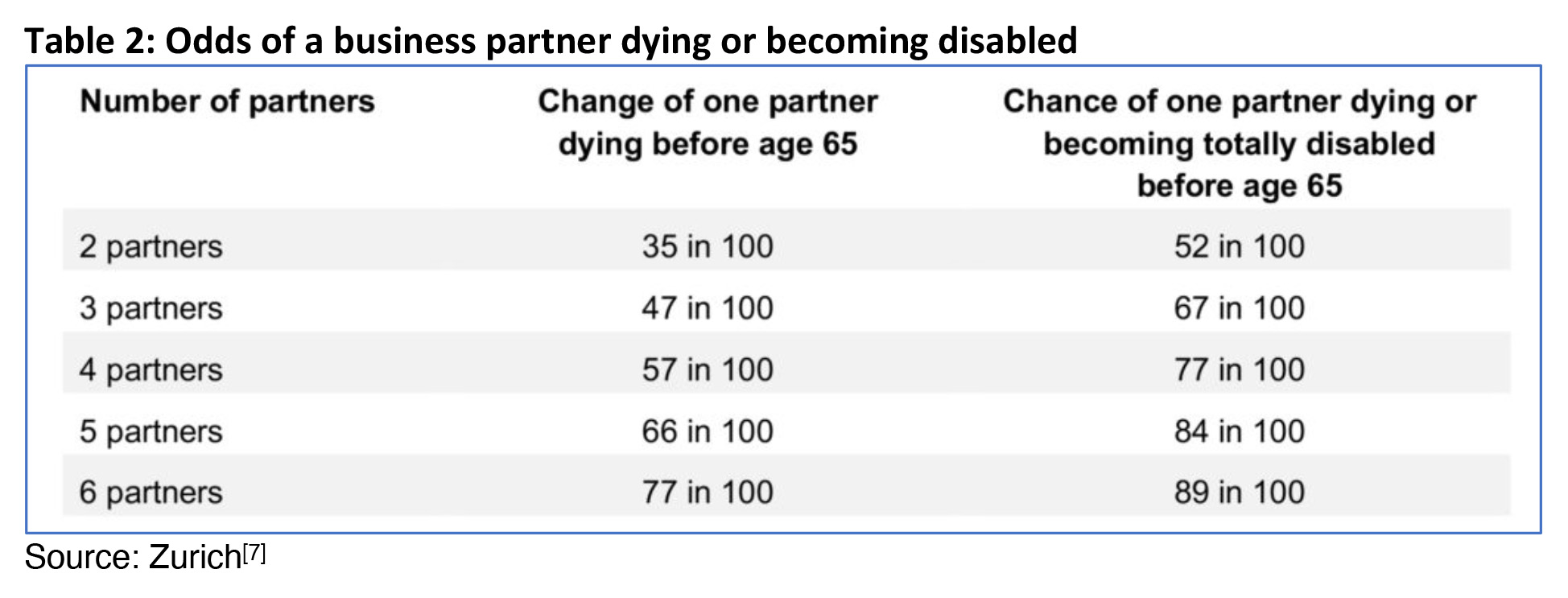
This is because the value of income protection cover can be severely eroded if by fixed business expenses which continue in disablement, even when the client’s income has stopped.
Typical continuing expenses for a professional practice could include:
- non income generating employee wages
- rent
- equipment leasing
- telephone, internet, and other utilities.
Without business expenses cover, these expenses would need to be paid from any income protection benefits, eroding the ability of those benefits to the client’s daily living expenses, such as the rent or mortgage, groceries, school fees, credit card bills and many more.
The case study in the table below provides a powerful example. It is based on a single partner drawing $25,000 in salary per month from a practice, and with $11,000 per month in ongoing business expenses.

Expenses which can typically be covered under Business Expenses insurance – the premiums for which are normally 100% tax deductible – include:
- wages of non-income generating employees
- rent on premises
- equipment and vehicle leasing
- telephone, internet, and other utilities
- interest on loans
- net cost of hiring a locum.
The definition of disablement – as it applies to TPD and Income Protection cover – is another crucial consideration when putting in place a protection strategy for high earning professionals.
A major priority for professionals is to ensure any disablement claim is assessed against their ability to perform the unique aspects of their own, specific, occupation, rather than any non-professional roles they may be capable of performing (‘own rather than ‘any’).
To that extent that many new era income protection policies revert to ‘any occupation’ after two years on claim, and TPD through super can only operate on an ‘any occupation’ basis, strategies which link super and non-super TPD benefits are thus particularly relevant for professionals, as is the use of trauma cover to provide protection for the most serious health events.
(For this same reason, any group life coverage a professional may have had in place from early in their career is unlikely to be suitable.)
It needs to be remembered that although the cash flow advantages of paying premiums from existing super balances – rather than out of pocket – can be especially tempting for professional clients with larger premiums, this must be weighed against the fact that premiums deducted from existing funds will erode retirement balances, whilst new contributions to risk only superannuation policies (will count towards concessional contribution caps, severely limiting the ability to make extra contributions for investment purposes.
Jumbo lump sum cover
In addition to larger incomes, professionals are also likely to have more expensive lifestyles and higher debts, meaning their lump sum cover needs will also be higher than average.
Although many insurers claim there are no upper limits on what can be applied for, in reality not all have an appetite or ability to handle ‘jumbo’ cases – and it is worth seeking out an insurer who is experienced in dealing with ultra-large sums insured.
Considerations as business owners
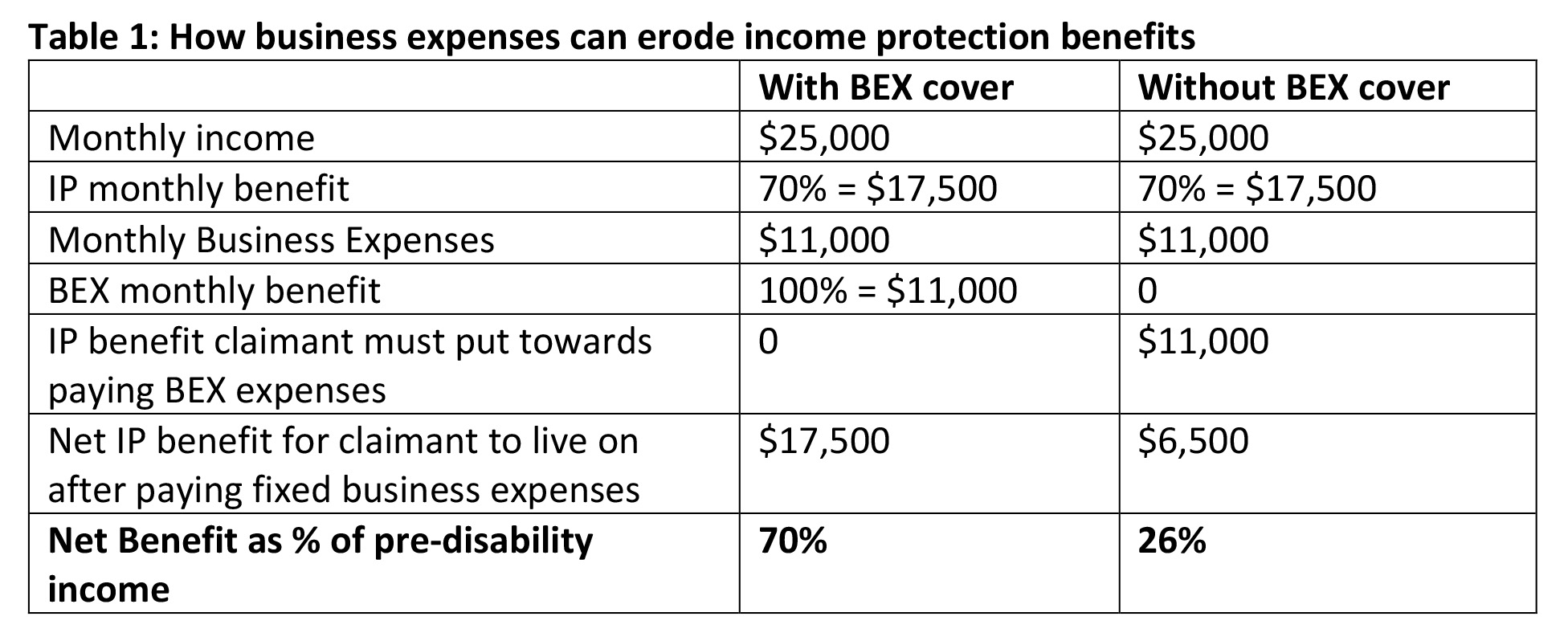
Running a private practice creates additional complexity for professionals, particularly if there are multiple partners or ‘key people’ in the business. Some of this comes down to pure statistical inevitability – the more partners or key people, the more likely it is that one will die or become disabled. In this regard, the table below makes for sobering reading:

There are many adverse outcomes that can result when a key person within the business dies or becomes disabled:
- loss of revenue in the period following a business owners’ death or disability
- suppliers who are concerned about credit risk and suspend the provision of goods/services
- banks and credit providers suspending credit and/or calling in debts; and
- lack of alignment and poor relationship between surviving family members and/or surviving co-owners/partners over control and future of business.
Specialised strategies that therefor become relevant to professional practices include the use of life insurance for:
- revenue protection
- asset protection
- ownership protection (and business succession), and
- estate equalisation
Revenue protection
The loss of a partner (or indeed any key person) makes a decline in revenue almost inevitable, especially when that person is a revenue generator because of their skill set and role within the business.
But there can be indirect revenue impacts as well. Finding, recruiting, and training a replacement can be very time consuming, – and very costly – taking other key people in the business away from their customer facing roles. The new recruit may take years to reach the capacity of the person they are replacing, so the revenue impact may last for a long time. Staff morale may be impacted, such that their ongoing capacity to serve and meet customer demand, and generate revenue, may be adversely affected.
A life insurance-based Revenue Protection strategy, which can include the use of death, TPD, business expenses and trauma cover, is designed to provide business with cash to compensate for this loss of revenue.
From a tax perspective, premiums for insurance for revenue protection purposes (which must be comprehensively documented) will generally be tax deductible to the business, while claim proceeds will be assessed as business income.
Asset/business loan/debt guarantor protection
The death or disability of a business owner can put a significant strain on the ability to repay business borrowings, which can threaten the ongoing provision of credit and bring personal guarantees (for example, those secured against the business owner’s family home) into play.
Asset protection – sometimes also referred to as Debt Guarantor protection or Business Loan Protection – ensures that the business borrowings (and/or owners’ guarantees) can be extinguished or reduced in the event of death or disability, freeing up cash flow, and importantly, preserving a good credit rating.
Asset protection strategies are generally based on lump sum cover types.
Ownership protection and business succession
The complexity and diversity in personal circumstances of business partners and their families make proper succession planning – with life insurance at the core – vital. There are many benefits to a properly planned succession plan, for both the remaining business partners, and the outgoing owners (and their estate):
For the remaining partners:
- eliminates claims to management rights of the practice by the estate of departing partner
- prevents unwanted introduction of new owners with incompatible philosophies and agendas
- protects against control of the business being ‘frozen’ because of probate difficulties or legal restrictions if an owner loses legal capacity
- provides assurance of the opportunity to buy shares from an affected partner should they suffer a tragic event
- predetermines funding for the purchase, as well as the price of the business
- assures continuity of the business with minimal disruption
- provides security for suppliers, staff, creditors, and other stakeholders.
For the outgoing owner or their estate:
- removes pressure to remain involved in the business
- assures purchasers will buy the business
- provides fair price for the business interest
- reduces delay between suffering a tragic event and receiving funds.
Business Succession plans are generally supported by Buy/Sell agreements, and there are many complex considerations that go into their preparation, including tax optimisation, business valuation, and business structuring, as well as the associated estate planning objectives of individual partners and their families. As a result, Business Succession Planning is often a process which will see advisers collaborating with accountants and lawyers.
Business Succession planning – case study
Louise and Ben ran an award-winning architectural practice that was in its 8th year of operation, employed 18 people, and was becoming very profitable.
Just when everything was going perfectly, tragedy struck, when Ben was diagnosed with late-stage cancer and died just three months later. Ben left all of his assets to his wife Rebecca, including his interest in his practice.
Rebecca had never been involved with the practice and wasn’t an architect herself, but she needed to convert her half ownership into usable funds; she had relied on Ben’s salary, and she needed money to support herself and their three children.
Louise would have been happy to pay Lisa her share of the value of the business if:
- She knew what the business was worth.
- Rebecca agreed with the value.
- Louise could find the money to pay her.
With a proper Business Succession plan in place, supported by life insurance, Rebecca could have then expected Louise to purchase her share of the business for an agreed predetermined price. Louise in turn could have required Rebecca to sell her share of the business to him for that predetermined price, which would have been in the best interests of both parties.
Estate equalisation for sole partner practices
A related strategy of particular relevance to sole partner practices is estate equalisation. Estate equalisation is about creating wealth to offset assets which are not easily divided in the case of the death of the owner.
There are a number of reasons why an asset such as a business creates difficulties in its division and distribution upon the death of the owner. These include the following:
- A business cannot usually be easily broken-up.
- It may not be commercially viable for the business if all beneficiaries were to receive a part of it.
- Continuing the business may not interest all or any of the beneficiaries.
- It may be difficult to convert the business into cash.
- A Capital Gains Tax liability may arise if, after receiving the asset, the beneficiary disposes of it.
- Even though the beneficiaries may be interested in continuing to operate the business, they may not have the knowledge and skills to do so.
Like Business Succession planning, Estate equalisation, will need to be supported by appropriate legal agreements and funding (e.g., life insurance).
In summary
A common career trajectory for qualified professionals is to move into private practice, bringing into play specialised life insurance products and advice strategies which reflect their higher-than-average cover needs, and the challenges they face as small business owners. These challenges relate to their role as key revenue generators within their practice, the ongoing nature of business expenses, and the challenges of equitably and appropriately transferring ownership entitlements upon the untimely death or disablement of a business partner.
By understanding how these solutions and strategies differ from mainstream approaches, advisers will be better equipped to help high earning professionals enjoy the fruits of their labour, confident that in the event of their death or disablement, their business will have the best chance of continuity, and their loved ones will be provided for and treated equitably.

