Investment markets and key developments
Apologies for the absence of the Weekly Market Update on Friday – due to the Microsoft Outlook outage we were unable to send it out. There is a danger in exaggerating the economic impact of the outage – as many of the affected activities will be made up for later and some may claim they got more work done due to the absence of email distractions. However, the global cost is still likely to run into many billions of dollars as email is central to economic activity these days. And the outage wasn’t just for a few hours – in my case it ran from around 5am Friday to around 10pm, ie 17 hours! Daily economic activity in Australia is around $9.3bn and if only 10% of that was disrupted it implies a cost of nearly $1bn. The wider issue it highlights though is the reliance on one provider for such a critical activity so I suspect there will be a lot of focus going forward on ensuring back ups and diversification – although that will be costly.
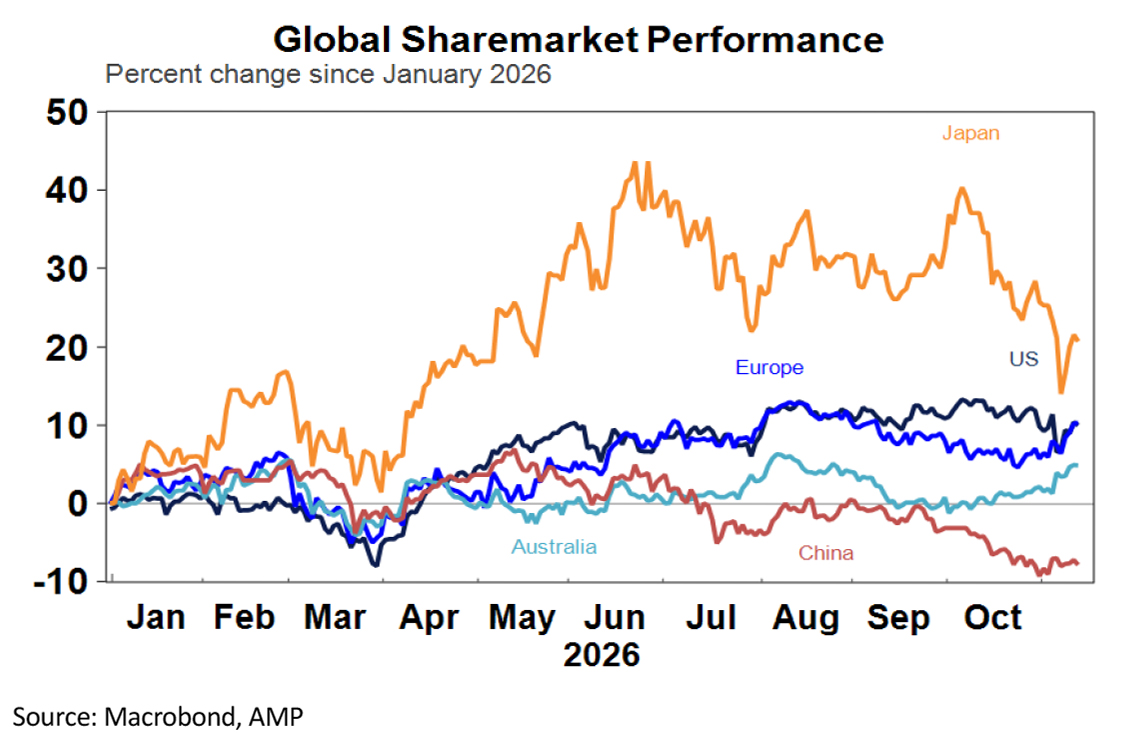
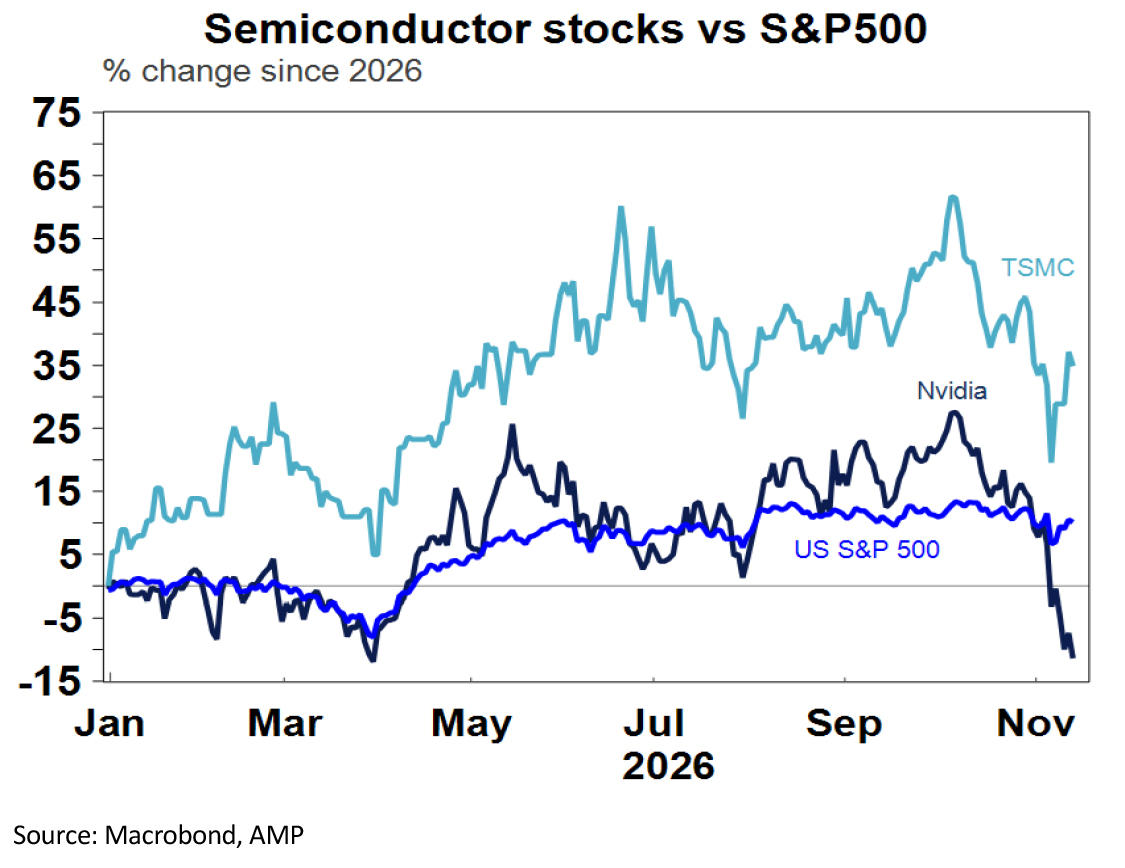
Global shares mostly rose over the last week led by a strong gain in US shares of nearly 2.5% helped by strong earnings, lower oil prices and dip buyers offsetting another bad US inflation report and the slump in Nvidia shares which weighed later in the week as its CEO departed. For the week US shares rose 2.5%, Eurozone shares gained 3.1% and Japanese shares rose 6.5%, but Chinese shares fell 0.9%. Australian shares also rose by 0.7% led by energy, industrial, IT and telco shares.

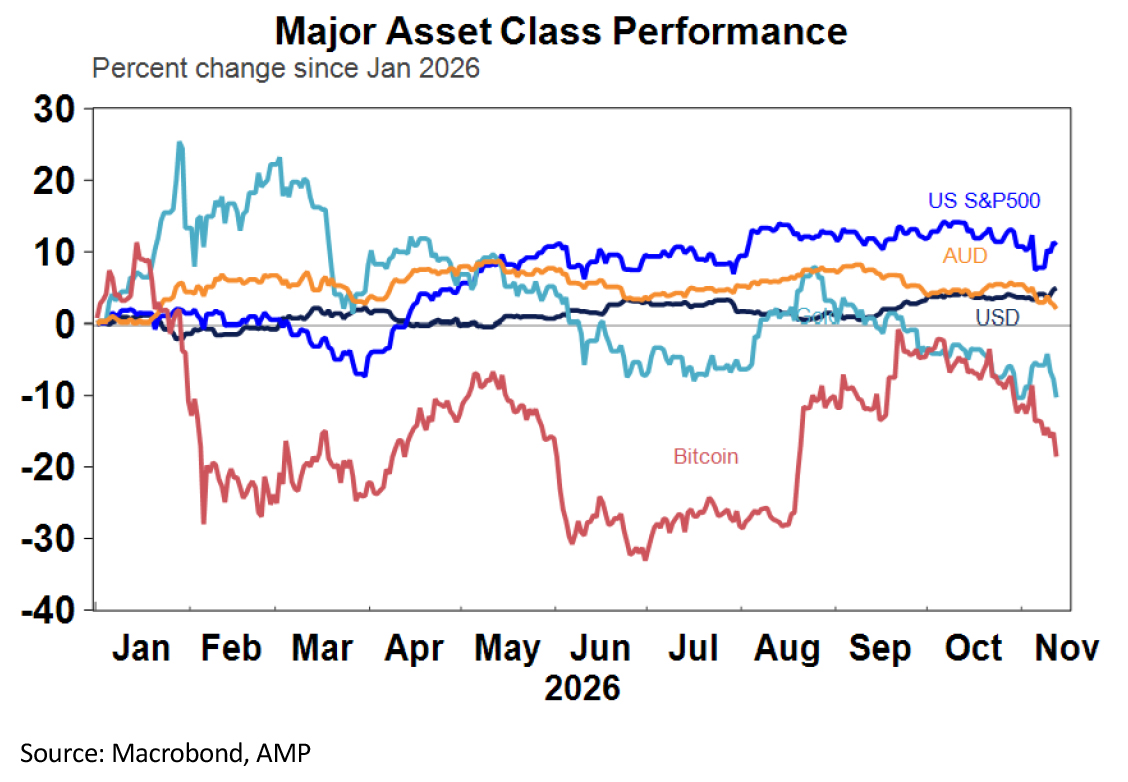
Gold, Bitcoin, metal and iron ore prices along with the Australian dollar all fell over the last week not helped by a solid rise in the US dollar on the back of increased expectations for Fed hikes after higher-than-expected US inflation data.

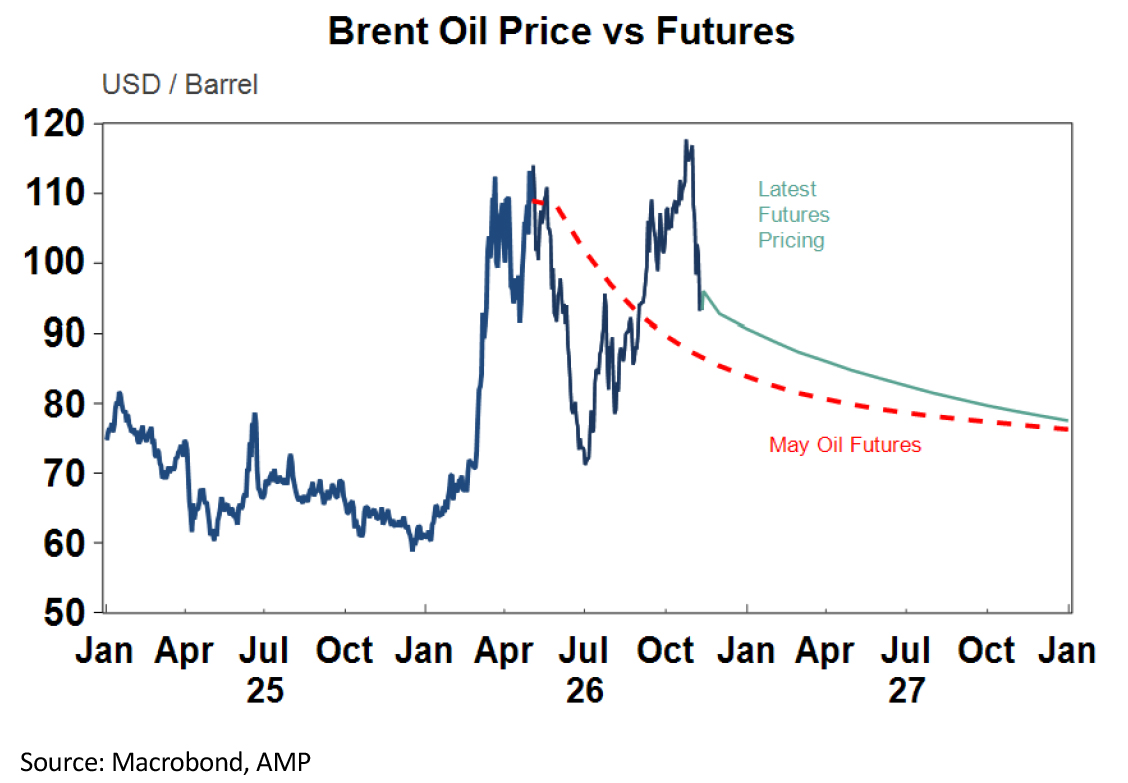
Oil prices intially fell further on the back of President Trump’s comment that signficant strikes on Iran were highly unlikely and on peace talk hopes but then bounced slighly as Trump said that the US does not need a deal with Iran. This would then leave ongoing uncertainty about the Strait of Hormuz and Iran’s nuclear program. The risk of another spike higher in oil prices remains high.

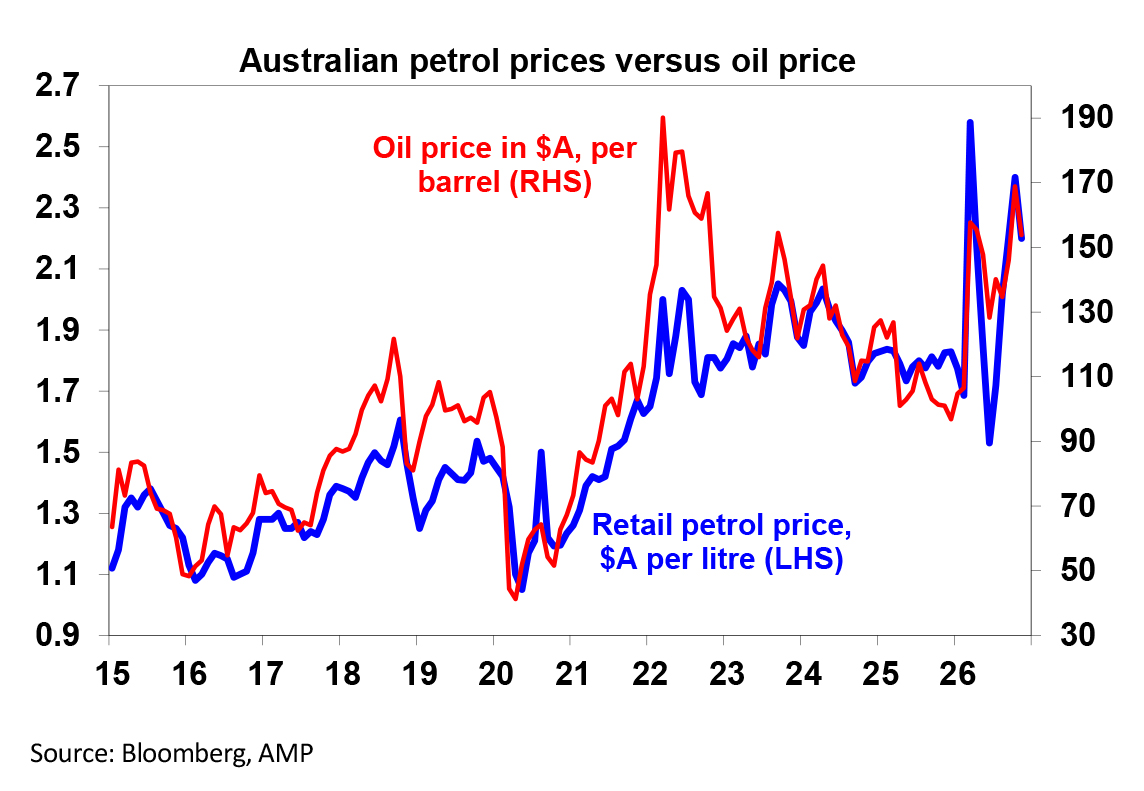
The fall in oil prices over the last two weeks though has seen Australian petrol prices fall around 20 cents a litre – but they remain high.

Bond yields rose over the last week on the back of ongoing inflation worries after the hot US inflation report fuelled expectations for more central bank rate hikes. The longer-term risks for bond yields remain on the upside though thanks to a combination of: the oil shock; central bank rate hikes; concerns that maybe the neutral short-term rate has moved up; worries about big budget deficits; corporate borrowing to fund data centre investment; and a rising trend in Japanese bond yields leading to a reversal of the so-called carry trade.
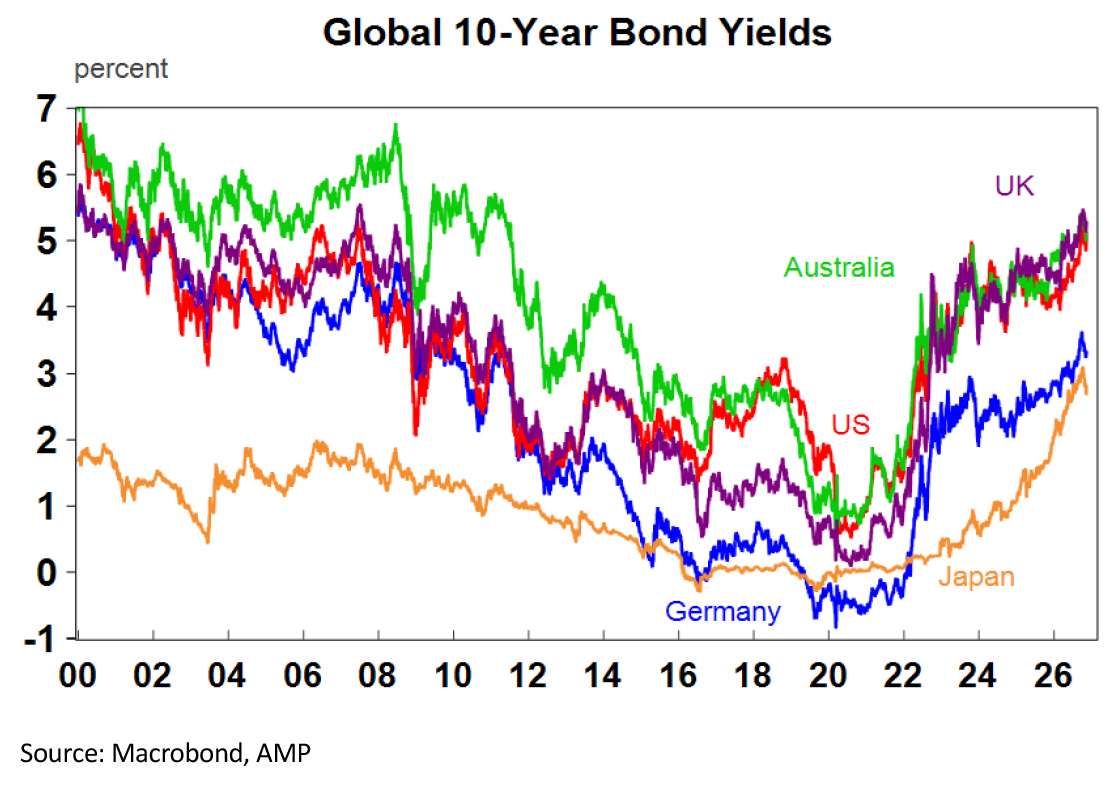

The risk of a correction in shares remains high with lots of things to worry about including: high and sticky inflation; the likelihood of more central bank rate hikes; excessive public debt; a rising long term trend in bond yields; AI bubble fears; concerns about more regulation and higher taxes after the US midterms; and slowing growth and rising rates in Australia.
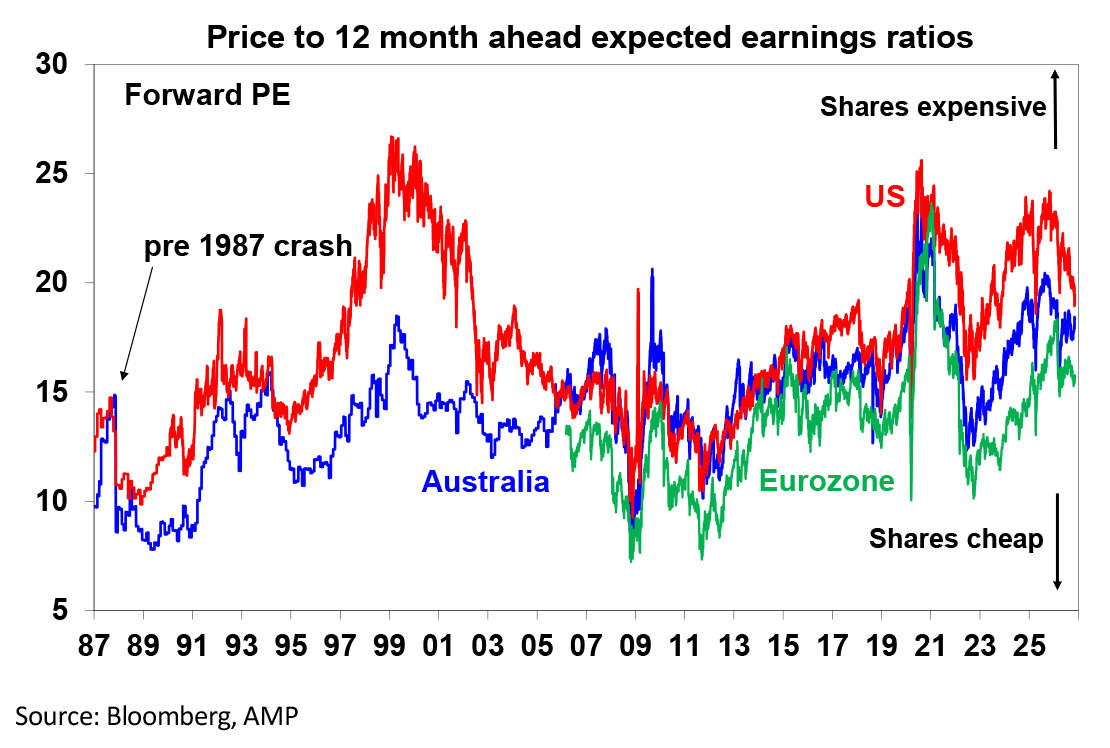
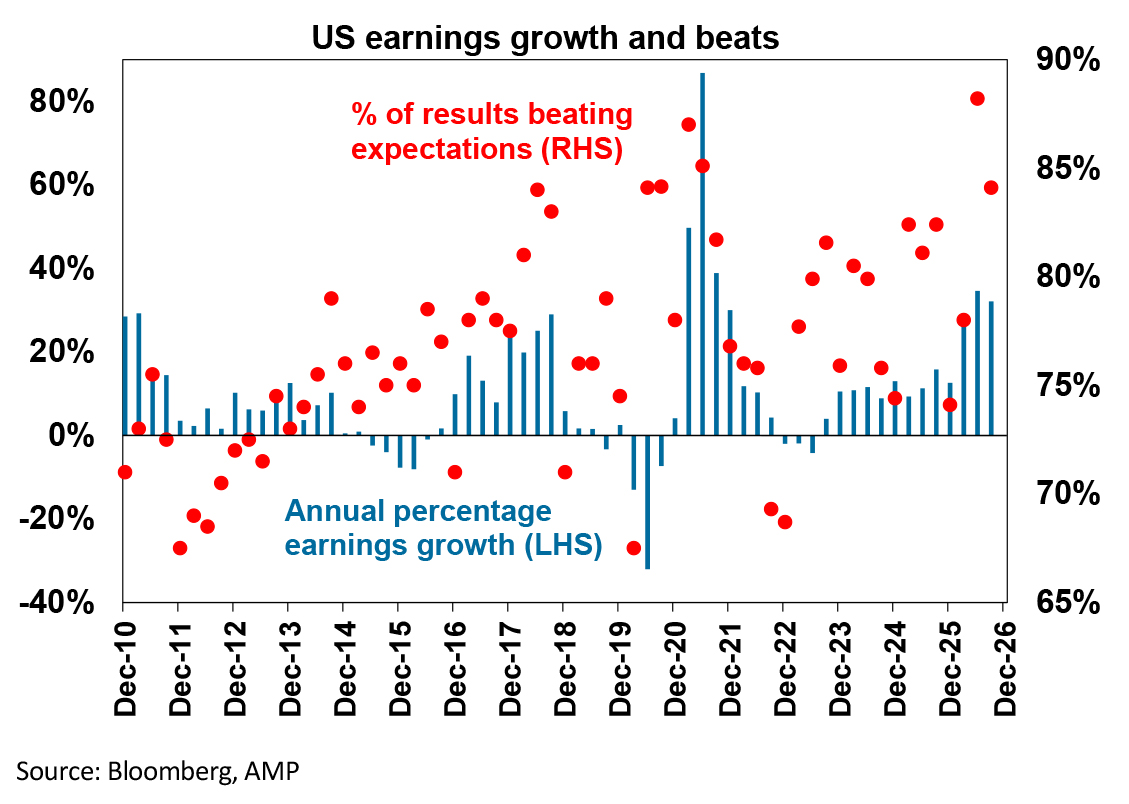
However, despite the issues around the outcome of the midterms, another month of high US inflation driving expectations for more Fed rate hikes shares and a slump in Nvidia shares on the back of the replacement of Jensen Huang as its CEO, shares have proven quite resilient with US shares just around 3% below their record high and even Australian shares only around 2% below their record high. So why are they so resilient? There are likely several reasons for this resiliency: despite some disappointments US earnings growth is very strong running at 32%yoy – tech remains a star performer but much of the upside surprise has been in ex tech and energy; strong earnings growth outside tech is supporting a rotation trade in US shares away from tech shares; recession risks globally are still low; price to earnings ratios are actually down from last year’s highs – see the next chart; regulatory fears regarding AI data centres are probably overdone as they can be located in states with less regulation and many were moving to their own renewable energy sources anyway; and in Australia softer data has come with the silver lining of a reduced risk of further RBA rate hikes. Compared to the US tech boom peak in 1999/2000 the forward PE is lower today and falling faster, earnings growth is stronger today particularly tech sector earnings and there is less of a sense of euphoria today.
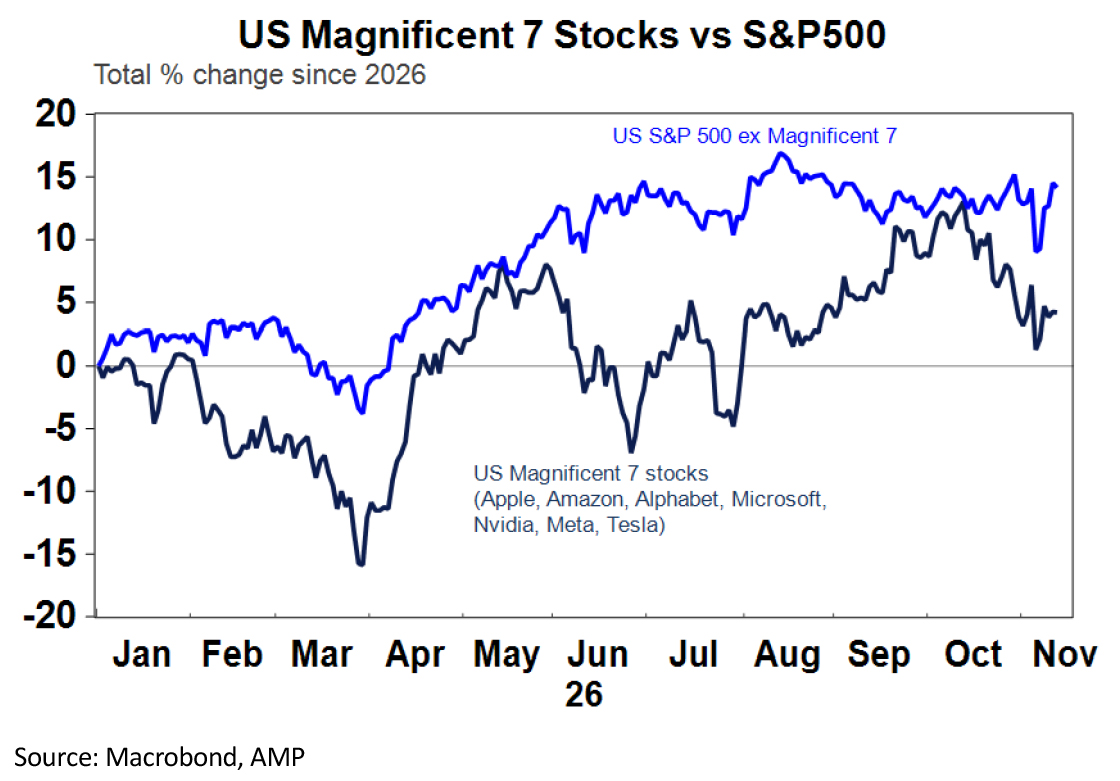


What about Jensen Huang leaving Nvidia as CEO? Analysis by North American research house BCA of unexpected CEO departures at major US companies show a meaningful impact on the company when legal and ethical issues are involved, but less so for the sector and no real impact on the broader market. The complication for Nvidia is that its at the centre of the AI boom, is 6% of the US share market and Jensen Huang has been CEO for 33 years having been a co-founder. It’s unlikely to impact its near-term earnings but could leave it vulnerable should its earnings report disappoint next Tuesday. The issue could also lead to a tightening in US rules around computer chip sales to China which could threaten the US-China trade truce ahead of next week’s summit between President’s Xi and Trump.
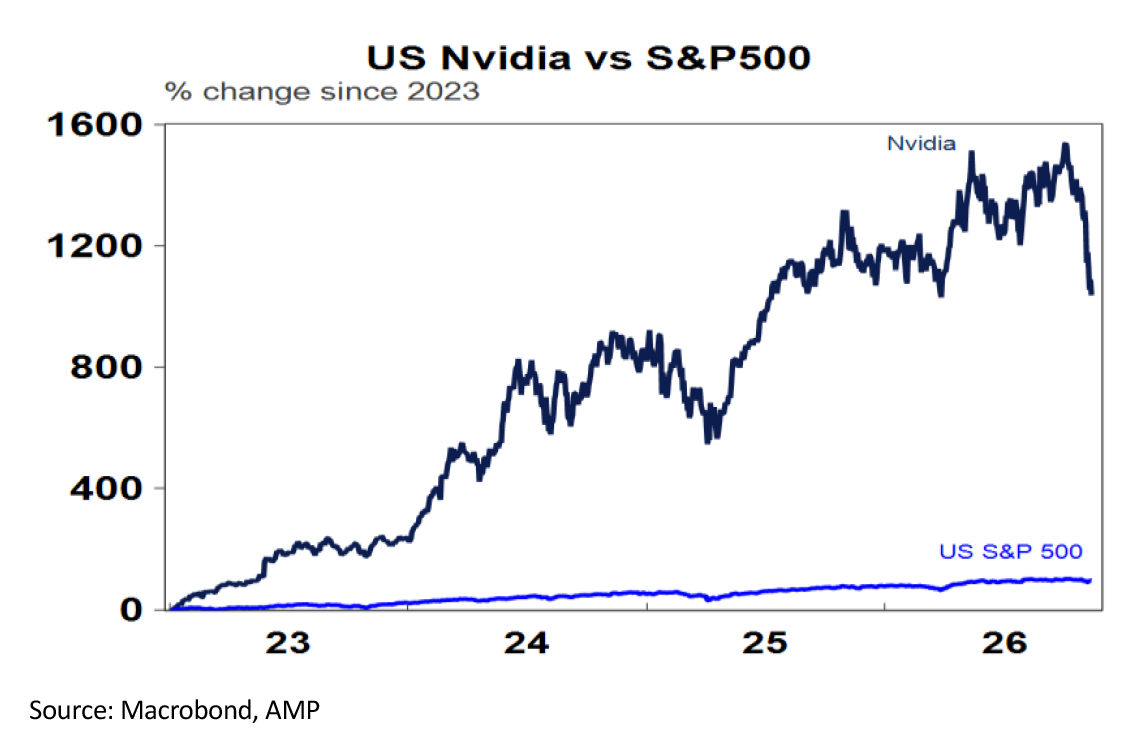

Despite the slump in Nvidia the US share market has held up reasonably well.

Meanwhile, Anthropic is due to list next Thursday following a record IPO of up to $US90bn. IPOs can engender enthusiasm for a theme and stock which can carry over to the share price immediately after listing. But they also have a mixed track record of delivering for investors, particularly beyond any initial spike as existing investors exit and any excitement can inflate valuations. The greater the hype often the worse the post listing performance. AI comes with greater than normal uncertainty as while longer term demand is likely assured the provision of AI tools could prove very competitive as it lacks the sort of network effects that locked users into particular social media providers.
In Australia, a further fall in consumer confidence and in business confidence and conditions in data released in the last week along with increasing reports of corporate job layoffs and rising levels of mortgage stress and arrears add to evidence that RBA rate hikes along with other things are working to cool demand which should take pressure off inflation. As such, our view remains that the RBA has done enough and rates will be on hold ahead of rate cuts late next year. The Australian money market now sees only a 4% chance of a November hike, 25% chance of another hike (both of which may be a bit too low) and has a first cut 61% priced in by December next year.
Another spike in announced corporate layoffs is worth watching. In the last few month this includes NAB (around 2500), Qantas (850), Rio (900), BHP (300), KPMG (387) and likely David Jones following the closure of half its stores (say half its 6000 employees). So far, the layoff numbers are low relative to average jobs growth of around 15,000 each month, but it may be another sign that the labour market is cooling down.
Major global economic events and implications
US inflation for October came in stronger than expected leaving the Fed on track for more rate hikes. Headline CPI inflation rose to around 4%yoy on the back of higher energy prices but core inflation also more than expected by 0.3%mom implying a rise to 2.8%yoy. (Note the October 2025 CPI was not collected due to the government shutdown so annual growth has to be estimated.) This along with key components from the producer price index for October suggests that core private final consumption deflator inflation – which is what the Fed focusses on – rose 0.3%mom or 3.2%yoy in October, which is up from 3.1%yoy. The pick up in underlying inflation was broad based and suggests that higher energy prices are bleeding through into other prices in the economy. All of which leaves the Fed on track for another rate hike next month and probably more again early next year. Consistent with this Fed speakers in the last week were all hawkish. The US money market has priced in a 110% chance of a 0.25% hike next month and now sees nearly three hikes after that. On the data front existing home sales fell to levels last seen in 2010 but jobless claims remain low.
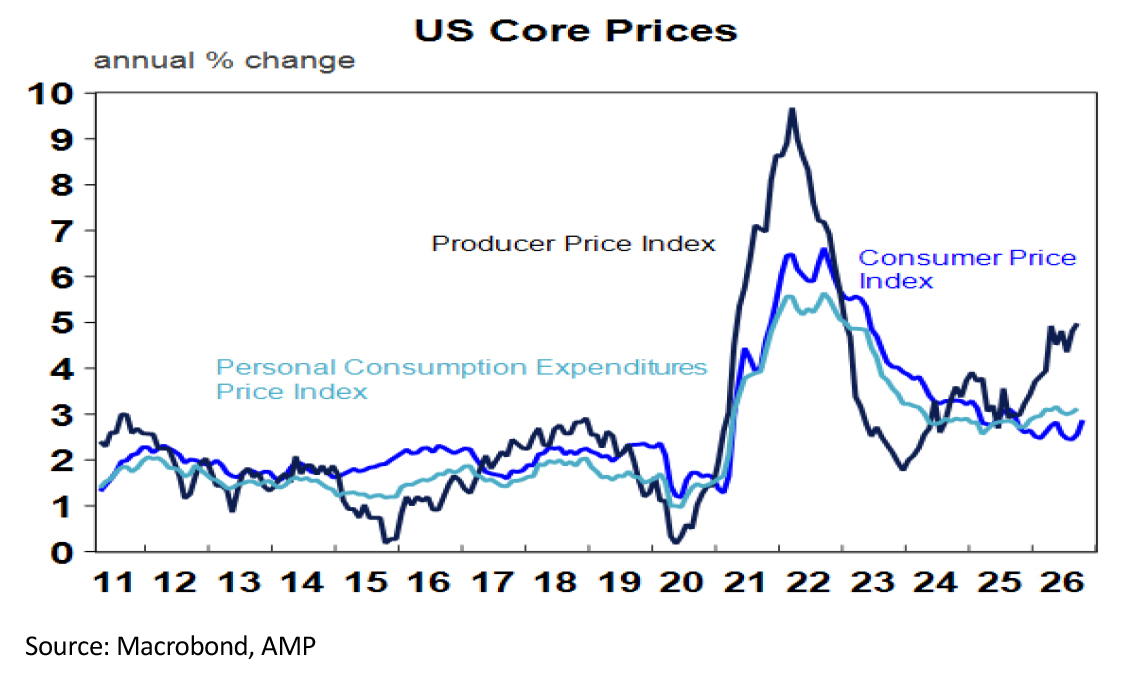

The US September quarter earnings reporting season is now 91% done with 84% beating expectations and earnings growth now running around 32%yoy, up from 26%yoy at the start of the reporting season. Earnings growth is concentrated in tech (+48%yoy) and energy (+155%yoy) but the rest of the market is still seeing earnings up a solid 13%yoy. Interestingly tech has seen some misses and on average is in line with expectations a month ago, but earnings ex energy and tech are coming in nearly twice as strong as expected supporting the rotation trade in US shares.

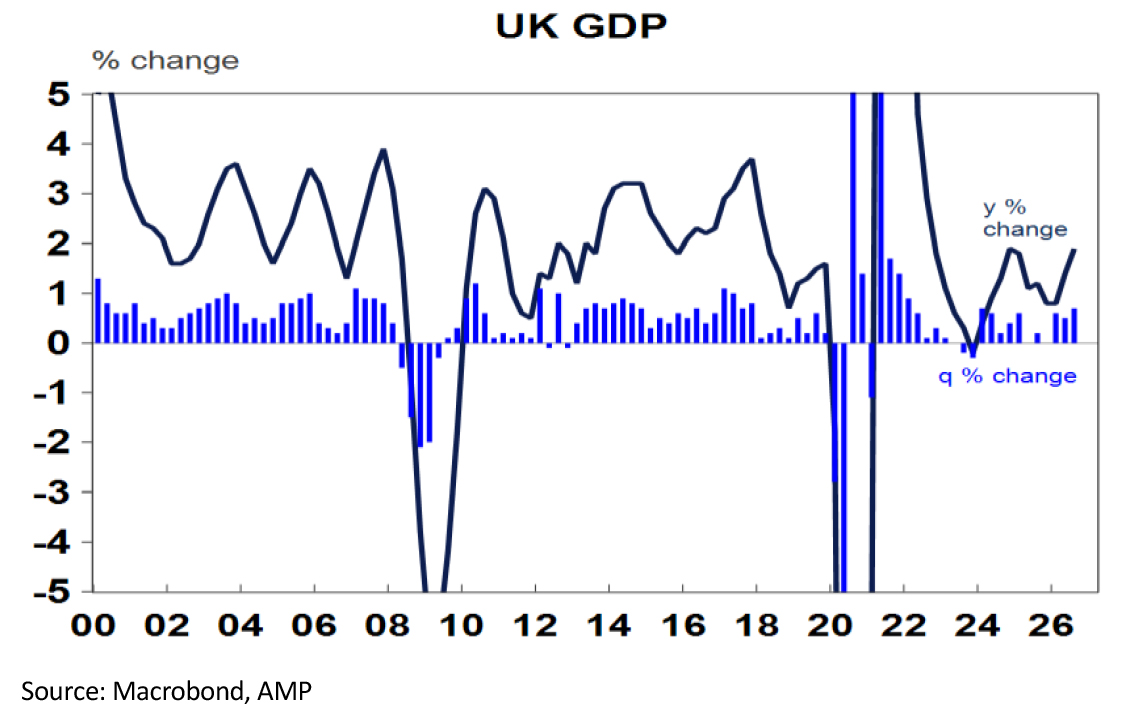
Solid UK economic growth at 1.9%yoy in the September quarter has strengthened expectations the Bank of England will hike rates again.

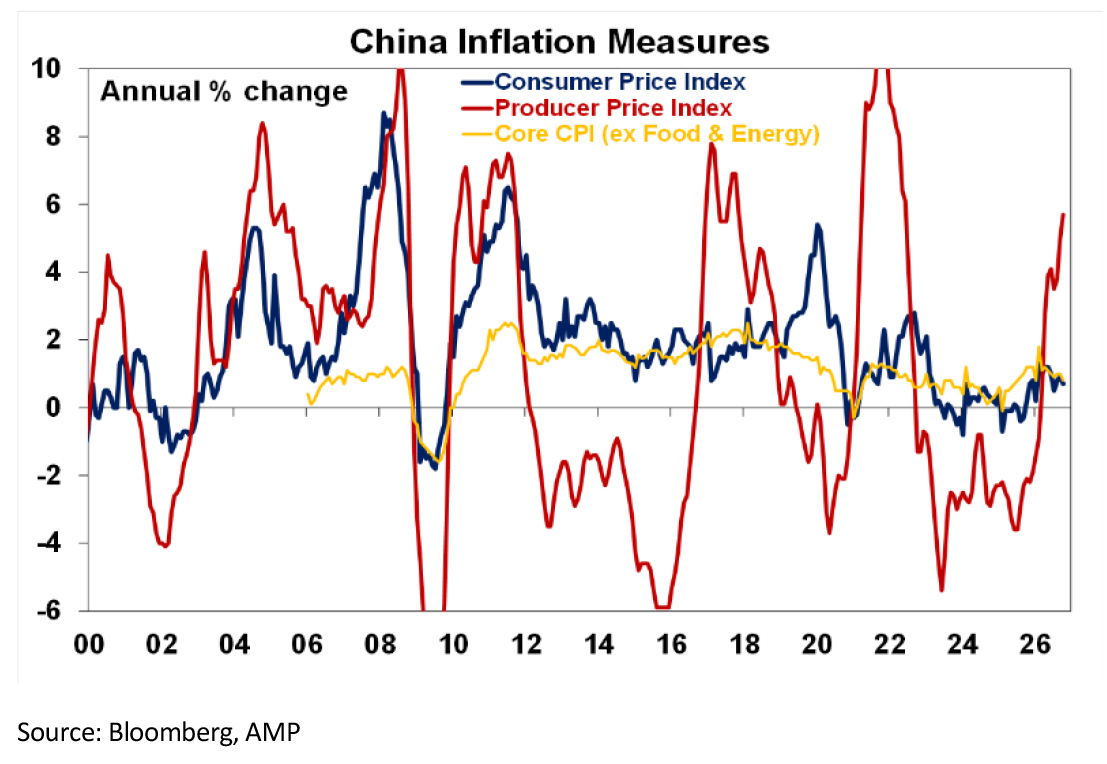
Chinese inflation statistics were mixed for October with producer price inflation up more than expected at 5.7%yoy driven by higher energy prices, but CPI inflation falling to 0.7%yoy and core inflation falling to just 0.8%yoy. The divergence implies some pressure on corporate profit margins.

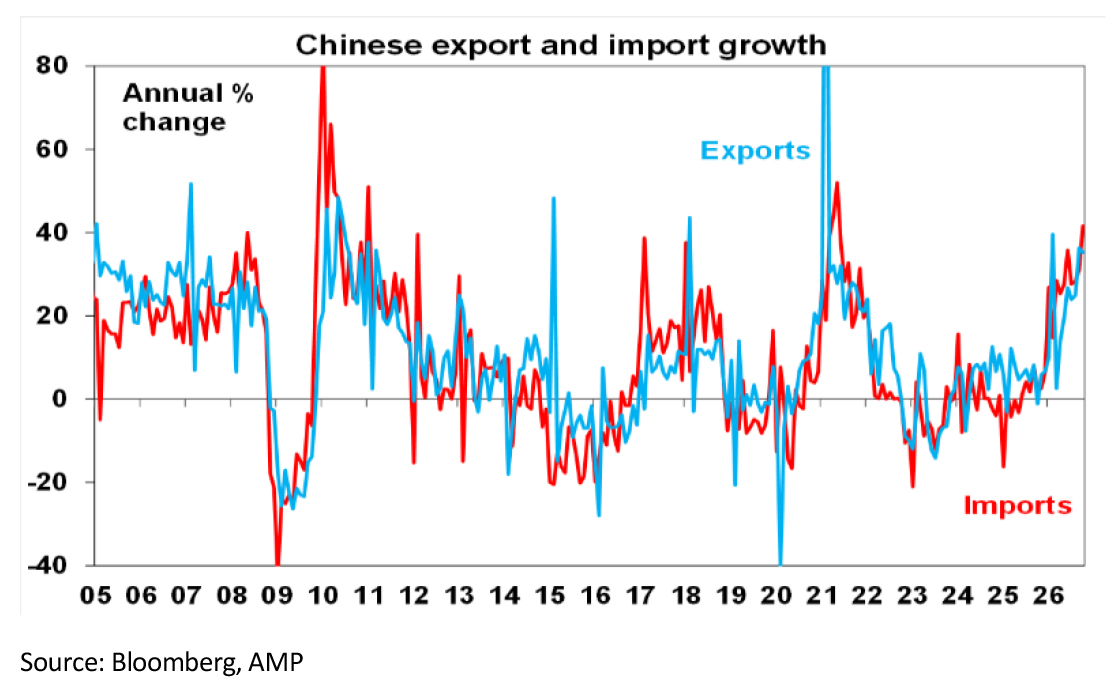
Meanwhile, Chinese export and import growth remained strong. Export growth slowed slightly to 35%yoy with slight falls to most regions and import growth accelerated to 42%yoy reflecting strong energy and tech imports. While Chinese import growth remains strong credit growth remained soft in October.

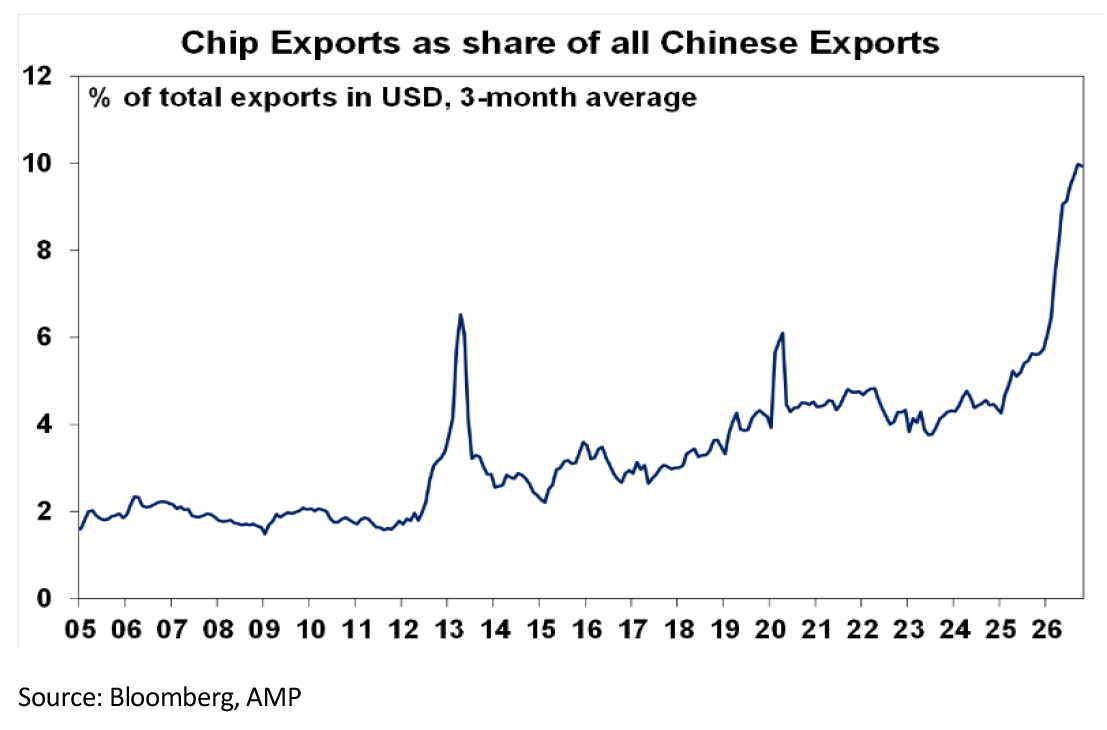
Interestingly Chinese computer chip exports as a share of total Chinese exports are surging.

Australian economic events and implications
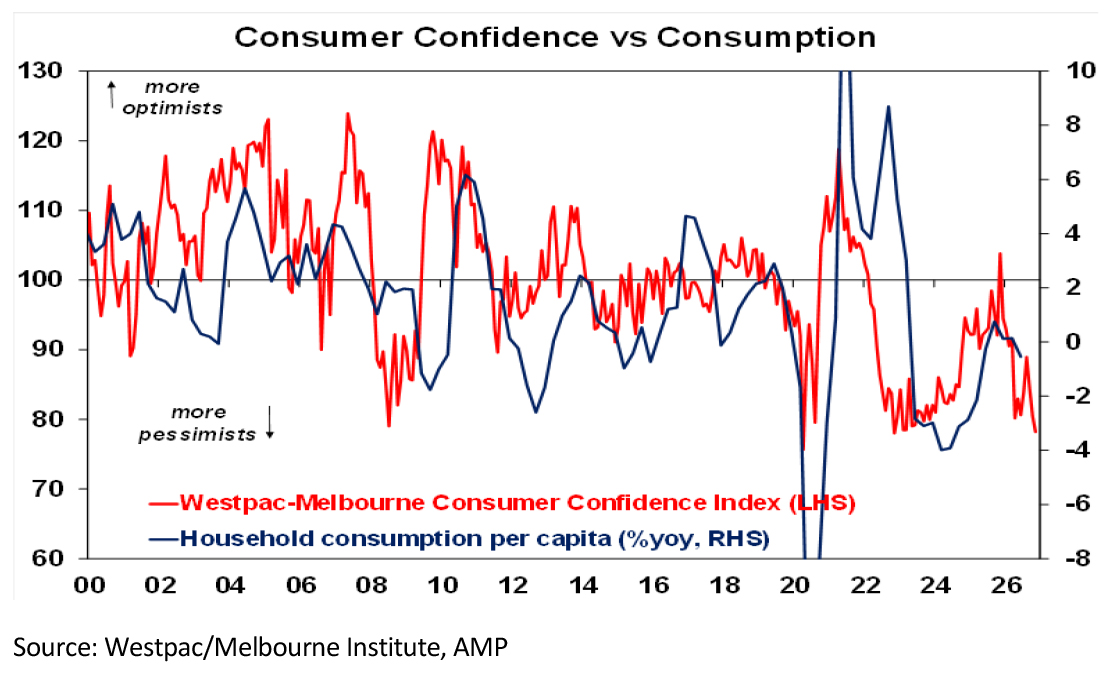
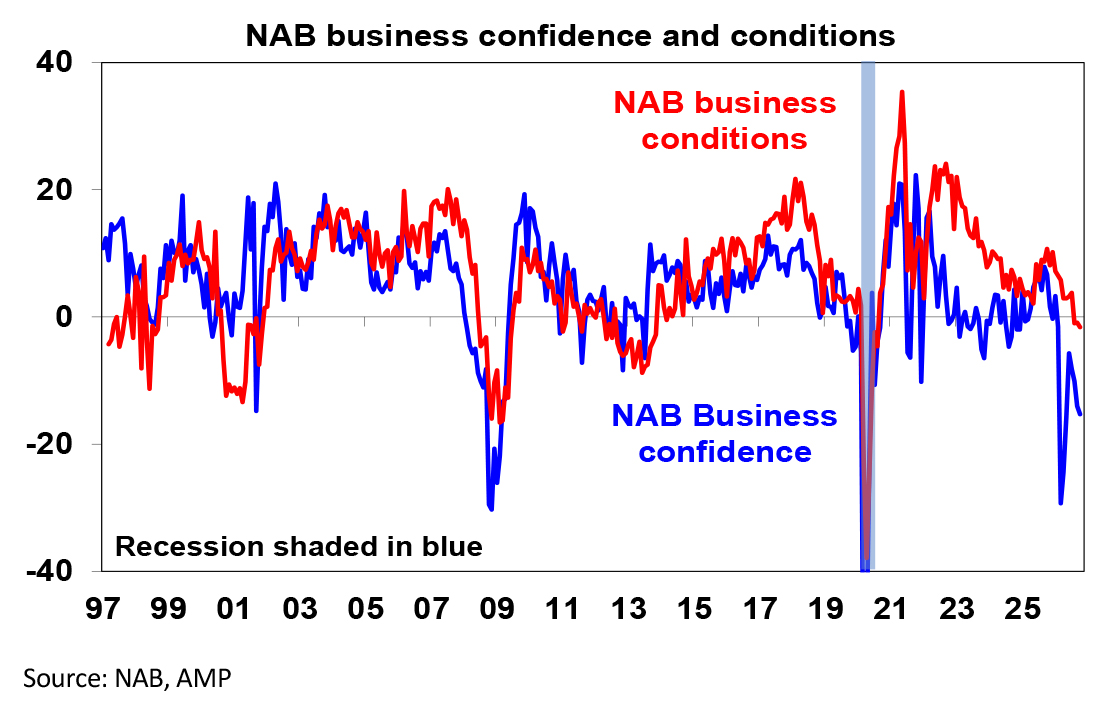
Both consumer and business confidence fell in the latest Westpac/MI and NAB surveys reflecting further rate hikes and high fuel prices. Outside of the pandemic consumer sentiment is at its lowest since the aftermath of the early 1990s recession.
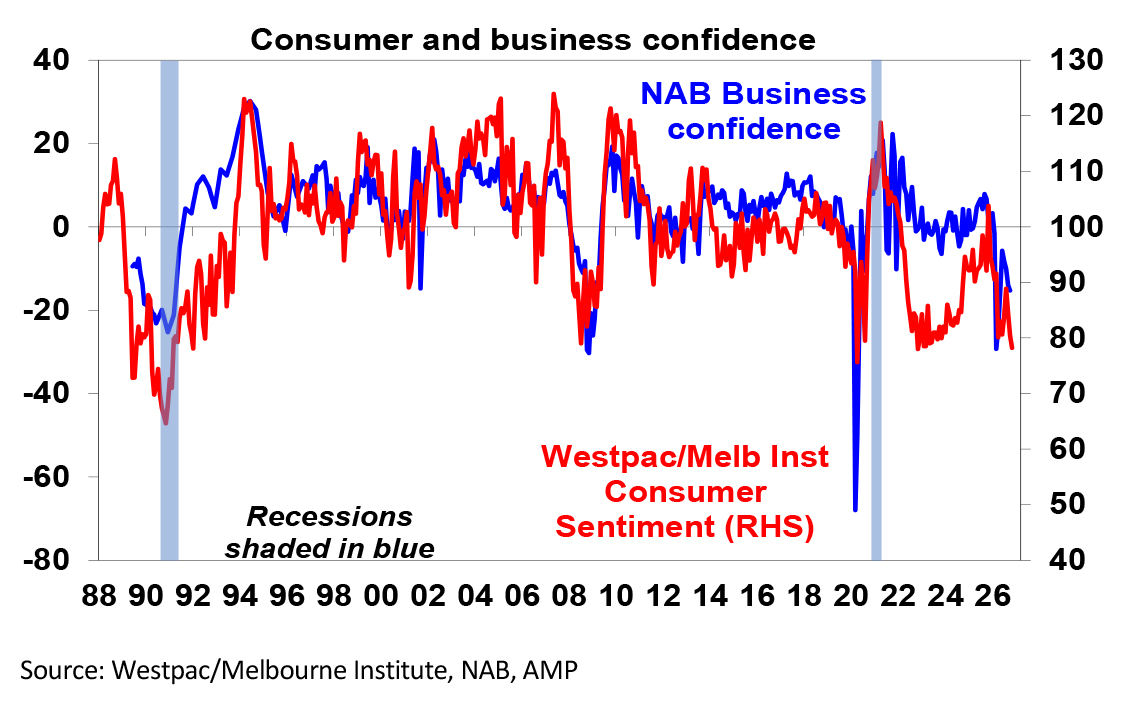

The slump in consumer confidence into November which was particularly pronounced amongst mortgagees continues to point to a slump in consumer spending ahead.

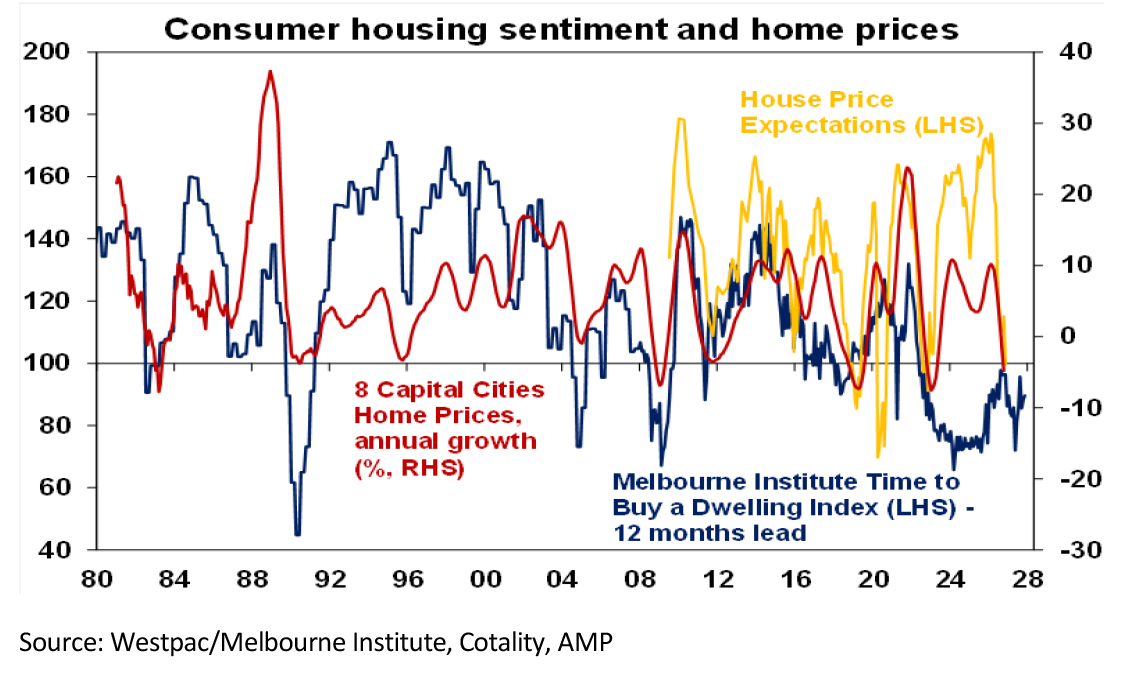
More consumers now expect home prices to fall than rise (the yellow expectation line is covered by the red line in the next chart) and while perceptions as to whether now is a good time to buy a property rose slightly they remain weak.

The October NAB business survey saw conditions fall to further into negative territory. Employment plans rose but orders and trading conditions fell sharply.

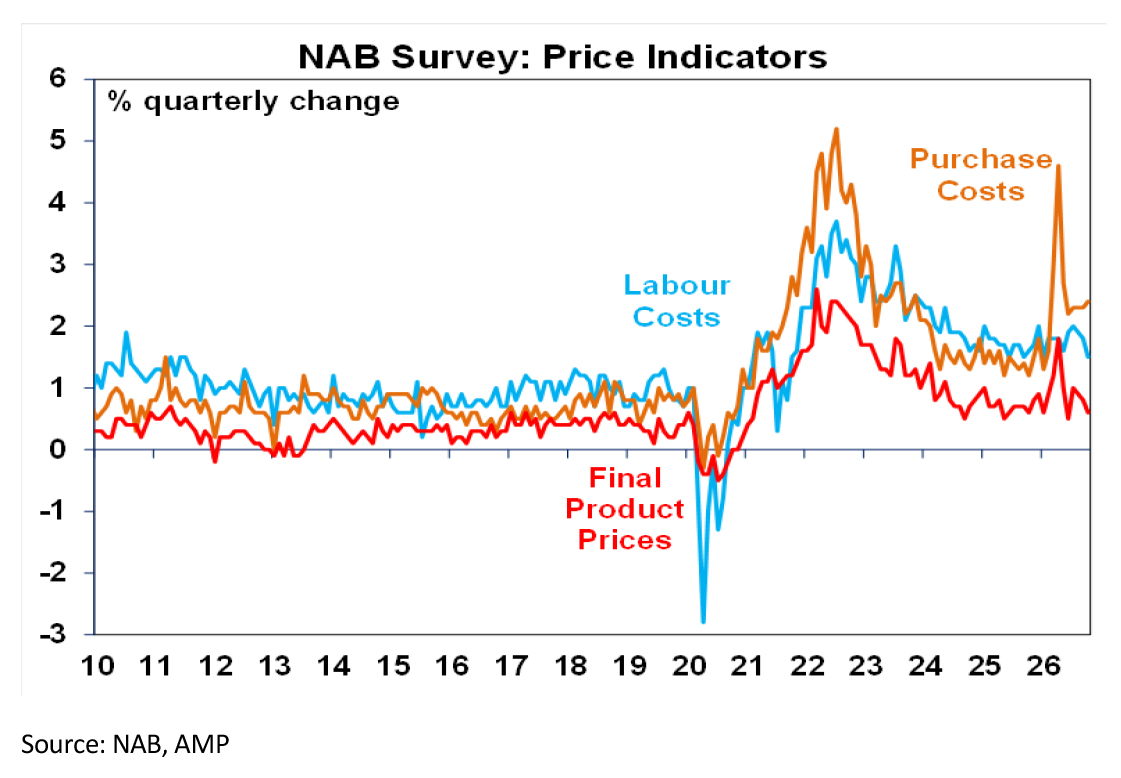
While the NAB survey showed a rise in purchasing costs labour costs and final product prices slowed. Final product price rises are back to levels seen around 2024-25, but after the experience then the RBA is likely to be more cautious this time around. Nevertheless, combined with the slump in consumer and business confidence it adds to evidence that the RBA has likely now done enough to slow demand which will cool inflation and so supports the view that the cash rate has likely peaked. Absent a crisis or sharper than expected collapse in growth into recession we still don’t see a rate cut until second half next year.

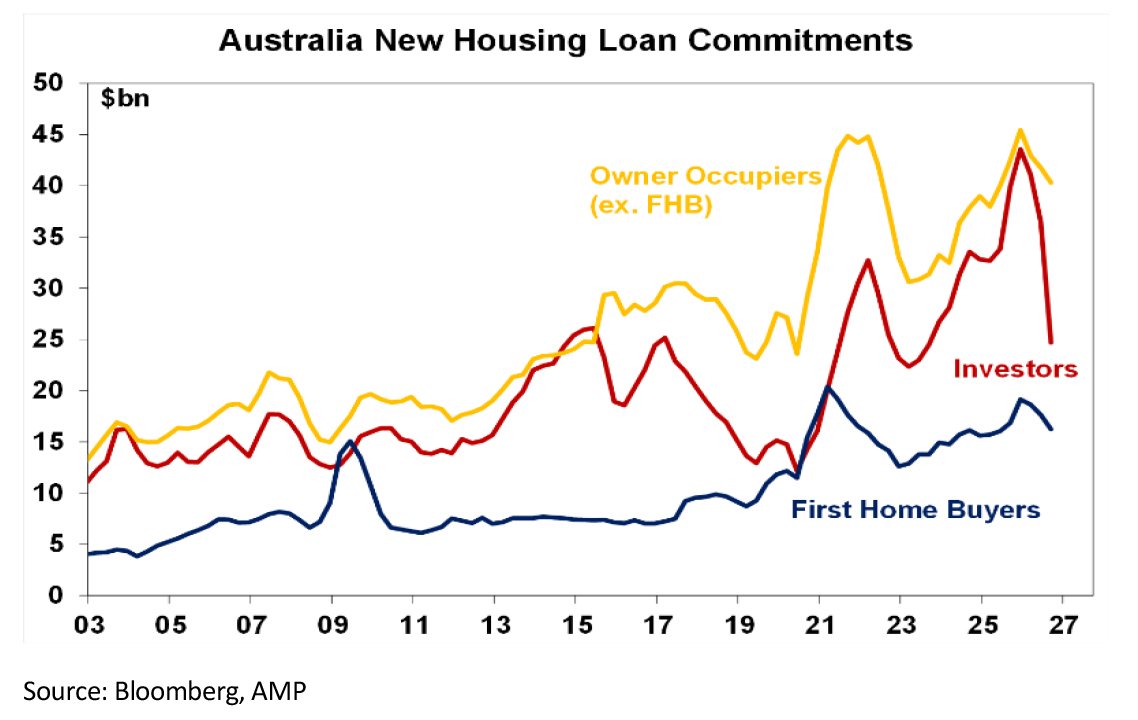
Consistent with the rise in interest rates and slump in home prices, housing finance plunged a record 15% in the September quarter, with finance to investors down 32% with the Budget tax hikes also impacting. This is consistent with reports from banks with one bank also reporting a rise in arrears, albeit they remain low at 0.8% of all mortgage loans.

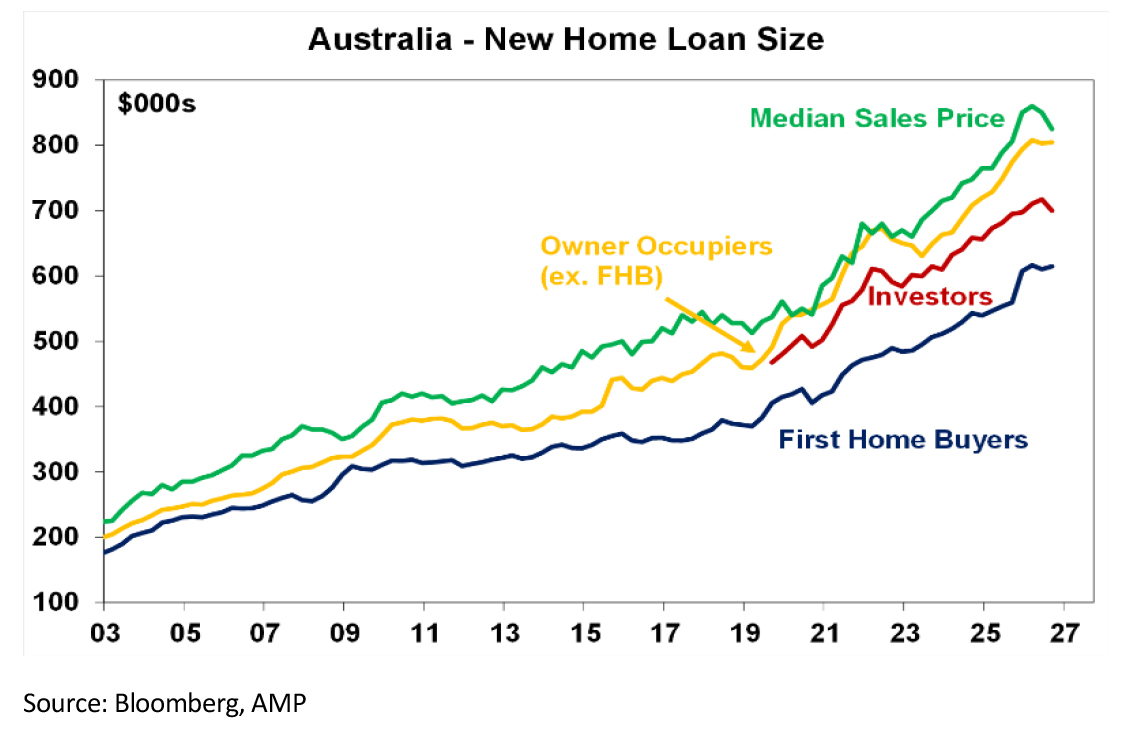
Interestingly average new home loan sizes have just had a flick off the top in a longer-term context – much like median home prices.

What to watch over the next week?
In the US, the minutes from last month’s Fed meeting (Wednesday) are likely to confirm that it retains a tightening bias but was just waiting for more information before moving again. On the data front, expect softer readings for the New York and Philadelphia regional manufacturing indexes for November, modest gains in October retail sales and industrial production (Tuesday) and continued weakness in the NAHB home builders’ conditions index (also Tuesday) and a bounce in housing starts (Wednesday) after a fall in September. On the earnings front Nvidia is due to report Tuesday and will be watched closely given its now 7% of the S&P 500 and given the issues around its CEO. Anthropic is due to list Thursday with a total capital raising of up to $US90.4bn, which would exceed Space X’s record capital raising of $US85.7bn.
In Canada, headline inflation for October (Monday) is likely to have risen to around 3.2%yoy thanks to another rise in fuel prices but underlying inflation measures are likely to remain around 1.9%yoy.
UK headline inflation for October (Wednesday) is also likely to have increased to around 3.6%yoy, with core inflation remaining around 2.8%yoy.
Japanese September quarter GDP growth (Monday) is expected to have slowed to around 0.1%qoq partly due to weaker consumption. Inflation in October (Friday) is likely to have increased to around 2.2%yoy with core inflation around 1.8%yoy.
Chinese economic activity data for October (Monday) is likely to have remained soft with retail sales growth slowing to 0.8%yoy and growth in industrial production remaining around 5.5%yoy.
In Australia, the minutes from the last RBA meeting (Tuesday) will be watched for confirmation that it has softened its hawkish bias and moved back into a wait and assess mode. Comments by RBA Governor Bullock on a panel on Tuesday will also be watched for any clues on the outlook for monetary policy although it’s doubtful the message will have changed much since the hike earlier this month. September quarter wages growth is likely to have accelerated to around 1%qoq taking annual growth up to 3.4%yoy (from 3.2%) reflecting this year’s bigger increase in minimum and award wages granted by the Fair Work Commission. Jobs data for October (Thursday) is expected to show a 20,000 gain in employment after September’s sharp fall, with unemployment remaining at 4.7%.
Outlook for investment markets
Global and Australian share markets are at risk of a correction given the oil shock, the risk of further increases in bond yields and stretched valuations, sticky inflation and central bank rate hikes, uncertainty associated with what the blue wave from the midterm elections will bring and worries about AI. However, returns should still be okay for a while yet thanks to continuing economic growth with recession likely to be avoided, albeit it’s a rising risk in Australia, and strong global profit growth and likely rate cuts later next year.
Bonds are likely to see subdued returns.
Unlisted commercial property returns are likely to be solid helped by strong demand for industrial property associated with data centres. Higher bond yields are a constraint.
Australian home prices are expected to fall around 15% top to bottom, of which they have already done 6.7%, out to the September quarter next year as a result of RBA rate hikes, reduced investor demand flowing from the winding back of negative gearing and the capital gains tax discount and poor confidence. Rising distressed sales risk also becoming a drag.
Cash and bank deposits are expected to provide returns around 4-5%.
The $A is likely to rise reflecting the wider interest rate differential to the US, although Fed hikes may limit this. Fair value for the $A is around $US0.72.
By Shane Oliver