
Gender pay gap persists globally, with large-scale economic and social implications
The oft-cited statistic that women earn approximately 80 cents for every dollar men earn still holds true in the U.S. [1] But what do the statistics mean? Behind the numbers lie far-reaching implications about women’s ability to build wealth and afford a secure retirement, as well as the societal norms that may perpetuate the cycle.
Erica Lasdon, ESG Senior Analyst at Calvert Research and Management, an affiliate of Eaton Vance, says that “this gap has large-scale economic and social implications.”
She reports: The OECD chart below shows the gap in annual wages between men and women who are full-time employees for a cross section of countries in 2017. Overall, European countries lead the pack in pay equity, while the U.S. is near the rear. Notably, the data do not include the self-employed, such as contractors or part-time employees. Most workers in those categories are women, and the wage gap there is even greater. [2]

Social norms and wage effects
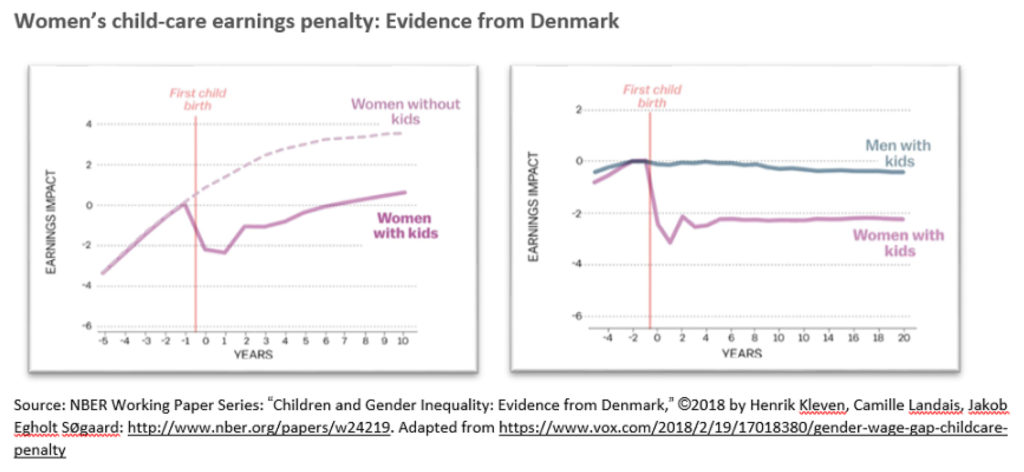
Having a child has a disproportionate impact on the earnings of women compared to men. Even in Denmark, which has strong and established systems for parental leave and child care, a study showed that having a child correlates very strongly with lower earnings for women, but the same wage effect is not present for men. [3]
US pay gap closing slowly
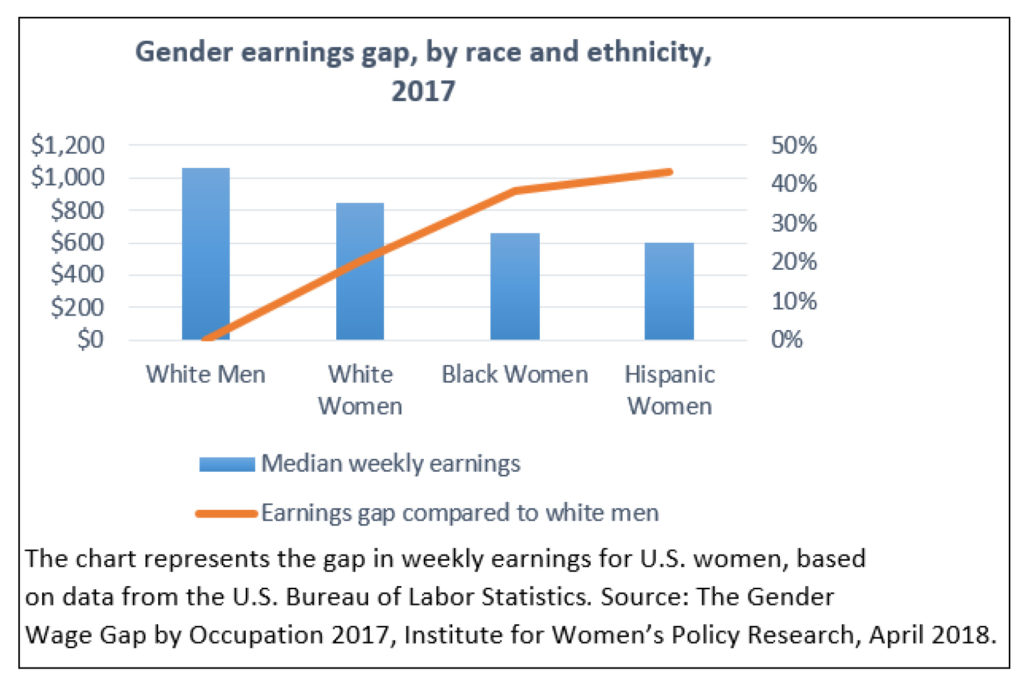
As seen in the OECD chart above, the U.S. is a relative laggard when it comes to closing its pay gap. Although U.S. Bureau of Labor statistics show the U.S. earnings gap has improved in recent years, a significant gap remains between white men and women. And, for women of color, the earnings gap remains strikingly wide.
The long view
Annual wages are a useful proxy for overall earnings comparisons at a single point in time. More telling, though, is how this wage gap plays out over the long term. Consistently lower wages over years or decades mean women have less ability to accumulate assets since they are starting from a lower base and a larger proportion of their income is likely to go toward basic living expenses. In the U.S., wages directly affect retirement savings where employee contributions and company matches are a percentage of income, and Social Security benefits are based on annual income. As a result, women are likely to face greater challenges in saving enough money to retire comfortably when they would like.
Closing the gap
The gender pay gap has large-scale economic and social implications. Reducing gender disparities in the workforce can also bring material financial benefits to corporations. At Calvert, we think managing human capital well is critical to corporate success. When we engage with a company on pay-equity bias, we recommend they conduct analyses that identify unequal pay for comparable positions and the overall unadjusted gender pay gap to give two different perspectives into the state of gender equity in their workforces. As a responsible investor, Calvert works with companies on pay-equity and diversity issues to help manage their human capital more successfully.
——–


