
 The remarkable recovery in super fund’s performance continues with another strong month of returns despite a slower vaccine rollout than many had hoped for and some regulatory uncertainty around the use of some vaccines.
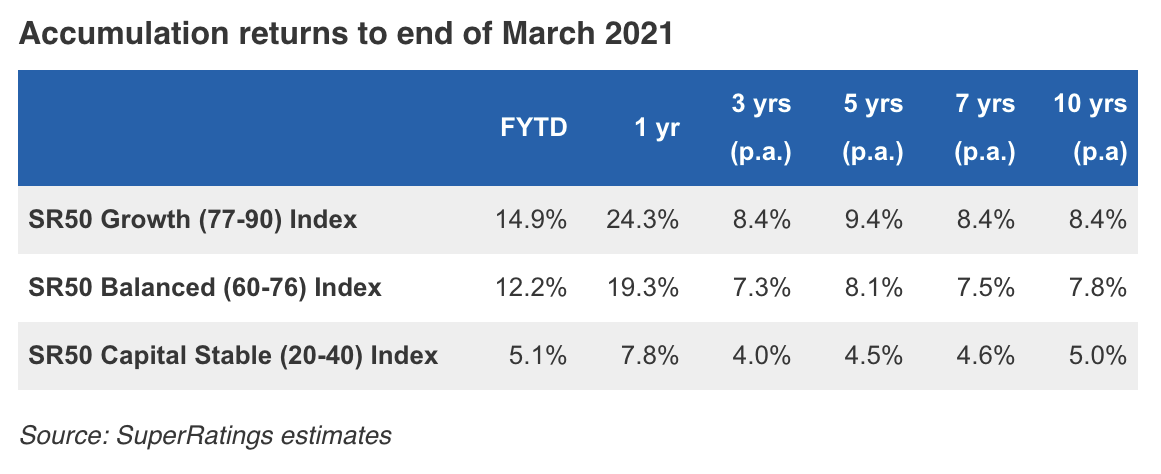
According to SuperRatings data, the median balanced option rose an estimated 2.0% in March, while the median growth option rose an estimated 2.4% and the median capital stable option rose an estimated 0.9%. Over the 2020-21 financial year to date, the median balanced option returned 12.2%, reflecting the strength and speed of the post-pandemic recovery, which extended through to the end of the March quarter.
As Australia confronts the short-term effects of the pandemic, members should expect markets to remain volatile, but the theme of 2021 is certainly one of ongoing recovery as the jobs market improves and economic activity picks up once again.
For younger members, long-term trends like the digitisation of economies and work automation—themes sped up by the pandemic—may prove to have the biggest impact on the growth of their retirement savings.
“The March returns data reinforced the success that super has seen in rebuilding from the depths of the pandemic last year,” said SuperRatings Executive Director Kirby Rappell.
“The real bright spot has been the bounce back in the labour market, which has restored confidence to households and helped reboot consumer spending. The reopening of the economy and the low or zero rates of community transmission we’ve experienced in Australia in recent months have galvanised the recovery.”
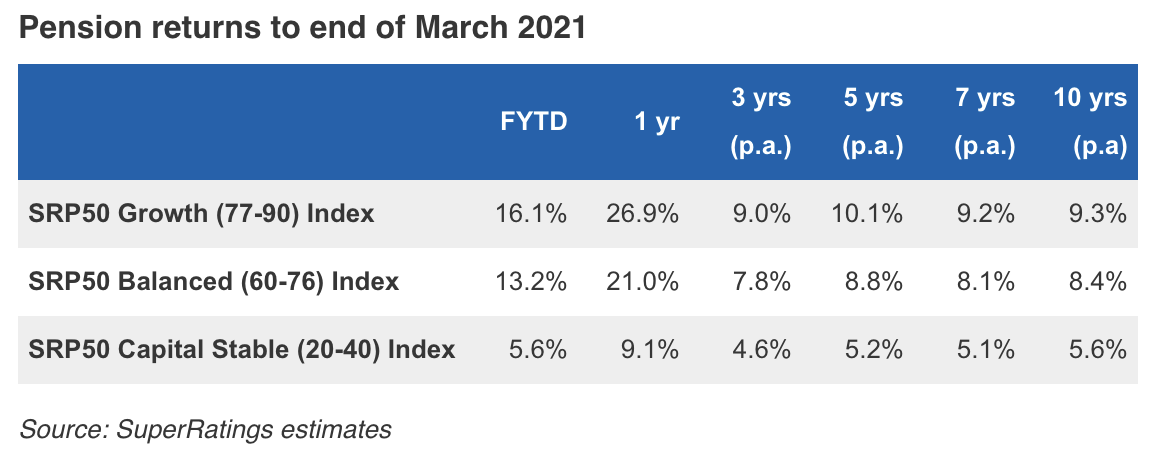
Pension returns were also positive in March. The median balanced pension option returned an estimated 2.1% over the month and 13.2% over the financial year to date. The median pension growth option returned an estimated 2.5% and the median capital stable option gained an estimated 1.0% through the month.
Thursday’s labour force figures continue to demonstrate the strength of Australia’s recovery. A further 70,700 jobs were created in March, taking the unemployment rate 0.2 points lower to 5.6%.
With the critical JobKeeper support now at an end and banks requiring mortgages to be serviced after a brief hiatus for those in need, it remains to be seen what the immediate economic fallout will be, but so far households appear to be holding up well.
“The vaccine story has been key to the recent rise in markets and super fund balances,” said Mr Rappell.
“However, there will likely be a period of adjustment, including some scarring effects from business closures and job losses, that we’ll need to navigate as we enter the new normal, but these should prove temporary. Overall, while the pandemic is certainly not over, we do foresee a period of greater stability for members.”


