

Kirby Rappell
Superannuation balances fell sharply over March as events in Iran evolved and the disruption to global oil supplies exacerbated emerging economic pressures. Leading research house SuperRatings estimates the median option will report negative returns across the balanced, growth and capital stable indices.
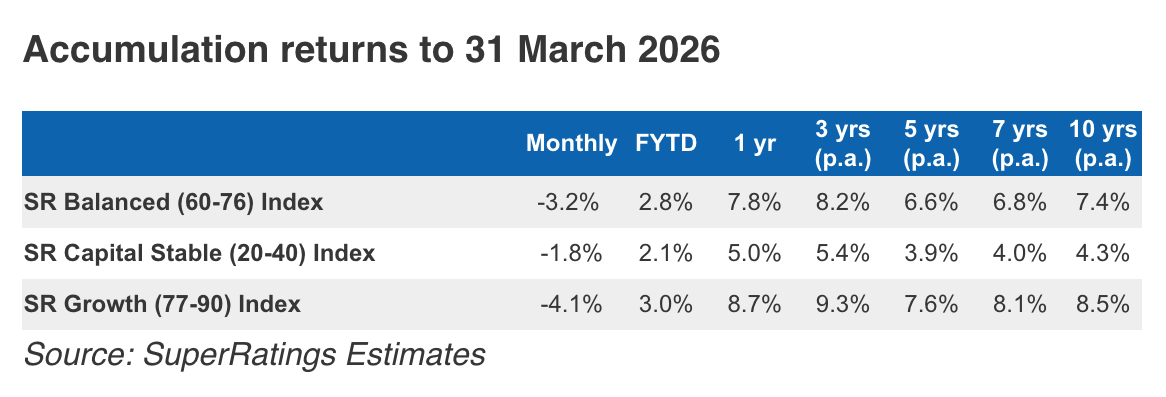
The median Balanced option is estimated to have declined by -3.2% in March, wiping out the gains accumulated since September 2025. As a result, the financial year to date return for the SR Balanced index has eased to 2.8%. The median Growth option is estimated to have fallen by -4.1% and more defensive strategies were not immune, with the median Capital Stable option recording an estimated loss of -1.8% over the period.
“With just one quarter remaining in the financial year, the pathway for funds to once again outperform their long-term average is narrowing, with returns confronting elevated levels of uncertainty across both global and domestic markets”, commented Kirby Rappell, Director of SuperRatings. “Markets are responding quickly to a rapidly evolving situation. This means we are likely in a period of greater volatility. While this will flow through to balances, it should be remembered that member’s super is usually invested across a range of asset classes (not just shares) and that over the long term, super returns remain sound.”
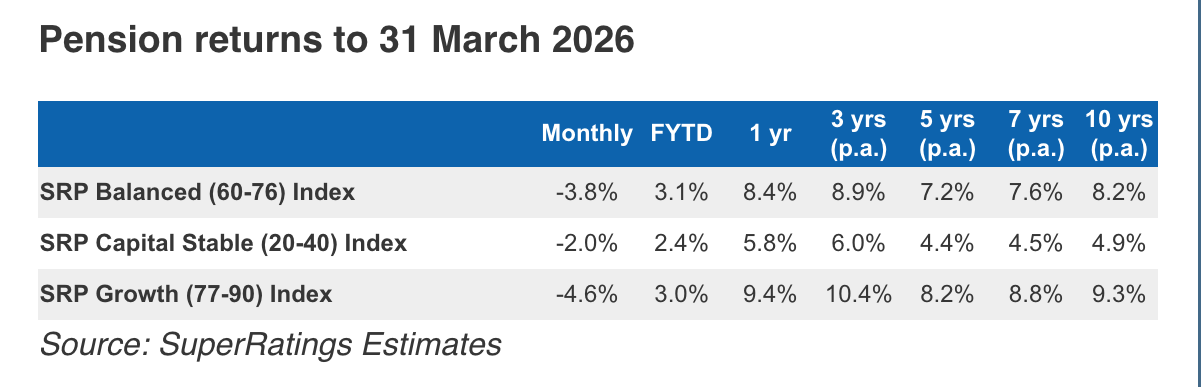
Pension returns followed the same downward trend seen in accumulation indices, with SuperRatings estimating losses across Balanced, Growth and Capital stable pension options in March will exceed accumulation option losses.
“March’s results reflect the reality that superannuation returns are being pulled in multiple directions: geopolitical issues, global market volatility, and interest rate changes all influence performance,” continued Mr Rappell. “While negative months are difficult, it’s important to remember super is a long-term investment and markets can recover over time.”
Mr Rappell also noted that periods of market stress can increase switching risk, where members may respond to uncertainty by moving their investments to cash or more defensive assets. “When markets fall sharply, it’s natural for some members to feel uneasy and consider switching to cash,” he said. “But switching after markets have already fallen can lock in losses and may mean missing the rebound when conditions improve, potentially leading to a poorer retirement outcome over the long term.”
SuperRatings encourages members who are concerned about short-term market volatility to seek financial advice from their fund or a trusted financial adviser before changing their investment option. Members should also ensure they are aware of any costs involved in getting advice before proceeding.


