
One Nation’s surge is concentrated in seats with the lowest super balances
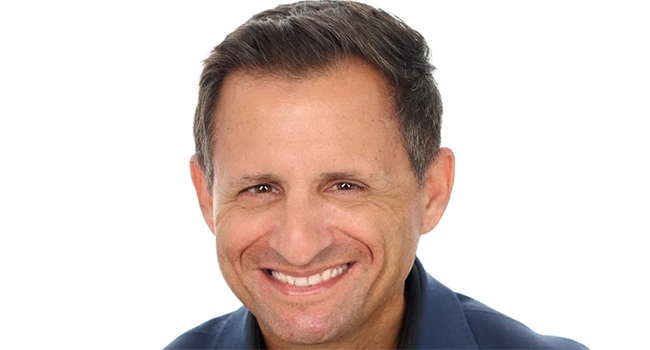
Kos Samaras
New research suggests that Australians in communities with the smallest superannuation balances are moving fastest to One Nation. Pollster Kos Samaras is warning politicians on every side that the retirement system is the one policy area voters want left alone.
Samaras, director at RedBridge Group, presented the research at a Capital Outcomes event in Sydney. The research draws on two sources. The first is RedBridge Group and Accent Research’s May 2026 federal multilevel regression and post-stratification (MRP) poll of 6,015 voters. The second is the Mandala | Zurich Australian Resilience Index, which scores 2,324 communities on 47 financial, health and social measures.
The findings come as several states prepare to go to the polls ahead of the 2028 federal election.
The MRP puts One Nation on 28 per cent of the first preference vote, up from 6 per cent at the 2025 federal election. Over the same period the Coalition falls from 32 per cent to 21 per cent and Labor from 35 per cent to 31 per cent. On those numbers, Labor keeps a bare majority of 76 seats, One Nation becomes the opposition with 53 and the Coalition is reduced to 12. RedBridge describes the MRP as a snapshot of voter sentiment in May, not a forecast.
When the poll is matched to the resilience index, super balances line up closely with the vote. In the least resilient tenth of communities, average super balances are a third of the national average. In the most resilient tenth, they are two and a half times the national average. The seats projected to fall to One Nation hold 80 per cent of the national average in super. The six seats the Coalition is projected to keep hold 180 per cent.
The gap is widest for people close to retirement. Residents aged 50 to 69 in the seats projected to go to One Nation hold 77 per cent of the average for their age group. In the seats held by the Coalition and independents, the figure is 189 per cent.
Samaras traces the pattern to a generation of workers who started work in the early 1990s in manufacturing, canneries and timber yards. Many bought their first homes in the mid 2000s, then lost those jobs in the mid-2010s. They found new work, but often at lower wages and with patchy super contributions.
“You told me that if I did everything right in my life, I studied hard, I went and got a job, I got a partner, we both got incomes, we started a family, and here I am queued up at a food bank,” he says.
“So you’re in your mid 50s. Your body’s breaking down because you’ve been working with your hands all your life. And you’re looking at retirement going, ‘I’m going to reach retirement age with this mortgage as an additional burden.’”
A policy blind spot on both sides
Samaras argues that the parties’ current super policies are aimed at the wrong voters. He says One Nation’s super proposal is modelled on an average wage that most of its supporters do not earn.
“The majority of their voters’ super balances are well below $50,000,” he says.
He is more pointed about the Coalition’s commitment to abolish the tax on super balances above $3 million.
“Who are they talking to? Not the voters that divorced them for One Nation,” Samaras says. “Most of the vote they’ve lost has got $50,000 in their superannuation balance.”
He describes compulsory super as a policy Australia should protect. However, he says it has not insulated every worker from the economic shocks of the past three decades.
“It’s compulsory, but it’s not waterproof to all the economic forces,” he says. “The things that have hit these generations have disrupted their ability to contribute to it.”
Younger voters are just as protective. Samaras says RedBridge did research for the super industry when the Coalition proposed letting people withdraw super to buy a first home. Younger Australians, he says, rejected the idea on economic grounds.
“If I take 30 grand out, and the next person takes 30 grand out, and the next person takes 30 grand out, and we’re bidding on the same house, doesn’t that raise the price of buying a house? So you want me to use my retirement savings to raise the price of a home?” Samaras says, describing their response.
Fragmentation online and at the centre
According to RedBridge’s surveys, 95 per cent of voters who moved to One Nation in the past 12 months formed their view of the party online, not through print, television or radio.
“The two major parties at the moment are operating in an analogue world, versus One Nation operating in a digital world,” Samaras says.
He expects the fragmentation to come from both ends of politics. Thirty-five per cent of Gen Z voters currently support the Greens, and there will be 5.2 million Gen Z voters by the end of the decade.
However, he argues that compulsory voting still rewards parties that hold the middle ground. He points to Victoria, where the Coalition is polling at 30 per cent under Liberal leader Jess Wilson.
“You cannot live in the Lodge unless you are winning the centre,” he says.
A case for the industry to make
Samaras’ main message to the super sector is that it should stop relying on government relations and start making its case directly to members. He compares the industry with the resources sector, which has repeatedly defeated political attempts to change its tax treatment.
“The super industry is bigger and more powerful and actually has a connection with every single Australian,” he says. “The punching power of the industry is immense.”
“You’re going into a very volatile political world. You cannot rely on the political class to help you now. You’re going to have to start building social licence with the Australian community.”
He says this calls for a campaign that goes beyond politics and goes beyond competition between super funds.
“Telling the story about super, its role, its importance, educating people on why they need to contribute,” Samaras says. “Super is the one thing politicians cannot touch. And if they try to touch it, you can punish them. It’s yours.”
For Australians who reach retirement with modest balances, he says the system has still done its job.


