
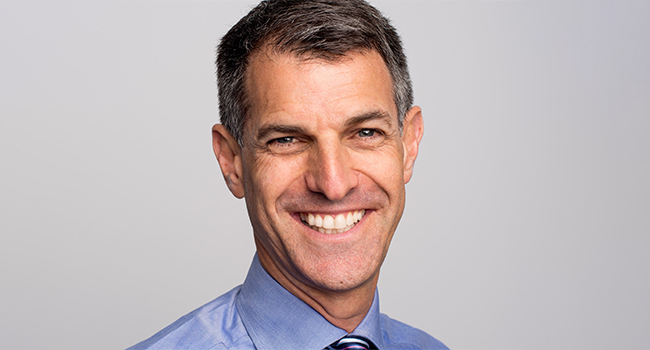
Michael Pillemer
Walk along almost any inland river in Australia and you’ll find river red gums that have stood for centuries. They’ve outlasted droughts, floods and fires and endure because of how deeply they’re established in their habitat, not the size of their canopy.
It’s an image worth keeping in mind amid the advice industry’s pursuit of growth. Much of the conversation centres on scale: who’s consolidating, who’s acquiring, who’s growing fastest. Scale has its place, but some of the longest-standing institutions in financial services built their strength through a different approach. They went deep with one community instead of broad across everyone.
Research from Oxford University’s Kellogg College[1], People, Place and the Economy: The Social Value of Mutuals, helps explain why those roots matter. A mutual is owned by its members, who are also its customers. That means the people it serves are the people it ultimately answers to. The research argues that this ownership structure creates value through the way mutuals do business: profits are reinvested in member benefits and better services rather than paid out to outside shareholders, and decisions are made with members’ long-term interests in mind. Over time, that builds a level of trust and loyalty that’s hard to replicate.
Advice businesses don’t need to be mutuals to apply those principles. Before PPS Mutual, most of my working life was spent on the advice side. In 2002, I co-founded and led Centric Wealth, growing it into one of Australia’s largest private wealth companies, with $5 billion under advice.
Around that time, banks were acquiring many of the medium to large financial planning businesses. This created a gap in the market for a substantial, privately owned wealth advice business serving high-net-worth clients who wanted independent advice. Centric Wealth’s growth showed me the value of recognising an underserved group and building a business around its needs.
At Centric, advisers would regularly tell me that their South African doctor and accountant clients were asking: “Haven’t you got the equivalent of PPS?”
When I took my eldest son to the Soccer World Cup in South Africa in 2010, I met with PPS and came to understand what those clients meant. Their experience of an insurer that understood the needs of professionals had made such an impression that, when seeking advice on another continent, they wanted to find its equivalent. That was a powerful illustration of the trust and loyalty a business can build by understanding and consistently serving a particular community.
Those experiences were a big part of why, a decade ago, we launched PPS Mutual in Australia, a member-owned life insurance company for professionals, drawing on the same model that has served professionals in South Africa for 85 years.
From running advice firms to now partnering with them, I’ve seen five habits stand out for turning a deep understanding of clients into a business that lasts.
1. They think in generations, not quarters
Quarterly targets are easy to set and easy to measure, which is why so much business planning revolves around them. But the institutions still standing make decisions for the business they want to be 20 years from now, and the clients they’ll still be serving then.
In an advice business, that horizon shows up in three places:
- Reinvestment: is the business funding systems, training and people whose benefits may take years to show, or drawing out profit while the numbers look good?
- Service: is the client experience designed around the next review, or around decades of changing circumstances, from building a career to retirement and passing on wealth?
- Succession: would the business keep serving clients well if its founder stepped away tomorrow? Nearly half of the advice businesses surveyed in CFS 10x’s Hidden Value Report[2] said they couldn’t operate effectively without their owner. Planning for that early gives clients confidence their relationship will outlast any one person.
It’s a useful lens for any big decision: which time horizon is it really being made for?
2. They treat loyalty as the measure of value
New client numbers are the figure most practices celebrate. Retention tells you more. Every year a client chooses to stay, they’re confirming the advice is worth paying for.
When I was running advice firms, the clients who stayed longest were rarely the ones paying the lowest fee. They were the ones who felt known. Their adviser remembered the daughter starting university, the business they were thinking of selling, the parent who’d just moved into care, and the advice shifted with them.
You can’t buy that familiarity at onboarding. It builds up review by review. It’s also why the strongest practices tend to pay as much attention to the clients who leave, and why, as to the ones who arrive.
3. They know reputation builds slowly and disappears fast
A lifetime spent building trust can evaporate in an instant. We saw this during the 2018 Hayne Royal Commission. Institutions that had become household names over generations watched their standing unravel in a matter of months. For licensees, much of the damage came from fees charged for services that were never delivered. Many of those brands are still rebuilding.
Risk psychologist Paul Slovic[3] calls this the asymmetry principle: trust is far easier to destroy than to create, because negative events stand out more and weigh more heavily than positive ones.
That’s why the moments that shape a reputation are rarely the easy ones. They’re the market fall when a client wants to sell everything, the strategy that didn’t play out as planned, the insurance claim a client is relying on. Clients and referrers remember how a business behaved when it counted.
4. They grow through referral, not reach
For most advice practices, personal referral is the main way new clients are introduced. In Adviser Ratings’ 2025 Australian Financial Advice Landscape[4], 81% of practices named existing clients as a source of referrals, up from 71% the year before, with accountants next at 45%.
The referral links hold strongest in close professional networks. A doctor mentions their adviser to a colleague on the same ward. An engineer brings them up at a project meeting. Each new client arrives with a recommendation from someone they respect, and the circle widens from there.
Referrals are also an honest measure. People only put their name to a recommendation when they’re confident it will reflect well on them.
5. They exist for something specific, and never forget what it is
A dentist who has treated the same family for 30 years knows which familial jaw patterns will emerge in the grandkids and who is likely to need orthodontics as they mature. That depth of understanding comes from sustained attention and familiarity. In other words, specialisation builds a depth of expertise that’s hard to replicate.
A clear client niche does the same for an advice practice, and more practices are heading that way. In the same Adviser Ratings report[5], 80% of practices with five or more advisers said they target specific client types, compared with 54% of solo practices. Serving one group, whether medical professionals, business owners or retirees in a particular region, reveals patterns others miss: the typical career path, the common tax traps, the moments when advice matters most. Expertise sharpens, the service becomes harder to replace, and the business grows more resilient because it isn’t competing for every client against every competitor.
The harder part is the second half of the habit. A broader market always looks tempting, especially when growth is the goal. The institutions that endure hold their focus anyway.
Deep roots keep a business standing
The next few years will bring more demand for quality advice. They will also bring new cycles of consolidation, technology intervention and pressure on margins. Some businesses will chase scale, and some will succeed at it. Whatever shape the industry takes, the ones still standing will have attributes in common with the river red gum.
They are likely to survive because of what’s beneath the surface: community roots, standing strong in one place, sheltering families and clients over multiple cycles and for the long term.
By Michael Pillemer, Founding CEO
———-


