
The old stock market adage “sell in May and go away” proved to be a losing strategy in 2013, with the Australian share market producing a total return of 7.31% (ASX300 Accumulation index) between May 1 and November 1.
Also known as the “Halloween indicator”, the strategy is based on the belief that the share market tends to begin falling away in May and that market returns are usually considerably stronger in the November to April period than between May and October.
This indicator has relatively strong statistical evidence behind it but it does not occur every year. Since 1970, the May to October period for the All Ordinaries index has returned an average of only 1.15%, while the November to April period has returned 6.14%.
van Eyk senior portfolio manager Otto Rieth said that while the Australian share market did indeed drop away sharply in May and June this year—the All Ords index dropping to almost its lowest closing price for the year—the forces driving the market higher have tended to overwhelm other factors.
“While investors are still apprehensive about the economy and the battles over the US debt ceiling, there has also been an unmistakeable, if modest, improvement in global macro indicators and monetary policy remains extremely accommodative, with unprecedented amounts of quantitative easing from the US and Japan” Mr Rieth said.
“Investors are also continuing to give strong support to stocks that offer a healthy yield given the relatively poor returns available from bonds and other assets.”
Mr Rieth said some easing of short term concerns about a slide in Chinese economic growth and the temporary resolution of the standoff in Washington over the debt limit had also helped to support the market recently, although he noted it had been climbing fairly steadily since June.
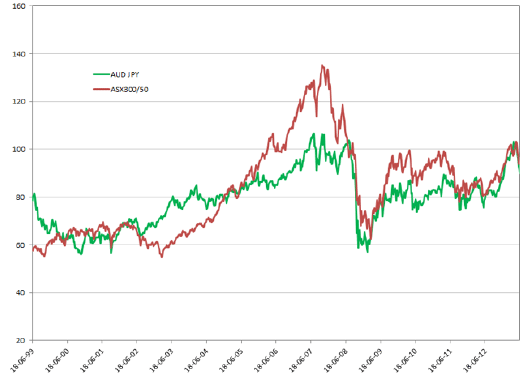
He also noted the typically close relationship between the AUD/JPY currency pair and the ASX300 (see chart). “If Abenomics continues to push down the value of the yen, investors will be increasingly tempted to take advantage of the carry trade and borrow cheaply in yen to invest in higher yielding assets offshore, like Australian shares,” Mr Rieth said.
Chart: AUD/JPY vs the ASX300
Source: Bloomberg


