
Details on proposed Carbon Tax
- The Federal Government has proposed a new tax on carbon emissions of $23 a tonne to apply to 500 of the biggest corporate emitters from July 2012.
- The aim of the tax is to increase the price of goods produced by carbon-intensive industries and thus change behaviour of consumers and businesses. But the extent of the compensation mechanisms substantially reduces the effectiveness of the tax. If consumers are no worse off, and in fact many are better off, then you don’t have the incentive to change behaviour.
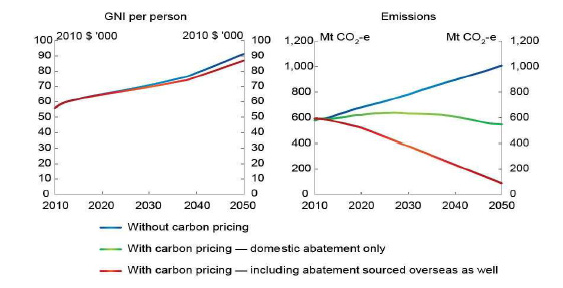
- The cost to the budget over the next four years is $4,281 million, including assistance packages for the steel and coal industries ($2,906 million in 2011/12). The Government expects the carbon tax to reduce emissions but income per person will be lower than in the absence of the scheme. Employment is tipped to increase by 1.6 million over the next nine years after rising by 2.18 million over the past nine years.
- The proposed tax on carbon emissions could work to reduce global emissions provided other countries moved at the same time. The risk of moving too quickly before other countries is that it reduces the competitiveness of Australian industries.
What does it all mean?
- The good news is that the release of details of the proposed carbon tax reduces uncertainty. The price of carbon is finally known as are the compensation mechanisms. The bad news is that the uncertainty has only just begun for consumers and businesses. Now Australians will be inundated with the pros and cons proffered by politicians, industry associations and interest groups.
- The Federal Government is proposing a tax on carbon emissions based on the theory that the global increase in carbon emissions is contributing to climate change. If you believe in the theory then it is reasonable that efforts are made to reduce carbon emissions. But a global problem requires a global situation. Australia represents just 1.5 per cent of global carbon emissions. So without significant efforts by large countries – China, India and the United States – then Australia’s efforts will have negligible effect.
 x
x
- At the end of the day, a tax on carbon emissions would work to reduce global emissions provided other countries moved at the same time. The risk of moving too quickly before other countries is that it reduces the competitiveness of Australian industries. Ahead of similar measures to price carbon by other countries, a better move in the interim may be to legislate for the gradual reductions of carbon emissions by companies.
- Unfortunately, as Greens senators acknowledge, there is the real risk that the Kyoto Protocol agreement to reduce carbon emissions will not be renewed when the United Nations climate change summit is held in Durban later in the year.
- In practical terms, the efforts to tax carbon emissions represent a lot of effort to produce little benefit. Australian consumers are likely to be rightly sceptical about whether their cost of living will rise. The Government says 5 million households will be super-compensated for the carbon tax. But until the compensation comes through, consumers will remain sceptical, entrenching “consumer conservatism”. While it is proposed that 90 per cent of households will be compensated, it still means that 10 per cent will be made worse off by the introduction of a new tax.
- In pure economic terms, there will be debate that the carbon tax – as currently proposed – is the right approach. As Professor Judith Sloan pointed out in The Australian on July 9/10, taxation measures are assessed on three grounds: efficiency, equity and simplicity. Professor Sloan argues that the tax fails on all three grounds. Clearly the tax is far from simple, as the Prime Minister acknowledged at the press conference. On efficiency grounds, the tax falls short of ideal for the simple fact that other countries are not moving at the same time. And on equity grounds, some in the community are actually made better off by the introduction of the carbon tax while others are made worse off. In addition, the extent of compensation measures reduces the effectiveness of the tax as it fails to change consumer and business behaviour.
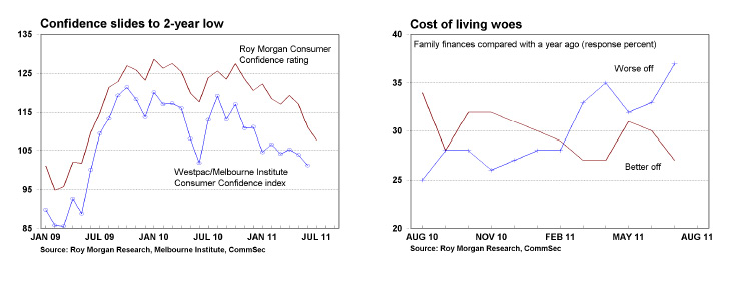
- In political terms, the Federal Government faces significant risks in proposing a new tax on carbon. The tax is far from simple, making the selling job more difficult. The “Clean Energy Future” documents alone total 250 pages. And, rightly or wrongly, the fact that Julia Gillard ruled out a carbon tax ahead of the election will mean that consumers will be sceptical that they won’t be worse off with the introduction of the new tax. Consumer confidence is currently weak with the principal concern being on the rising cost of living and impact on household finances. The new carbon tax won’t ease those concerns – especially in the short term.· If opinion polls show a substantial fall in support for the Government then this will increase political uncertainty. Understandably foreign investors will be reluctant to put money to work in Australia until the carbon tax legislation is passed. There will be on-going hesitancy to invest until the tax begins in July 2012.
What are the details of the proposed tax? (note: much of the detail below is directly taken from Government documents)
- The Federal Government has proposed a “Clean Energy Future” program” that involves:
- introducing a carbon price
- promoting innovation and investment in renewable energy
- encouraging energy efficiency
- creating opportunities in the land sector to cut pollution.
- The Government has committed to reduce carbon pollution by 5 per cent from 2000 levels by 2020, and by up to15 or 25 per cent depending on the scale of global action. These targets will require cutting expected pollution by at least 23 per cent in 2020. The Government also commits to a new 2050 target to reduce emissions by 80 per cent compared with 2000 levels.
Carbon price
- The Government is proposing a tax of $23 per tonne on carbon emissions to begin from July 1 2012. The carbon pricing mechanism will be fixed for the first three years and will rise at 2.5 per cent per annum in real terms. On 1July 2015, the carbon price will transition to a fully flexible price under an emissions trading scheme, with the price determined by the market.
- A carbon price will be applied to domestic aviation, domestic shipping, rail transport, and non-transport use of fuels. A carbon price will not apply to household transport fuels, light vehicle business transport and off-road fuel use by the agriculture, forestry and fishing industries. Household fuel is exempt from the tax. The Government intends to apply a carbon price to heavy on-road transport from 1 July 2014. This measure was not agreed by the Multi-Party Climate Change Committee.
- There will be a household assistance package and it is estimated that 50 per cent of the revenue from the carbon tax will be spent on household assistance.
- The Federal Government claims that the average household will see cost increases of around $9.90 per week, while the average assistance provided will be around $10.10 per week. The effects of the carbon tax are estimated to lift the Consumer Price Index by 0.7 per cent in 2012/13.
- The cost of electricity for the average family is expected to increase by $3.30 a week with gas up $1.50 a week and food up by $1 a week.
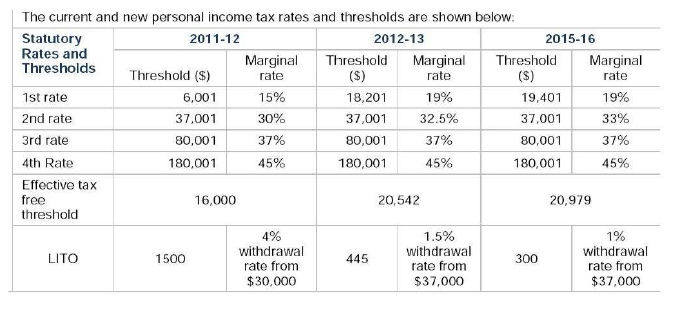
- The Federal Government is also proposing that the revenue raised from the carbon tax will allow the tax-free threshold to be more than trebled to $18,200 in 2012-13. From 2015, the tax-free threshold will be further raised to $19,400.
- The Government estimates that 4 million households will be better off – that is, they will receive assistance that covers at least the average price impact of the carbon price on their cost of living.· Pensions, allowances and benefits will also increase. Pensioners and self-funded retirees will get up to $338 extra per year if they are single and up to $510 per year for couples, combined. Families with two children will get up to $220 in extra Family Tax Benefit Part A, and other families will get up to $110 per child. Families will get up to an extra $69 in Family Tax Benefit Part B. Allowance recipients will get up to $218 extra per year for singles,$234 per year for single parents and $390 per year for couples, combined. Self-funded retirees on the Commonwealth Seniors Health Card (CSHC) holders will get $338 per year for singles and $510 per year for couples, combined, through their Seniors Supplement.
The Climate Change Authority (CCA)
- The CCA will be established by legislation as an independent body to provide expert advice on key aspects of the carbon pricing mechanism and the Government’s climate change mitigation initiatives. The Government will remain responsible for carbon pricing policy decisions with significant and far-reaching implications. A Clean Energy Regulator will be established to administer the carbon pricing mechanism within a limited and legislatively prescribed discretion.
Federal Government initiatives
- Clean Energy Corporation: The Federal Government will invest $10 billion in a commercially orientated Clean Energy Corporation. Of the total $5 billion will be dedicated to investments in renewable energyprojects. The other $5 billion stream will fund investments in renewable energy, energy efficiency and clean technology.
- Australian Renewable Energy Agency (ARENA): The Government has proposed establishing a new,independent statutory body – the Australian Renewable Energy Agency (ARENA). “The Australian Government is funding around $3.2 billion in renewable energy investment to promote the research and development of renewable energy technologies”.
- Carbon Farming Initiative: The Government proposes a Carbon Farming Initiative for farmers and landholders that take steps to reduce carbon pollution. It will do this by creating credits for each tonne of carbon pollution which can be stored or reduced on the land. These credits can then be sold to other businesses wanting to offset their own carbon.
- Clean Technology Investment Program: The program will support manufacturers by providing $800 million in grants to upgrade to less polluting equipment and cleaner technologies. It will boost their international competitiveness and help keep manufacturing strong. Funding will be provided on a co-contribution basis,with industry providing three dollars for every dollar provided by the Government.
- Clean Technology Food and Foundries Investment Program: The Government will provide $200 million in grants to help companies in food processors, metal forgers and foundries industries to upgrade to less polluting equipment and cleaner technologies.
- Clean Technology Innovation Program: The Government will provide grants of up to $200 million through the Clean Technology Innovation Program over five years to support business investment in renewable energy, low emissions technology and energy efficiency. This could support manufacturers to develop new clean technology products.
- Energy Security Fund: The Government proposes an Energy Security Fund. The Government will seek to negotiate the closure of around 2000 megawatts (MW) of generation capacity by 2020 and provide transitional assistance to the most strongly affected coal-fired power stations.
Carbon permits
- The Government will allocate Australian carbon permits to the most emissions-intensive and trade-exposed industries. This will shield eligible businesses from the full impact of a carbon price, while retaining incentives to reduce carbon emissions.
- The most emissions-intensive and trade-exposed activities will initially be eligible for 94.5 per cent shielding from the carbon price. A second category of assistance will provide an initial shielding level of 66 per cent of the carbon price. This will apply to activities assessed as having a lower risk of carbon leakage. LNG projects will also receive a supplementary allocation to ensure an effective assistance rate of 50 per cent, in recognition of the wide dispersion of emissions among some prospective LNG developments. The assistance rates will be reduced by a carbon productivity contribution’ of 1.3 per cent a year to provide additional incentives over time for these industries to reduce pollution.
Assistance for small business
- The Federal Government says that small businesses will benefit from being able to claim an immediate tax deduction for assets costing up to $6,500 under changes to business tax deductions. This will help business invest in more energy efficient equipment and help small businesses to respond to the carbon price. The small business instant asset write-off threshold will be increased to $6,500. This applies to businesses with a turnover of less than $2 million a year.
The Jobs and Competitiveness Program
- The Jobs and Competitiveness Program will support local jobs and production, and encourage industry to invest in cleaner technologies. The ongoing program will provide $9.2 billion of assistance over the first three years of the carbon pricing mechanism, targeted at companies that produce a lot of carbon pollution but are constrained in their capacity to pass through costs in global markets. Assistance will be provided to around 40-50 of these ‘emissions-intensive trade-exposed’ industrial activities, such as steel, aluminium, cement and zinc manufacturing. Businesses producing over 80 per cent of the manufacturing sector’s emissions are expected tobe eligible for assistance under this program.
Additional measures proposed by the Government:(additional to that agreed by Multi Party Climate Change Committee)
Treatment of heavy on-road transport
- The Government intends to apply an effective carbon price to fuel used by heavy on-road transport from 1 July2014 through changes in fuel tax credits. This will significantly broaden coverage of the carbon price as heavy on road vehicles account for over 25 per cent of road transport emissions. Moreover, as rail, domestic shipping and domestic aviation will face an effective carbon price, extending coverage to include heavy on-road vehicles will provide consistent treatment across the freight sector.
Steel Transformation Plan
- The Steel Transformation Plan will provide assistance worth up to $300 million over five years to encourage investment and innovation in the Australian steel manufacturing industry. This will help the sector transform into an increasingly efficient and economically sustainable industry in a low-carbon economy. The Steel Transformation Plan is designed to improve the environmental outcomes of steel manufacturing and promote the development of workforce skills.
Coal Sector Jobs Package
- The Coal Sector Jobs Package will provide assistance over six years to the most emissions-intensive coal mines. The Government has allocated $1.3 billion to this program.
Coal Mining Abatement Technology Support Package
- The Coal Mining Abatement Technology Support Package will provide transitional assistance to help the coal industry implement carbon abatement technologies. Assistance will be provided in the form of grants on a co contribution basis. The Government has allocated $70 million over six years to this program.
What are the implications for investors?
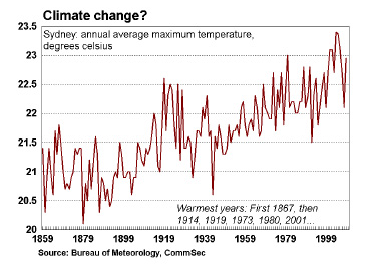
- The United Nations climate change conference in December may not renew the Kyoto agreement on carbon emissions. Simply, there has been a re-assessment of the climate change theory. While the Clean Energy Future documents warn of global warming and point to a similar situation in Australia, long-run figures from the Bureau of Meteorology indicate that the gradual upward trend in temperatures has occurred for almost 150 years. The risk isthat Australia ends up leading the world on an issue whether there is less agreement on the right response.
- The Government gives the impression that it has created the perfect tax – where no one is worse off, in fact some are better off, and Australia takes a lead over other countries to price carbon emissions. But if it was that easy and painless then Governments would have done it years ago.
- The simple fact is that there is a cost to the economy – the budget bottom line is worse off by $4.3 billion with much of that impact actually made in the current financial year. Employment and income are expected to increase with the carbon tax, but will do so at a slower pace than without the carbon tax.
- Foreign investors will continue to be cautious on investing in Australia. If the carbon tax is introduced and runs successfully then foreign investors may warm to Australia – but success is unlikely to be proven for a number of years. There are risks in Australia moving at a faster pace on pricing carbon than other countries. The economy will be negatively affected in the short-term, albeit modestly. And then there is the mining tax, which has yet to be passed by Parliament.
- The Australian dollar is unlikely to be significantly impacted. If anything the impact is mildly negative, but that clearly would be welcomed by miners, rural producers, manufacturers and tourism operators.
- The extent of change and uncertainty for the coal and steel sectors as well as manufacturers will lead to a softening of investment support in the short term.
- While the Government has been generous with income and taxation support for households, consumers are likely to remain sceptical. It is important to remember that household incomes have been rising but the sharp lift in the cost of living – especially gas and electricity bills – has still made consumers cautious about spending. Electricity and gas are inelastic goods meaning that substantial changes in prices lead to only small changes in demand.
- Any increase in the headline rate of inflation makes the Reserve Bank nervous. So the Reserve Bank is more likely to lean in favour of rate hikes in the first half of2012/13 as the new tax gets bedded down.The other risk relates to the potential for business to lift prices in response to higher electricity and gas prices.
Produced by Commonwealth Research based on information available at the time of publishing. We believe that the information in this report is correct and anyopinions, conclusions or recommendations are reasonably held or made as at the time of its compilation, but no warranty is made as to accuracy, reliability orcompleteness. To the extent permitted by law, neither Commonwealth Bank of Australia ABN 48 123 123 124 nor any of its subsidiaries accept liability to any person for loss or damage arising from the use of this report.The report has been prepared without taking account of the objectives, financial situation or needs of any particular individual. For this reason, any individual should,before acting on the information in this report, consider the appropriateness of the information, having regard to the individual’s objectives, financial situation and needs and, if necessary, seek appropriate professional advice. In the case of certain securities Commonwealth Bank of Australia is or may be the only market maker.This report is approved and distributed in Australia by Commonwealth Securities Limited ABN 60 067 254 399 a wholly owned but not guaranteed subsidiary of Commonwealth Bank of Australia. This report is approved and distributed in the UK by Commonwealth Bank of Australia incorporated in Australia with limited liability.Registered in England No. BR250 and regulated in the UK by the Financial Services Authority (FSA). This report does not purport to be a complete statement or summary. For the purpose of the FSA rules, this report and related services are not intended for private customers and are not available to them.Commonwealth Bank of Australia and its subsidiaries have effected or may affect transactions for their own account in any investments or related investments referred to in this report.


