
Smaller investors and instos expected to increase allocations to unlisted infrastructure

Nicole Connolly
Despite a recent rise in the number of listed infrastructure fund offerings, smaller investors have largely been excluded from the increasingly popular unlisted infrastructure assets.
That is changing, according to independent funds management group Infrastructure Partners Investment Fund Management Pty Ltd (IPIFM).
Australia’s larger industry superannuation funds have invested in unlisted infrastructure since the mid-1990s, accessing the benefits and diversification provided by these real and reliable income generating assets, says Nicole Connolly, Executive Director of IPIFM.
In contrast, she says “the nation’s smaller institutional investors, high net worth individuals (HNWIs) and close to 600,000 SMSFs have traditionally been excluded from this market.
However, she notes that low interest rates and term deposits, coupled equity market volatility are prompting smaller investors to seek new ways to generate returns, beyond their traditional allocation concentration to Australian equities, cash and property. “And this is extending to unlisted infrastructure.
“Infrastructure, and particularly unlisted infrastructure is attractive due to its typically stable, reliable returns and low correlation to equities.
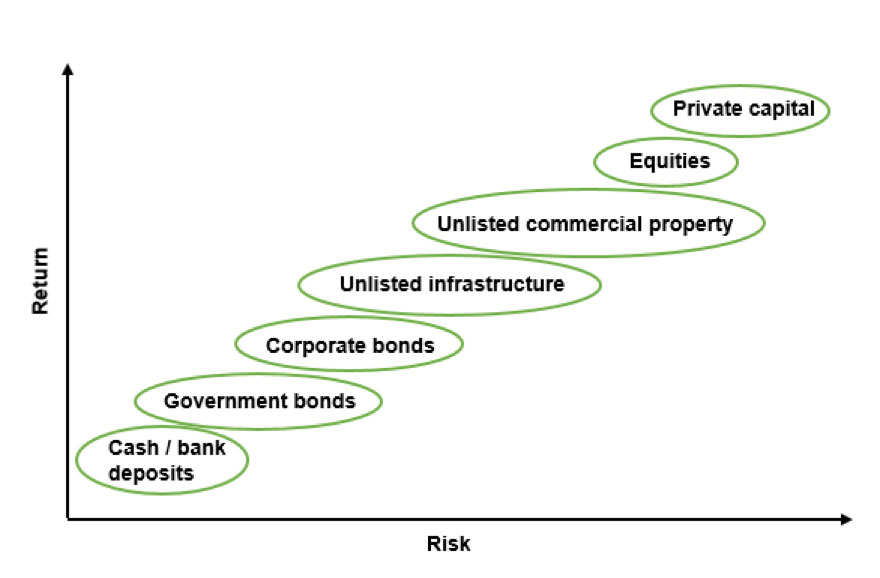
“Infrastructure in a portfolio sits between government bonds and equities in terms of risk return, making it an excellent portfolio diversifier,” she says (and as shown below).
“Infrastructure’s potential for stable, reliable income and capital growth is derived from long-term, stable and predictable cash flows, typically underpinned by long-term contracts or a regulated asset base; with high visibility of income and revenues often linked to inflation.”
This is one reason why unlisted infrastructure investments accounts for between 7- 12% of major institutional investor portfolios, with the Future Fund having some 7% allocated to infrastructure and Australian Super 12%, as at the end of 2017.
“We have recently witnessed an increase in the number of listed infrastructure funds on offer,” says Ms Connolly, “however no-one has been able to address the issue of access to unlisted infrastructure.
Why the increase in investor demand?
Ms Connolly notes unlisted infrastructure is renowned for its ability to provide consistent, reliable long-term income AND capital gains through the stable and predictable cash flows from diversified assets such as airports, seaports, power generation utilities and more.
“These returns have historically returned 9% p.a.-plus. This is more than the yields from Australia’s top dividend stocks of the big four banks and well above the rates of term deposits.
“Couple this with the recent uncertainty over the future of franking credits and dividends and it is little wonder that more investors are increasingly considering the predictable and consistent returns of unlisted infrastructure. All without the associated market volatility of listed investments.
“The key is to determine which assets and projects will provide the greatest, and most consistent, returns,” she says.


