
 Super funds have emerged from the recent market downturn in top shape, recovering from a string of losses suffered in late 2018 as investors regained confidence and share markets were bolstered by a generally positive earnings season.
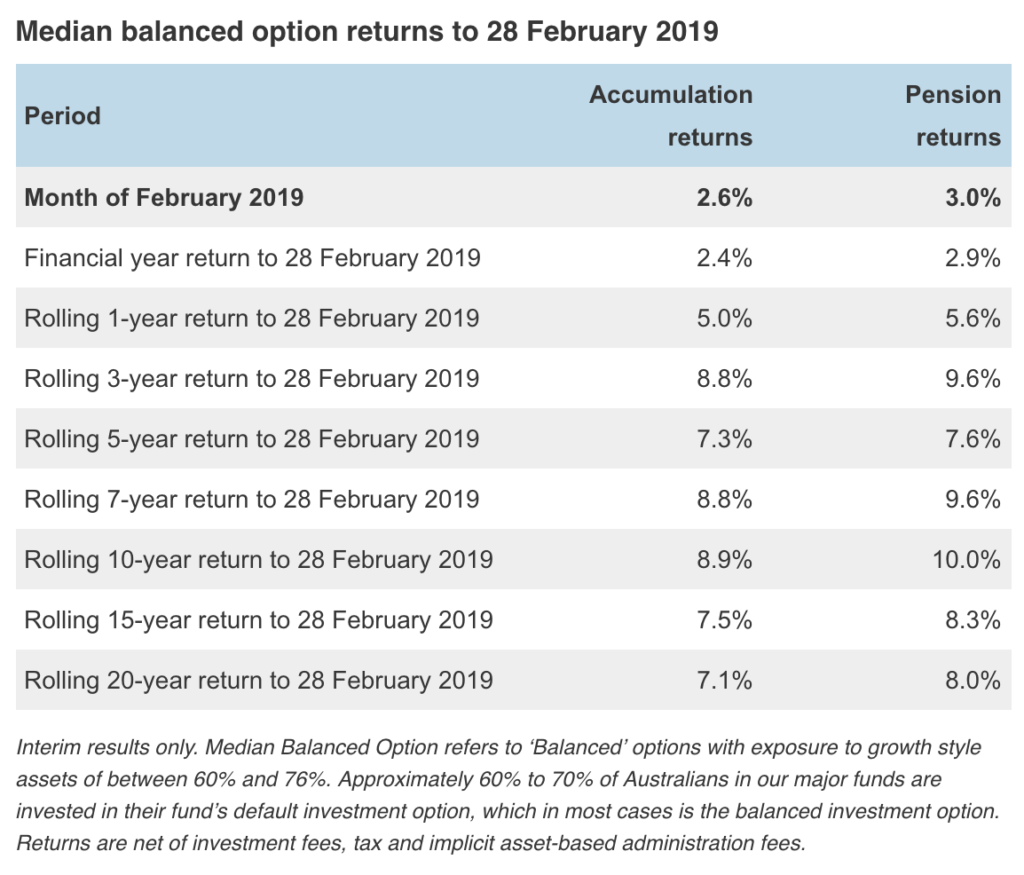
February’s median Balanced option return of 2.6% was the highest monthly return since July 2016, while the median Growth option did even better, returning 3.3% over the month. Highlighting the strength of the market rebound, the median Australian Shares option returned 5.4% over the month, outperforming the median International Shares option, which returned 4.2%.
This contrasts with performance at the end of 2018, which saw super funds hit by four consecutive months of negative returns. Following February’s performance, members invested in the median Balanced option are now fully recovered from last year’s market sell-off.
“Super fund performance over the last six months has been a great example of the sector’s resilience in challenging market conditions,” said SuperRatings Executive Director Kirby Rappell.
“Markets have generally reacted favourably to the recent round of earnings in Australia and the US, while trade tensions have eased and central banks have backed away from further tightening. But most participants expect volatility to return in the near future, meaning funds must remain focused on long-term performance.”
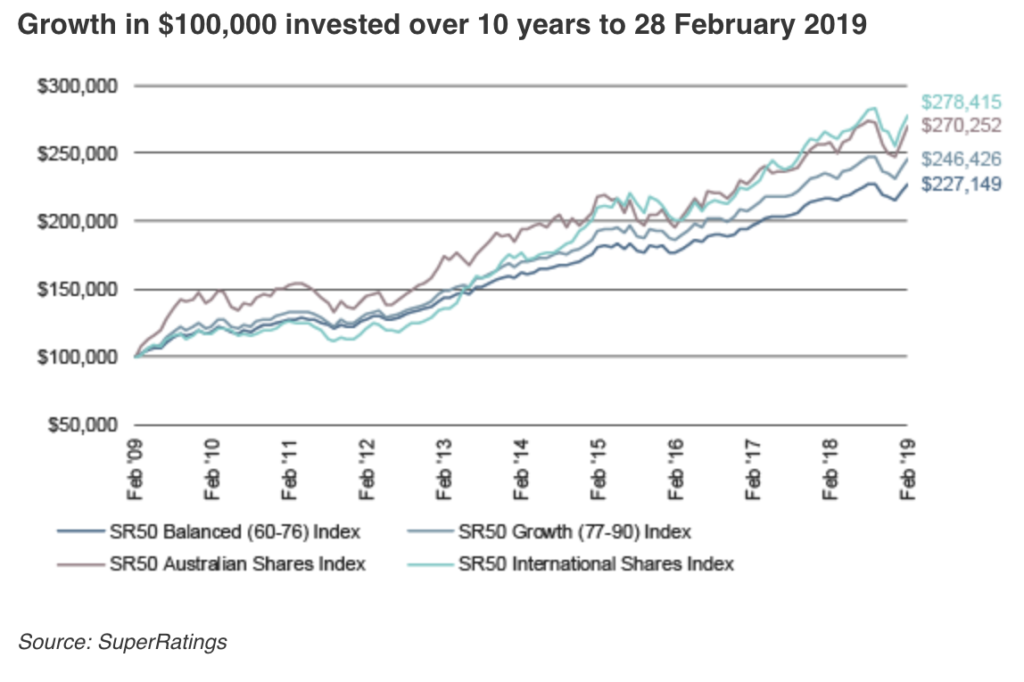
The positive performance for super funds in February has helped to boost total balances over the ten-year period ending 28 February 2019, with $100,000 invested in the median Balanced option in February 2009 now worth $227,149. The median Growth option is worth $246,426 over the same period, while $100,000 invested in domestic and international shares ten-years ago is now worth $270,252 and $278,415 respectively. In contrast, $100,000 invested in the median Cash option ten years ago would only be worth $129,990 today.
Fund performance
Australia’s top-performing funds continue to deliver for members, with TelstraSuper’s top-ranking balanced option returning 9.7% per annum over the past 10 years, followed closely by industry funds QSuper and UniSuper.
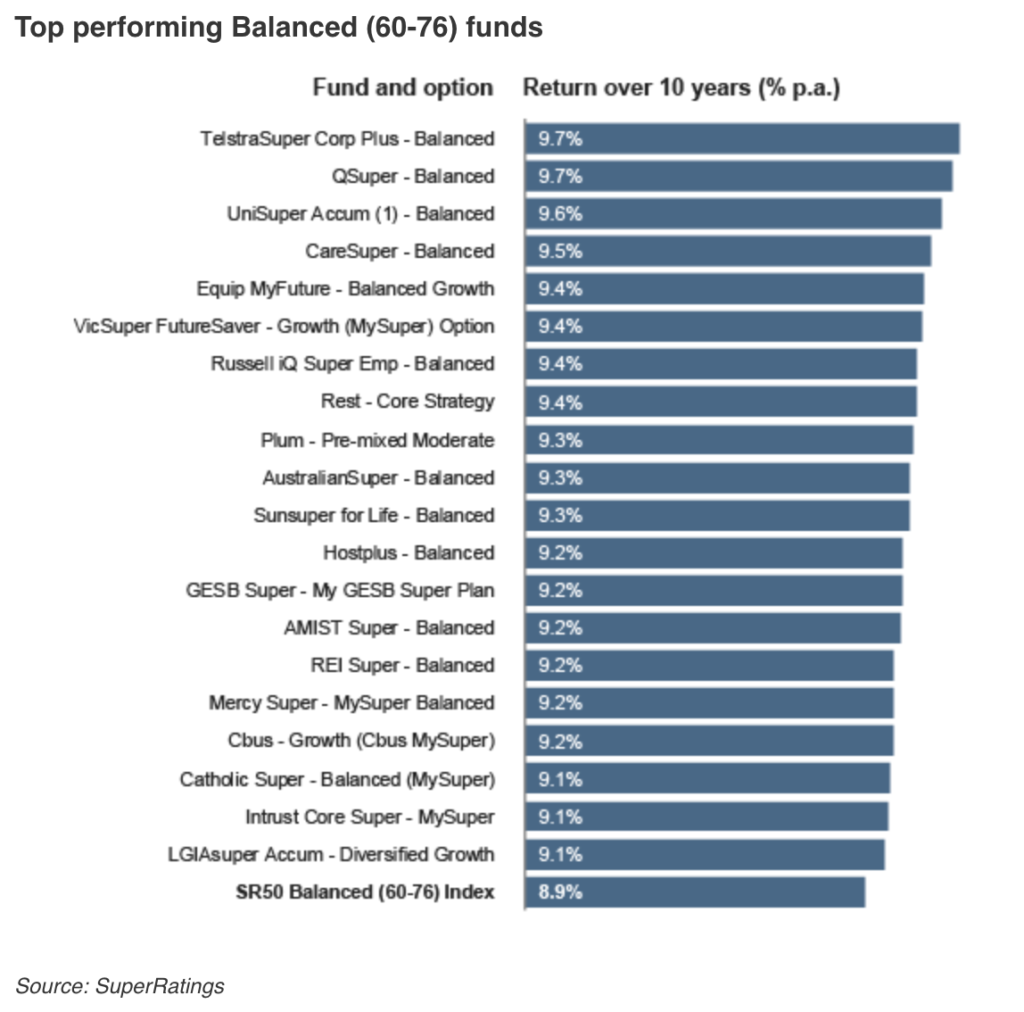
The rankings show how tight competition is among Australia’s leading funds when it comes to long-term performance. Mr Rappell said the results highlight the need to ensure members continue to have a wide range of high-performing funds to choose from.
“If you look at the top 20 performing super funds, each of them have achieved an average return of over 9.0% per annum over 10 years,” said Mr Rappell. “Over time it is common to see movement up and down within the rankings, and this is good for members because it shows there is competition within the sector.”


