
Evergreen launches results of Quarterly Responsible Investment performance survey

Angela Ashton
Key findings
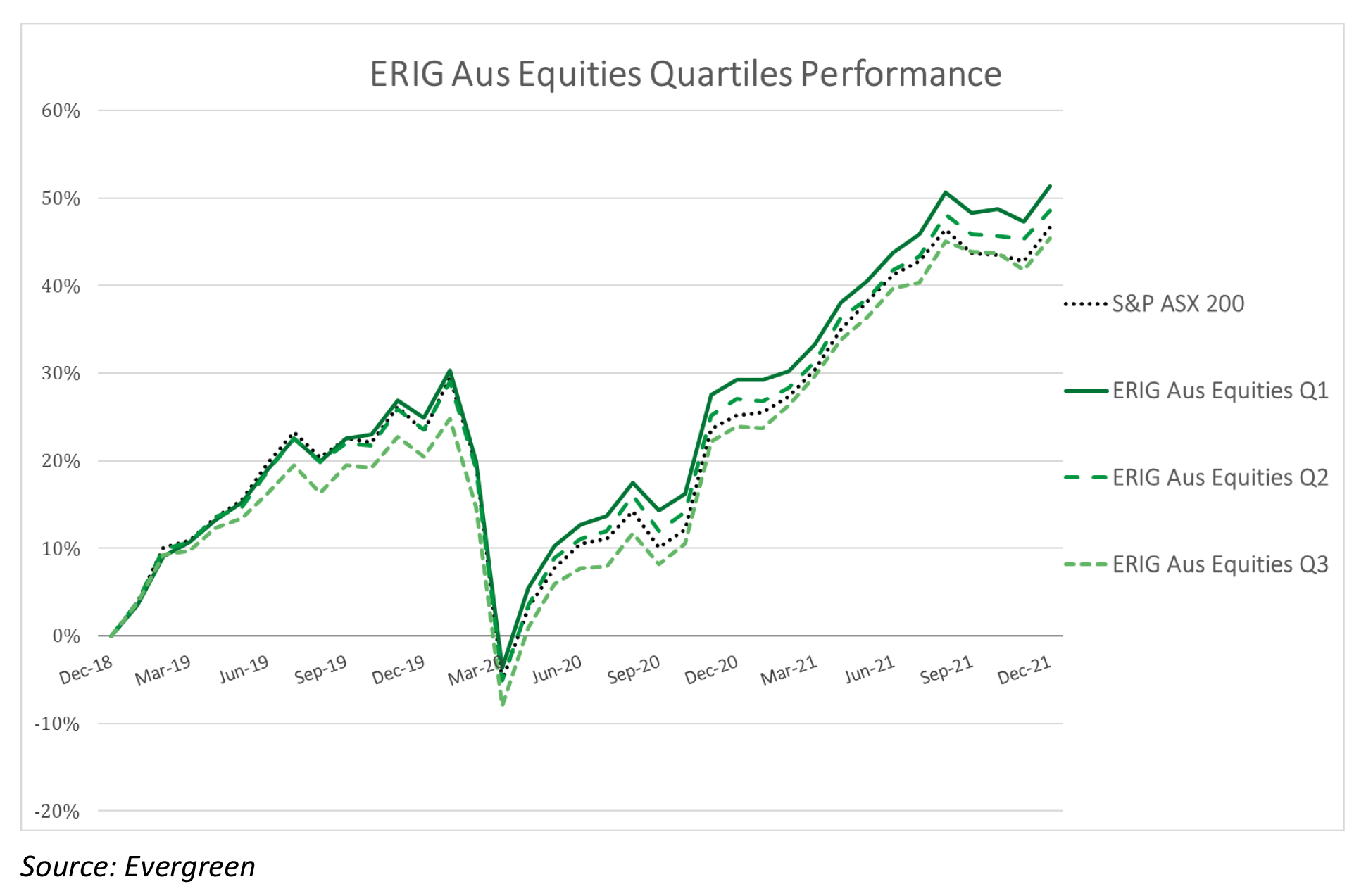
- Quartile One Australian equity funds continue to outperform the S&P/ASX200 and lower quartiles.
- Performance and sustainability aren’t mutually exclusive.
- You can’t judge a fund by its name, mixed bag of funds in top ten.
The Evergreen Responsible Investment Grading (ERIG) Index has released its quarterly Responsible Investment performance survey and the findings show a number of common misconceptions to be untrue.
The survey included over 100 Australian Equities funds, grouped into their ERIG quartile rankings[1], and compared their performance to the S&P/ASX 200 Index. First Quartile funds, that is those with the highest ESG credentials, outperformed the benchmark by over 0.5% per annum over the past three years, after all fees.
This is consistent with the previous quarter’s results.
These funds also outperformed the growth and value indices but underperformed the quality index.
The perception that performance and sustainable investing are mutually exclusive was shown to be incorrect with these highly ranked ERIG funds consistently outperforming the benchmark, while also scoring highly amongst peers for their Responsible Investment (RI) capabilities.
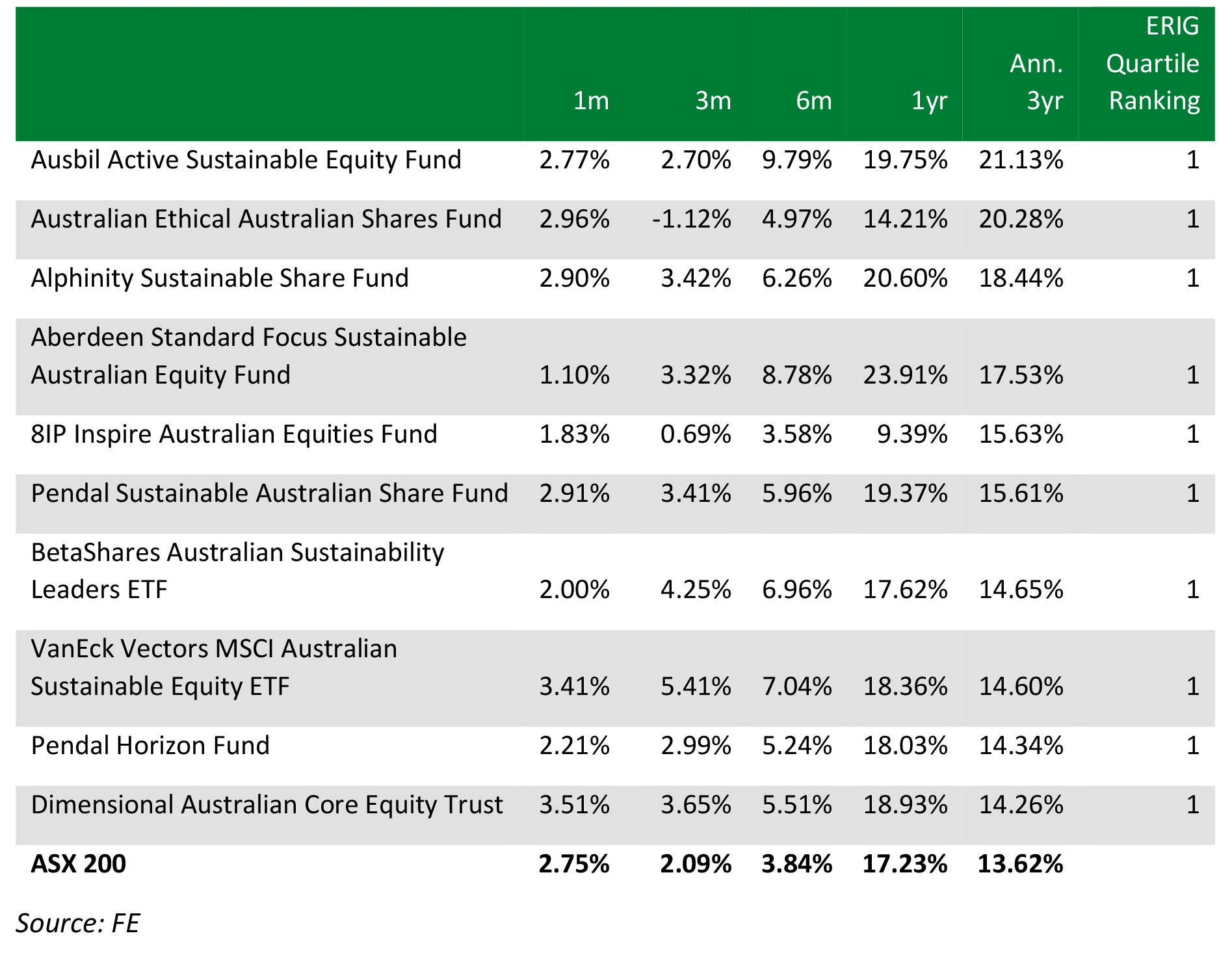
Interestingly, the top ten performing First Quartile Australian Equities funds included RI strategies offered by ‘mainstream’ fund managers, ETFs, and those managers who solely invest through a RI lens.
“One particular first quartile fund manager’s sustainable equity fund outperformed the benchmark by 7.5%pa over three years, while the ETFs in the top ten also outperformed by 2%pa,” says Angela Ashton, ERIG Index founder.
“Fund managers that are not necessarily known for their ‘sustainable’ or ‘ESG’ products have scored similarly well in terms of performance and Responsible Investment scores, highlighting that we must look beyond the name and instead at the actual intention and actions of a fund manager. Not just to avoid greenwashing, but to find gems as well.”
“We are beginning to see the rise of Responsible Investment being woven into the standard practice of fund managers and this essentially results in best practice. Best practice sees long term sustainability and long term returns delivered simultaneously.”
Results
———


