
CPD: Maximising super contributions before retirement

What contribution strategies can advisers utilise to help their clients increase their superannuation balances in the lead up to retirement.
For clients in their fifties and early sixties, superannuation stops being a distant concept and becomes a countdown. This article, proudly sponsored by Allianz Retire+, explores how clients can maximise their contributions to super in these important years.
The mortgage is often paid down or close to it. Children are typically more financially independent. Income is frequently at its peak. Despite this, many Australians in this position aren’t making the most of the contribution opportunities available to them, simply because they’re unaware of what’s possible in the time remaining.
As you would be aware, this is the decade that matters most for building a super balance, that can make the difference between a ‘modest’ or ‘comfortable’ retirement as defined by ASFA in its Retirement Standard[1].
Money contributed at 55 has fifteen or more years to compound before it needs to support a retirement; funds contributed at 64 have considerably less. The tools available to pre-retirees, concessional contributions, non-concessional contributions and a handful of structural strategies like downsizer contributions and spousal splitting, are well established. What’s often missing is a clear plan for using them before the window available to each closes.
This article sets out the key contribution strategies advisers should discuss with clients in the ten years before retirement. It covers how the concessional and non-concessional caps work under the current rules, how carry-forward and bring-forward provisions can be used to catch up on missed contributions, and where downsizer and spouse contributions fit into a broader plan. These are the conversations that could make a significant difference to a client’s retirement outcome.
How much is enough?
Is it a million dollars? Twice that? Will a client get by on half that amount?
As you likely tell each client, it depends on a range of factors. Lifestyle, goals, home ownership, health and control. The latter point is important. In 2024-25[2], the top 3 reasons retirees ceased their last job were: reaching retirement age or eligible for superannuation (33%), sickness, injury or disability (13%) or retrenched, dismissed or no work available (6%). Retirees who left their last job due to sickness, injury or disability had the lowest retirement age, on average. So, that’s nearly 20% who had no control over the timing of the retirement…and of course, their readiness for this next stage of life (that naturally leads into a discussion on the importance of insurance, but that’s beyond the scope of this article).
Many pre-retiree clients are asset-rich and income-comfortable, but their super balance doesn’t necessarily reflect either. It’s a common pattern: a client who has managed a mortgage responsibly, built some equity and maintained a solid income for decades, arrives at 55 with a super balance that won’t meet their retirement income needs. The gap is generally due to a working life spent focused on other priorities, with super running quietly in the background.
What changes in this decade is capacity. For many clients, mortgages are often paid off or at least paid down. Children are frequently independent and the client’s earnings potential is commonly at its highest point. For many clients, this is the first time in years that meaningful discretionary income exists, and it coincides with the last stretch of time available to put that income to work inside super.
There’s also a psychological shift worth noting. Clients in their fifties and sixties tend to be more engaged with retirement planning than they were a decade earlier. Retirement has moved from an abstract future event to a specific, calculable date. This engagement is an opening – clients who weren’t interested in contribution strategies at 40 are often ready to act at 55, provided the options are explained clearly and the time pressure is made real.
And while there’s no definitive answer to the ‘how much is enough’ question, each client’s financial and lifestyle goals will contribute to the answer. ASFA’s retirement standard can also provide some guidance. Its most recent update[3] has seen a considerable climb from previous years, with the required superannuation balances jumping from $595,000 to $630,000 for singles and from $690,000 to $730,000 for couples to enjoy a ‘comfortable’ retirement.
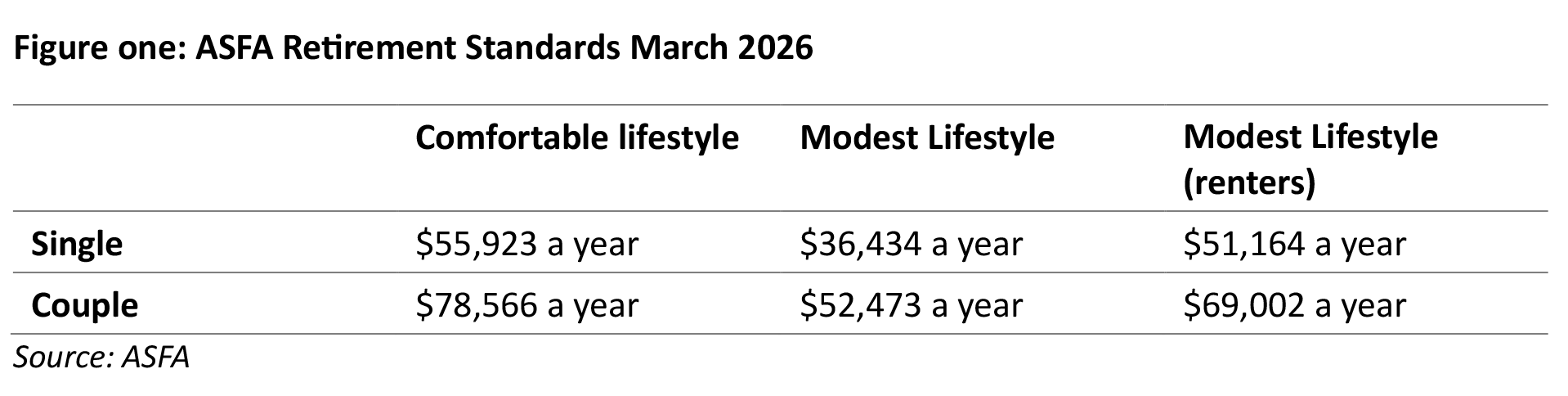
The point is, however, that it is important for clients to start their retirement savings early and to maximise contributions during the 10-15 years prior to retirement.
Concessional contributions: the core lever
Concessional contributions are the most commonly used tool available to pre-retiree clients. For the 2026-27 financial year, the concessional cap is $32,500; this covers employer superannuation guarantee (SG) payments, salary sacrifice arrangements and personal contributions claimed as a tax deduction.
For most PAYG clients, the SG rate of 12% leaves meaningful room under the cap. A client earning $150,000 receives roughly $18,000 in SG contributions, leaving around $14,500 in unused concessional cap space each year. Salary sacrifice is the straightforward route for employees wanting to fill that gap.
Self-employed clients can make personal deductible contributions to a complying superannuation fund up to the maximum contributions cap. They must complete a Notice of Intent (NOI) to claim or vary a deduction form and provide it to their super fund before lodging that year’s tax return. The super fund will provide a formal written acknowledgement confirming they received and accepted the NOI. Once received, the acknowledged deduction amount is included in your client’s tax return. Once claimed as a deduction, the contribution is treated as a concessional contribution.
The tax case is usually the easiest part of the conversation. Concessional contributions are taxed at 15% inside the fund, compared with the marginal rates likely paid by your clients. For a client on the top marginal rate, salary sacrificing into super rather than taking income as salary represents a substantial tax saving, on top of the retirement benefit.
Advisers should flag Division 293 tax for clients with income above $250,000, which adds an additional 15% tax on some or all of their concessional contributions, though even at this level the total tax rate on contributions typically remains below the top marginal rate[4].
The carry-forward rule
Clients with a total super balance below $500,000 at the previous 30 June can access unused concessional cap space from the past five financial years, on top of the current year’s cap. For 2026-27, this can lift a client’s effective concessional cap as high as $175,000, combining the current $32,500 cap with unused amounts from 2021-22 through to 2025-26.
This provision is especially important for those clients who may have taken time out of the workforce, worked part-time for a period, ran a business with modest early profits, or simply didn’t prioritise super contributions in earlier years. A client realising a major asset, receiving an inheritance or collecting a bonus or redundancy payment can use the carry-forward rule to direct a large lump sum into super at concessional tax rates, rather than defaulting to a non-concessional contribution or leaving the money outside super.
Unused amounts expire after five years on a rolling basis, and the total super balance test is assessed annually; a client who crosses the $500,000 threshold loses access to the provision going forward. This makes an annual review of carry-forward eligibility, rather than a one-off conversation, an important part of the service for clients in this age bracket.
Non-concessional contributions and the bring-forward rule
Non-concessional contributions are the tool for clients who have money to add to super beyond what the concessional cap allows, typically from an asset sale, an inheritance or accumulated savings outside super. For 2026-27, the annual non-concessional cap is $130,000. Contributions are made from after-tax income and not taxed again on entry to the fund.
On its own, a $130,000 annual cap is useful but limited for clients looking to make a meaningful lump sum contribution; it’s the bring-forward rule that makes non-concessional contributions an interesting pre-retirement strategy. It allows clients under 75 to access up to three years of the cap in a single financial year, provided their total super balance falls under the relevant threshold.
From 1 July 2026, clients with a total super balance under $1.84 million at the previous 30 June can contribute up to $390,000 in one year. Clients with a balance between $1.84 million and $1.97 million can bring forward two years, allowing a contribution of up to $260,000. Above $1.97 million, no bring-forward is available, and the client is limited to the standard annual cap. Once a client’s total super balance reaches $2.1 million, the general transfer balance cap for 2026-27, non-concessional contributions are no longer available at all[5].
This makes non-concessional contributions a strategy constrained in two independent ways. Firstly, the total super balance test cuts off access as balances grow, and secondly, triggering the bring-forward rule locks in a fixed cap for the following two years regardless of any indexation that occurs during that period. For example, a client who triggers a bring-forward contribution in 2026-27 uses their full three-year allowance based on this year’s caps, even if the cap rises again in 2027-28 or 2028-29.
This highlights the importance of planning. A client who sells an investment property, business or other asset, or receives an inheritance or other lump sum in their late fifties or early sixties, will often have a choice about whether to direct proceeds into super or hold them outside it. For clients still below the total super balance thresholds, the bring-forward rule allows a substantial amount to move into a concessionally taxed environment in a single transaction. This is considerably more effective than spreading the same contribution over several years and risking a change in circumstances or eligibility along the way.
The main planning risk is timing. Total super balances are assessed at the previous 30 June, so a client’s eligibility for a given financial year is locked in before the year even begins. Advisers working with clients close to a threshold should model contribution timing well ahead of the relevant date, since a balance that moves across a threshold, whether through investment growth or an earlier contribution, can materially change the available strategy.
The downsizer contribution
The downsizer contribution is available to clients aged 55 and over, and it sits comfortably outside the caps already discussed. Eligible clients can contribute up to $300,000 each – or $600,000 per couple – from the sale of their home, with no work test and no total super balance restriction on eligibility. However, a downsizer contribution will be included in your client’s total superannuation balance when it is calculated at the end of the financial year which, in turn, may affect their future eligibility regarding some superannuation rules and entitlements.
Downsizer eligibility rules
The downsizer contribution is administered by the ATO and there are some rules to qualify:
- Your clients are aged 55 years old or older at the time they make the contribution
- The client’s home was owned by them (individually, as a couple or by their spouse) for 10 or more years before the sale. If only one spouse owned the home, the other is also eligible to contribute if the other conditions are met.
- The home being sold is a residential building in Australia and is not a caravan, houseboat, or mobile home.
- The sale qualifies for the main residence capital gains tax (CGT) exemption – either fully or partially; or if the home was purchased before 20 September 1985, it would have qualified if it were a CGT asset.
- Your client has not previously made a downsizer contribution from the sale of another home, or the partial sale of their current home.
- Your client provides the ‘Downsizer contribution into super’ form to their super fund before, or at the time they make the contribution.
- The contribution is made within 90 days of receiving the home sale proceeds (usually at settlement) unless your client applies for and is granted an extension of time by the ATO.
What makes this provision distinct from concessional and non-concessional contributions is that it sits outside both caps entirely. A client can make a full downsizer contribution in the same year they use their concessional cap, their carry-forward provisions, and the non-concessional bring-forward rule. It also remains available to clients whose total super balance exceeds $2.1 million.
For advisers, the downsizer contribution fits naturally into conversations you may already be having. Many clients in their late fifties and sixties will weigh up whether to stay in the family home or move to something smaller as part of their broader retirement plan. Where that move is already under consideration, the downsizer contribution turns a lifestyle decision into a substantial retirement funding opportunity.
A few details are worth flagging early in these conversations with clients, rather than after a sale has gone through. Firstly, the age threshold applies at the time the contribution is made, not at settlement, which could matter for a client selling close to their 55th birthday.
Secondly, while the downsizer contribution itself isn’t assessed for eligibility, the proceeds will be counted in the client’s total super balance from 1 July following the contribution, which can affect their access to non-concessional contributions and carry-forward provisions in future years.
Finally, you should also flag the Age Pension impact where relevant. Moving the sale proceeds from an exempt principal residence into an assessable super balance can affect a client’s means-tested entitlements, even before they’ve reached pension age.
Spouse contributions and contribution splitting
Where couples approach retirement with uneven super balances, spouse contributions and contribution splitting offer two ways to address it; one is aimed at building the lower balance directly and the other at redistributing what’s already been contributed.
Spouse contributions
The spouse contribution tax offset rewards a contributing partner for adding to a lower-earning spouse’s super. A client can claim a tax offset of up to $540 by contributing $3,000 or more to their spouse’s super, provided the receiving spouse’s income is below $37,000, with the offset phasing out entirely at $40,000.
The contribution itself counts as a non-concessional contribution for the receiving spouse, so it draws on their non-concessional cap rather than the contributing partner’s. Eligibility also depends on the receiving spouse’s total super balance sitting under the general transfer balance cap, $2.1 million for 2026-27, at the previous 30 June.
The dollar amounts here are modest against the scale of the other strategies in this article, so the value isn’t really in the offset itself. It’s in the habit of directing new contributions toward whichever partner needs the balance built up, which matters more the closer a couple gets to retirement.
Contribution splitting
Contribution splitting works differently and solves a different problem. Rather than directing new money, it allows a client to transfer up to 85% of their own concessional contributions from the previous financial year into their spouse’s super account. There’s no tax offset attached and no income test on the receiving spouse. It’s treated as a rollover rather than a fresh contribution, so it doesn’t use any of the receiving spouse’s own caps.
For pre-retiree couples, the case for splitting usually comes down to balance equalisation. A couple with $1.6 million held mostly in one partner’s name faces a different set of constraints than a couple with the same combined balance split evenly. The partner with the larger balance is closer to the total super balance thresholds that restrict non-concessional contributions and carry-forward eligibility, while the partner with the smaller balance has unused cap space going to waste. Splitting contributions each year, even in modest amounts, keeps both partners’ balances progressing together rather than one hitting a ceiling while the other has room to spare.
There’s a second reason equalisation matters for this age group: transfer balance cap planning. Since each person has their own transfer balance cap, a couple with evenly split balances can generally move more combined super into a tax-free pension phase than a couple with one large balance and one small one. For clients approaching retirement with a significant gap between their balances, this is often the more persuasive reason to start splitting contributions now rather than waiting.
The strategies discussed in this article, concessional and non-concessional contributions, carry-forward and bring-forward provisions, downsizer and spouse contributions, aren’t new or complicated in isolation. What makes them powerful in the pre-retirement decade is timing. A client who understands what’s available at 55 and acts on it has a materially different outcome to a client who has the same conversation at 63, simply because there’s less time left for the strategy to work and less room left under the thresholds that govern it.
This is also why a mid-life super review shouldn’t be treated as a one-off exercise. Nearly every strategy in this article, the carry-forward concessional cap, the non-concessional bring-forward rule, spouse contribution eligibility, hinges on a client’s total super balance at the previous 30 June. That figure isn’t static. It moves with investment returns, with contributions made earlier in the year, and with life events like an inheritance or a property sale. A client who was eligible for carry-forward last year may not be this year, and a client approaching the $500,000 or $1.84 million thresholds needs that checked before any contribution advice is given.
For advisers, the practical implication is straightforward. Total super balance should be reviewed annually for every client in this age bracket, ahead of any conversation about caps or contribution strategy. Building this check into an annual process is what turns these strategies from occasional advice into a consistent and important component of retirement planning.
Take the FAAA accredited quiz to earn 0.5 CPD hour:
CPD Quiz
The following CPD quiz is accredited by the FAAA at 0.5 hour.
Legislated CPD Area: Technical Competence (0.5 hrs)
ASIC Knowledge Requirements: Superannuation (0.5 hrs)
please log in to start this quiz

———–
Notes:
[1] https://www.superannuation.asn.au/consumers/retirement-standard/
[2] BS, Retirement and Retirement Intentions, Australia, October 2025
[3] ASFA, Retirement Standard March quarter 2026
[4] https://www.ato.gov.au/individuals-and-families/super-for-individuals-and-families/super/growing-and-keeping-track-of-your-super/caps-limits-and-tax-on-super-contributions/division-293-tax-on-concessional-contributions-by-high-income-earners
[5] https://www.ato.gov.au/individuals-and-families/super-for-individuals-and-families/super/growing-and-keeping-track-of-your-super/caps-limits-and-tax-on-super-contributions/non-concessional-contributions-cap
CPD Quiz
The following CPD quiz is accredited by the FAAA at 0.5 hour.
Legislated CPD Area: Technical Competence (0.5 hrs)
ASIC Knowledge Requirements: Superannuation (0.5 hrs)
please log in to start this quiz
———–
Notes:
[1] https://www.superannuation.asn.au/consumers/retirement-standard/
[2] BS, Retirement and Retirement Intentions, Australia, October 2025
[3] ASFA, Retirement Standard March quarter 2026
[4] https://www.ato.gov.au/individuals-and-families/super-for-individuals-and-families/super/growing-and-keeping-track-of-your-super/caps-limits-and-tax-on-super-contributions/division-293-tax-on-concessional-contributions-by-high-income-earners
[5] https://www.ato.gov.au/individuals-and-families/super-for-individuals-and-families/super/growing-and-keeping-track-of-your-super/caps-limits-and-tax-on-super-contributions/non-concessional-contributions-cap


Have feedback on this article? Contact Us
Earn CPD Points
 CPD: US middle market private credit – the investment case
In today’s rapidly shifting investment landscape, traditional sources of fixed income are struggling to meet the yield and diversification needs of investors. They are also becoming more closely correlated with [...]
 CPD: A new global order and implications for investors
The new global order differs from its predecessor in four ways, as outlined in the following article from GSFM’s investment partner TD Epoch. For decades, the US has been unrivalled [...]
 CPD: Is your approach to client risk profiling putting you at risk?
Introduction The shockwaves that followed the announcement of ‘Liberation Day’ tariffs by Donald Trump brought an abrupt and unsettling end to a three-year bull market. Major global indices plummeted by [...]
 CPD: Ethics and the advice practice
When last published, the FAAA’s Value of Advice Index[1] saw trust in financial advice at an all-time high, which reinforces the importance of ethical practice. This article, proudly sponsored by [...]
 CPD: Retirement income strategy choices
There’s a wide variety of income strategies used across the market, with an equally wide variety of labels attached to these strategies. Each varies in complexity, its ability to mitigate [...]