
Once considered the “forgotten space,” core equities are emerging as a potentially compelling allocation for U.S. equity investors—even during these volatile times. More recently, investors have tended to go passive in their core equity allocation —that sit at the intersection of growth and value— in favour of the stylistic growth and value strategies that tend to be tied to stages of the market cycle.
This perception has made it challenging for active managers to stand out in this segment. However, recent market dynamics, particularly the rise and fall of the so-called “Magnificent Seven” and the prevailing tariff-induced market volatility, underscores the need to re-evaluate core equities as a vital component of equity portfolios.
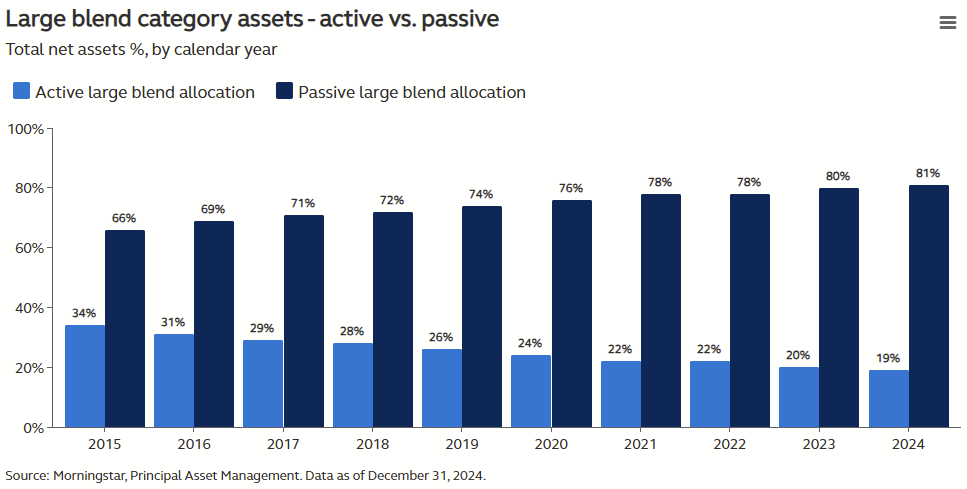
Many investors have gravitated towards passive strategies in core equities while actively pursuing large-cap growth and value stocks. It’s time to dispel the myth that core equities are best suited for passive management; they deserve renewed attention for their potential to enhance actively managed equity portfolios.
Dispelling decades of misconceptions around core equities
The truth is that core equities provide the broadest opportunity set for active management, presenting avenues for further upside in strong market environments and downside mitigation in weaker environments. An allocation to active core equities can lead to a lower average drawdown over long periods. This expansive space allows for tactical and agile active management, enabling investors to outperform across various sectors, including technology, financials, and consumer goods.
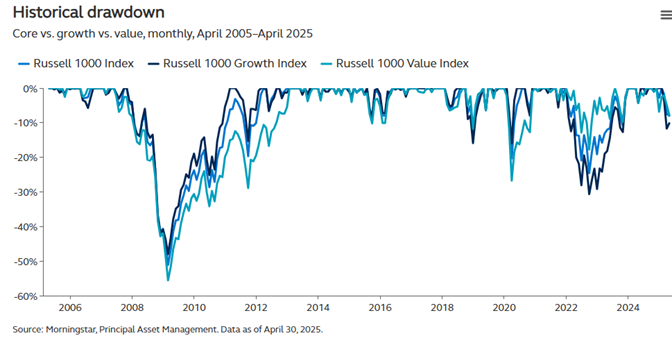
Furthermore, core equity investments can enhance portfolio diversification, reducing risk while capitalising on the broader market’s growth.
Historical shifts in market cycles
Understanding the historical context of market cycles is crucial to appreciating the relevance of core equities as it can dampen the large swings in performance from growth to value. Core equities provide investors with a less volatile return stream through market cycles. While leadership shifted back and forth through the decades from the 1980s to the present, the table below illustrates that core equities demonstrated less volatility.
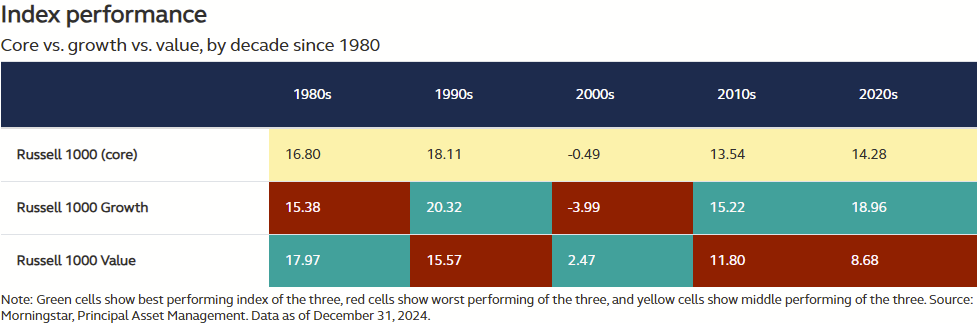
- 1980s: Value equities dominated as the foundation of many portfolios, characterised by stability.
- 1990s: The internet boom propelled growth equities to the forefront, leading investors to favour high-growth potential over stability.
- 2000s: Value equities gained prominence, driven by booming energy and emerging markets, further sidelining core investments.
- 2010s: Growth equities reemerged following the global financial crisis (GFC), reinforcing the perception that core equities had lost their competitive edge.
But as we navigate the current market landscape, the emergent bear market and, ultimately, the cyclical nature of equity markets warrants a fresh examination of core equities. This is particularly true during these volatile times as investors position themselves for an eventual market bottom when core equities should regain their status as a critical allocation for active investors.
Market dynamics supporting core equity relevance
Performance of the “Mag 7” and narrow market leadership
The “Magnificent Seven” stocks—made up of technology giants like Meta, Alphabet, and Nvidia—have been a focal point for market discussions.
Active management can play a pivotal role in identifying opportunities among these companies, allowing investors to add long-term tactical value to their portfolios. This scrutiny is essential, especially as market dynamics have shifted following “Liberation Day” on April 2, emphasising the need for strategic re-engagement, perhaps through core equities.
Not only do these companies make up a record proportion of the market, but their valuations vary widely and change often, creating an opportunity for managers who are selective. While these companies remain some of the best in the world with bright futures, valuation risk is a key consideration for investors. It’s not enough to be on autopilot with a passive strategy.
Volatility creates a broad opportunity set; why be limited by growth and value boxes?
The post-COVID market is characterised by extreme volatility across growth, value, and core equities, no more so than in the weeks since the Trump Administration unveiled far more aggressive tariffs than anyone expected. Volatility allows active managers to exploit market swings and valuation mismatches. Core equities, especially with their expansive and more balanced opportunity set across sectors and industries, serve as a fertile ground for tactical active management.
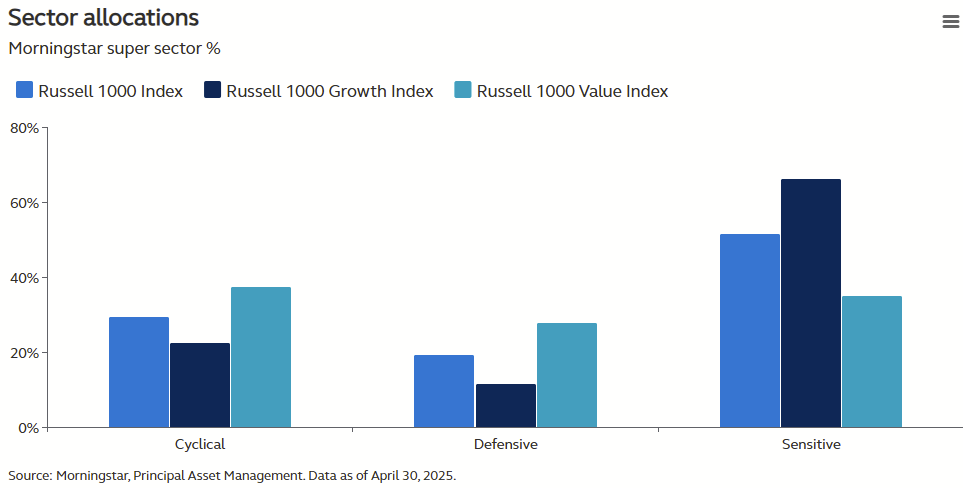
Sector neutrality is a crucial risk management tool, ensuring balanced exposure. Active core managers can better navigate sharp market fluctuations by mitigating overconcentration in specific sectors—such as technology (growth) or financials (value). This strategic approach enables investors to maintain a diversified portfolio while capitalising on stock-specific opportunities.
Competitive advantages of active core management
After two strong years of equity returns, where the S&P 500 surged by 25%, many investors may have become complacent, and this complacency can lead to a rude awakening. In recent weeks, passive strategies, by definition, captured 100% of the tariff-sparked market downturn in their respective indexes, leaving passive investors vulnerable during corrections and bear markets. During periods of volatility, active core equities may deserve a closer look.
Broad opportunity set
Active management often faces negative narratives suggesting inefficiency or high costs. However, evidence shows that skilled active managers can mute headline market noise1 . By making tactical and strategic decisions, active managers can navigate the complexities of the market and potentially deliver attractive returns. Active core managers can prioritise stability and consistent returns by avoiding the limitations often associated with growth-only or value-only strategies. While growth stocks focus on companies expected to experience above-average growth, core equities emphasise reliable performance, leading to significant differences in available investment opportunities.
Core equities are well-positioned for the potential market bottom
Core equities offer the most expansive purview for active management, enabling tactical opportunities and effective risk mitigation. Strategies focusing on free cash flow provide resilience and long-term value, particularly in volatile markets like the current environment. The resurgence of core equities would reflect a shift in market cycles, making a compelling case for active investment in this space.
While no investment is immune to downturns, core equities generally provide a more resilient option during economic challenges over the long-term, making them a favoured choice for risk-averse investors. As market dynamics evolve, investors should reconsider their U.S. equity allocations and explore the unique advantages that active management in core equities can offer. We believe it’s time to embrace the forgotten core and recognise its potential to enhance investment portfolios in an increasingly complex market landscape.
By Jamie Kiehn, CFA, Managing Director, Product Specialist


