

Ollie Beckett
In recent years, the investment spotlight has been firmly fixed on the US, especially its tech sector, drawing significant fund flows away from other regions.
However, as global economic dynamics evolve, European small caps are emerging as a compelling opportunity, poised for a resurgence after a period of underperformance relative to their large cap counterparts.
Turning the tide
European small caps, typically more sensitive to macroeconomic factors, have faced several headwinds. The Russian invasion of Ukraine spurred a rise in energy prices, benefiting large-cap energy giants while small- and medium-sized enterprises (SMEs), particularly in energy-reliant economies like Germany, faced downgrades. Additionally, higher interest rates have disproportionately impacted European small caps, given their greater exposure to variable debt.
The tide appears to be turning. Uncertainty around President Trump’s tariff strategies created temporary disruption, but is expected to stabilise. Some resolution to tariffs could lead to a more favourable economic environment, accompanied by potential interest rate reductions in both the US and Europe.
Europe’s economic outlook is improving, driven by a series of external pressures that have necessitated a robust response. The continent can no longer depend on Russia for energy or China for intellectual property security, leading to policy shifts. This transformation is gradually enhancing Europe’s economic prospects, particularly for European small caps, which stand to benefit from an upswing in global growth, decreasing energy prices, and a normalisation of inventory levels.
The attractiveness of European small caps lies in their potential to transition from a stagnant economic state to one with some momentum.
Germany is positioned to lead this charge. The country is addressing its economic challenges, with plans to lower corporate taxes and incentivise capital investment, especially in sectors like electric vehicles.
This strategic shift marks a departure from Germany’s historically conservative government spending policies, reflecting a broader European determination to enhance competitiveness and stimulate growth.
Valuation opportunities
Valuations for European small caps are near a 15-year relative low versus large caps, despite their promising growth potential. This valuation gap presents a unique opportunity for investors, particularly as confidence in Europe’s economic resurgence builds.
The flow of funds, previously directed toward the US, is beginning to reverse, with signs of increasing investment in European defence and infrastructure.
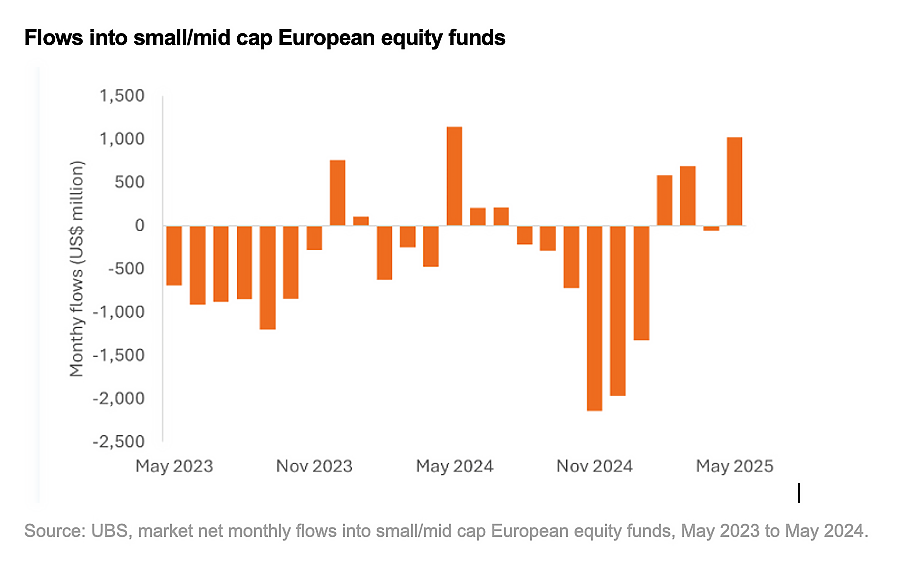
Consumer sentiment, while still recovering, shows promising signs. Rising wages and falling energy prices could catalyse a shift in consumer behaviour, boosting spending and further supporting economic growth.
Despite the promising outlook, risks remain. Potential complacency regarding US tariffs or fiscal policies could pose challenges. Nevertheless, we believe the valuation of European small caps is attractive.
In our view, European small caps are positioned for a period of growth, supported by macroeconomic shifts and strategic policy responses.
By Ollie Beckett, Portfolio Manager


