
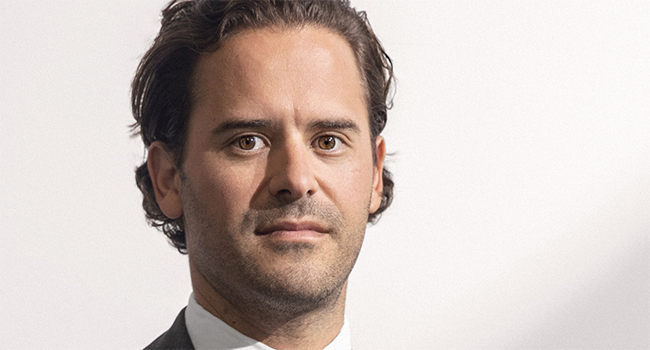
Jared Pohl
The most important asset that any funds management company has is usually their human capital. For most active fund managers, it’s the people that make the decisions about which companies to buy and if those people are to be successful, the appropriate culture needs to be in place.
The type of investment strategy you run, requires you to implement a specific type of culture.
Culture and strategy often work hand in hand, in that a fund manager’s strategic approach to managing money is likely to dictate its culture. How you build the culture and nurture it may, in turn, dictate how successful your strategy is.
It will also determine the people that you hire, and the structure of your teams.
Two ends of a spectrum
There are low skill high breadth strategies (HB), and high skill low breadth (LB) strategies. in the former you’re generally trying to capture statistical mispricings. In the latter, you’re trying to identify where the long term value of this company has not yet been realised. The time horizon for each of these is very different.
HB strategies tend to focus on shorter-term investment horizons as mis-pricings usually correct themselves quicker than the LB strategies, where fundamental value needs to be created and realised, which doesn’t tend to show up in short term valuation multiples.
Each of these strategies requires a different team structure to be effective.
Considering portfolio management strategies on a spectrum, on one end there is the more hierarchical or vertical structure, where perhaps one or two key fund managers, supported by a team of analysts, are making the decisions about which companies to buy.
On the other end of the spectrum is a more collaborative approach, where all analysts are involved in discussions around potential companies to invest in and the underlying research of those companies.
These two different approaches will usually use different methods of incentivising employees which is likely to lead to different cultures within organisations.
In a flat structure you want to foster collaboration, teamwork and open dialogue which results in a collective remuneration approach. The culture for such a strategy needs to encourage ideas sharing with a focus on equality among analysts.
A flat structure can be better at mitigating confirmation bias among stock pickers. But for that to be the case the culture must facilitate discussion and collaboration, so all members get an equal say and the loudest voice in the room doesn’t drown out everyone else. It needs a respectful culture where everyone can present facts and debate them with each other, and it needs to be an environment where all employees feel psychologically safe enough to debate ideas and voice dissenting opinions.
This kind of culture doesn’t happen overnight, and an organisation’s management needs to have processes in place for collaboration to build and work. Trust is essential for a cooperative culture as all members of a team need to trust that their ideas will be heard and understood.
Team meetings and get-togethers obviously help with collaboration but so does showing vulnerability, especially by leaders, so everybody operates from a place of shared humanity.
Flat versus vertical
A flat structure like what we have at ECP Asset Management still has clear lines of accountability, and individuals that are responsible for certain areas of coverage. But the team also shares knowledge and information which then gets debated and refined. It is only once those discussions are had with the whole team that we move forward with a buying or selling a company.
Due to the nature of this process decisions to buy or sell companies take some time, and of course there is also the possibility that not everybody in the team is pulling their weight.
A hierarchical structure, in contrast, generally makes decisions much quicker as it is usually only the fund manager that determines whether to buy a stock. In those environments, you generally have a portfolio manager and then individual analysts that sit underneath with very defined roles. The investment analysts feed information and research to the portfolio manager, who makes the ultimate decision.
The hierarchical approach often comes with a star fund manager who are often extremely successful, but also, as recent high-profile controversies have shown, carry key person risk. The whole fund management company’s success is dependent on the fund manager’s star continuing to shine.
The culture in these organisations is not as cooperative and is usually more about everybody respecting and understanding their role is to support the main portfolio managers.
But there still needs to be appreciation of the role of all analysts even in a vertical culture as when analysts end up doing a significant portion of the work and are not being heard, or their views are not being represented in a portfolio, that leads to dissatisfaction and high turnover in teams.
And in a flat structure like ours, we recognise that it is equally important to be flexible, given the changing nature of markets, and to have independent oversight at a high level. Our board chair and chair of the investment committee, Manny Pohl, takes that role at ECP Asset Management and keeps the team on track.
The bottom line
Many of the star fund managers with a vertical approach to strategy have been very popular with investors who have benefited from their winning stock picking. It is also easy to follow a name, rather than a process you may not entirely understand.
However, a collaborative approach, supported by a collegiate culture, also has a lot to offer the investor if they can understand how cooperative decision making can overcome confirmation bias and lead to solid long-term outcomes.
By Jared Pohl, partner


