

Advisers should understand the drivers of structural growth in global growth equities and the role these investments can play in enhancing client portfolios.
Growth style investing is a strategy focused on capital appreciation. It achieves this by targeting companies that exhibit above-average growth in earnings, revenue or cash flow compared to the broader market.
Growth managers tend to look to the future and typically invest in companies that have a solid earnings outlook, even if the share price appears expensive in terms of metrics such as the company’s price to earnings (P/E) ratio or price to book (P/B) ratio – the investor is willing to pay more today for a company’s future cash flows.
The characteristics of a typical growth company are:
- High P/E and P/B ratios
- Low or no dividends – earnings are reinvested to grow the business
- High earnings growth
In a diversified portfolio, growth investing adds value by providing a powerful engine for long-term wealth accumulation, particularly during periods of economic expansion or low interest rates. While these stocks may sometimes be more volatile and sensitive to increased interest rates, they offer a necessary hedge against the stagnation of more mature industries.
By including growth assets in a portfolio, an investor may capture those companies that drive the majority of market-wide gains. Growth investing is particularly important for those investors with a longer time horizon, who can tolerate short-term fluctuations in exchange for the compounding power of industry leaders and innovators.
Structural versus cyclical growth
While it is important to identify today’s winners and losers, determining which companies will come out ahead over the medium to long term is far more important. It may seem straightforward, but when multiple companies are competing for dominance in the same industry, which one will ultimately lead and generate strong returns for shareholders?
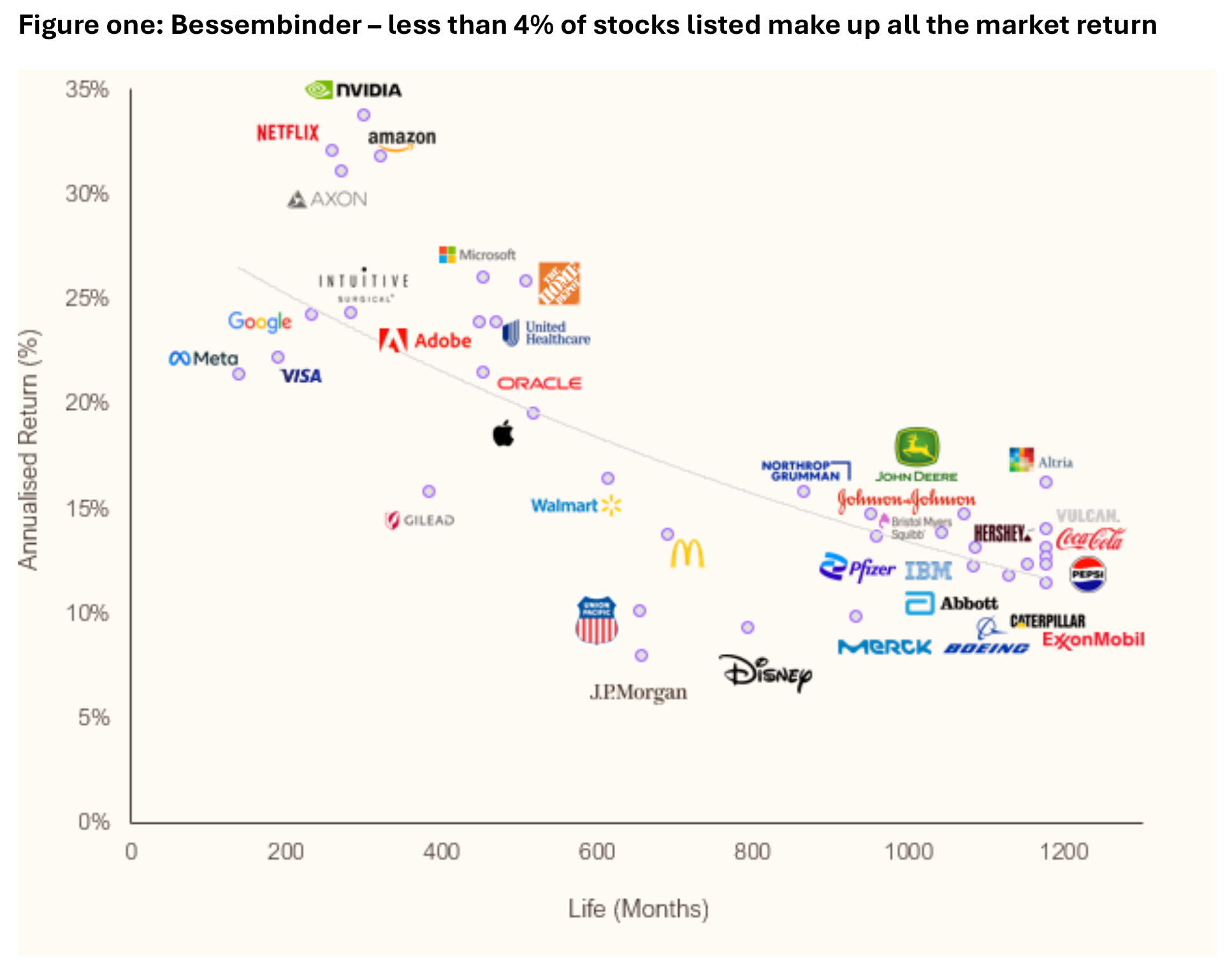
Research by Hendrik Bessembinder[1] demonstrated that the entire net wealth creation of the US stock market since 1926 (based on the S&P500) was generated by a mere four percent of listed companies.
The remaining 96 percent of stocks collectively matched only the returns of one-month Treasury bills, largely due to extreme positive skewness, where a small group of ‘superstar’ companies produce massive gains that offset the mediocre performance or failure of the rest.
Growth investing is fundamentally a bet on the future. While value investors look for what a company is worth today, growth investors are looking at what a company could become. There are three core pillars that underpin growth investing: earnings growth drives stock prices, sustained earnings growth is worth more than cyclical earnings growth and the market will often misprice growth and its sustainability. Let’s explore each in greater detail.
Earnings growth drives stock prices
Often attributed to Charles Munger or Warren Buffet, it was Benjamin Graham that said, “In the short run, the market is a voting machine, but in the long run, it is a weighing machine.”
In the short term, there is ample evidence that the market is indeed a voting machine, influenced by headlines and hype. In the long term, however, it is a weighing machine, where the weight is earnings per share (EPS) and more importantly, EPS growth.
EPS growth has three important effects on a company:
- It can increase a company’s valuation – stock prices generally follow the direction of earnings. If a company consistently earns more money year-over-year, its intrinsic value increases.
- It can generate multiple expansion – when a company demonstrates high earnings growth, investors are often willing to pay a higher P/E ratio. This often creates a ‘double whammy’: the share price rises because earnings are up, and it rises because people are willing to pay more for each dollar of those earnings.
- Compounding – even a modest lead in growth rates can lead to significant price appreciation over the longer term due to the power of compounding.
Sustained versus cyclical earnings growth
Not all growth is created equal; the quality of earnings depends heavily on how predictable and repeatable they are. Companies that grow regardless of the broader economy exhibit sustained growth, which is usually driven by a long-term trend – for example, ageing populations or the efforts to decarbonise our planet. Because the growth is (generally) predictable, the market rewards these stocks with premium valuations. Cyclical growth companies, however, tend to see earnings expand rapidly during economic booms but contract sharply during recessions.
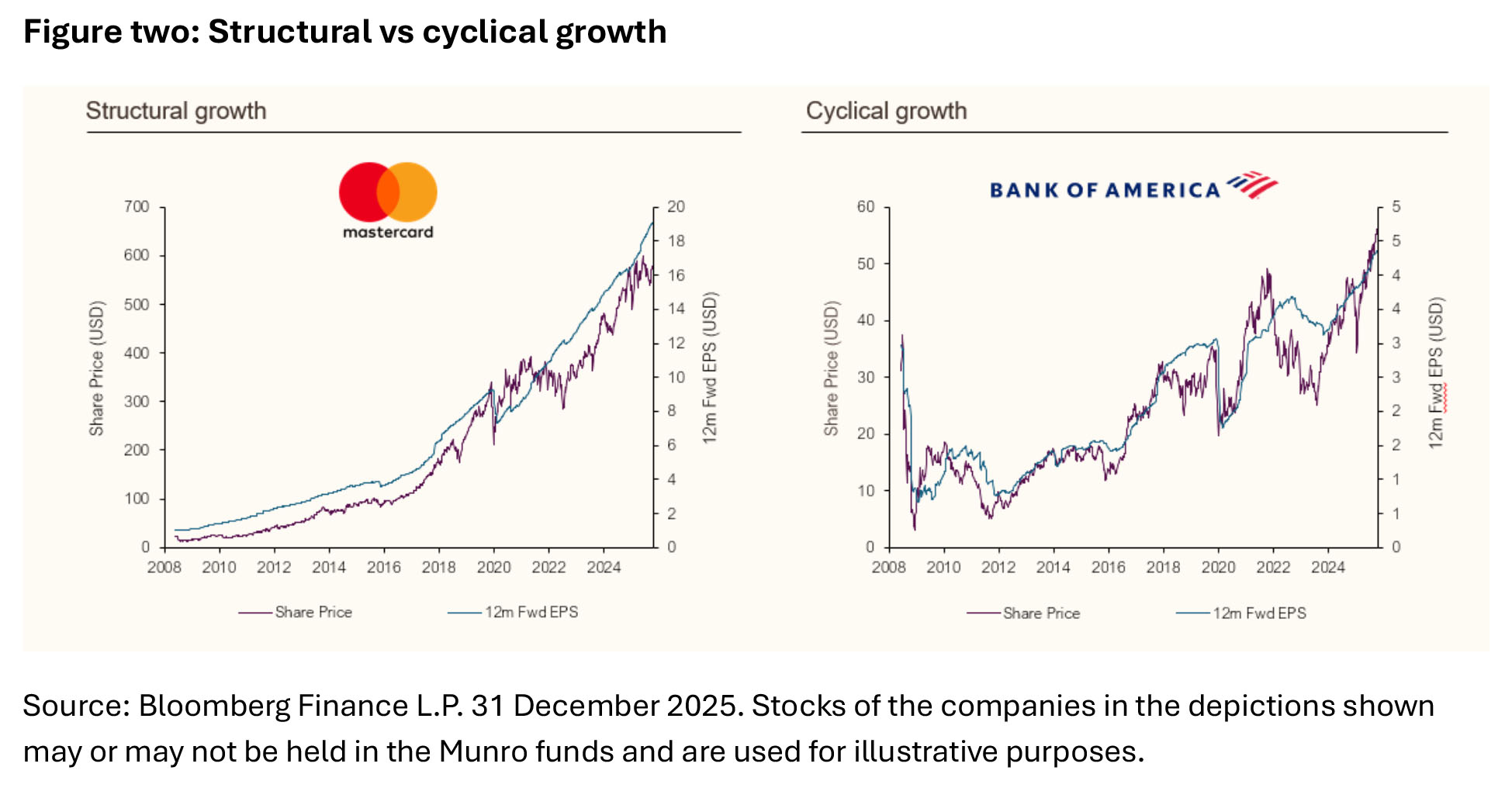
Figure two shows two companies, Mastercard and Bank of America; the purple line is the share price, the blue line is the blended forward earnings per share. In each case, it shows that share prices follow earnings – and that structural earnings (Mastercard) deliver better long-term outcomes.
Market mispricing
Humans tend to think linearly, but great businesses grow exponentially. Analysts often underestimate how long a ‘moat’ can last; the moat represents a durable competitive advantage that acts as a structural barrier, effectively insulating a company from competition and allowing it to sustain high returns on capital for a much longer duration than the market currently anticipates. Other reasons for mispricing include misjudging the S-curve, with investors selling too early because they believe a company has peaked.
The S-curve
Growth investing isn’t just about finding fast-growing companies; it’s about identifying where the market’s expectations for future growth are lower than the company’s actual potential. One effective method is to assess a company or industry’s development over its cycle, using its S-curve (see figure three) as a reference.
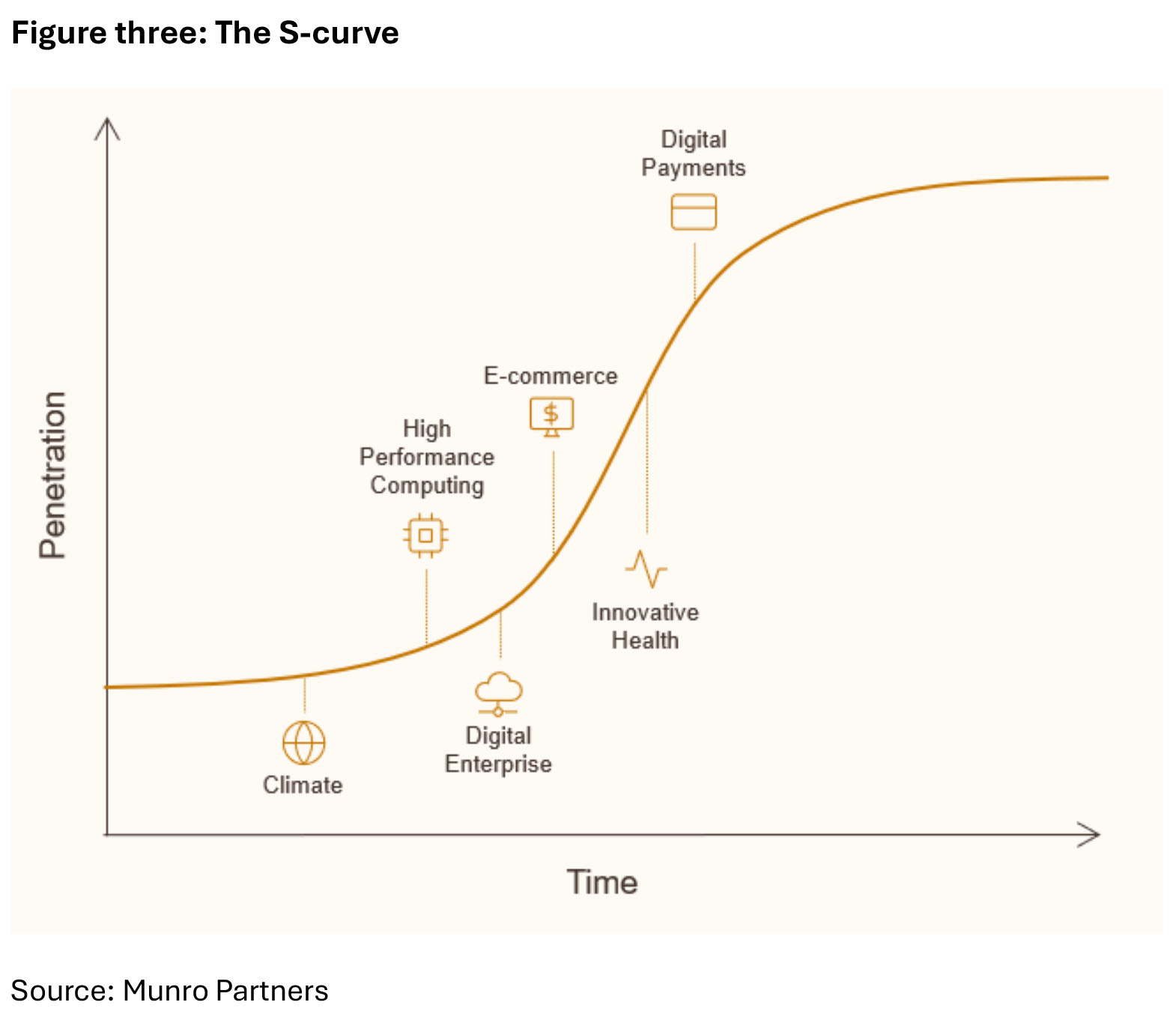
The S-curve is a visual model that represents the lifecycle of a company or industry as it moves through various stages of adoption and maturity. Figure three illustrates some key industry sectors and where they sit on the S-curve.
The S-curve begins with a slow incubation phase, where high costs and technical hurdles may result in slower initial progress. At a certain stage, growth accelerates due to a structural shift. This structural change creates a powerful tailwind, one that enables companies (or industries) to expand rapidly and build lasting value. The most consistent long-term compounders typically benefit from an extended runway of earnings growth supported by multi-year structural trends. Durable earnings, underpinned by a large and expanding total addressable market, are essential to sustaining wealth creation.
Toward the end of its lifecycle, the S-curve flattens into a saturation phase, where the market becomes mature, competition intensifies and incremental gains become more difficult to achieve. To achieve the best outcomes in growth investing, the goal is to identify companies at the bottom of the S-curve, just as the company or industry reaches the inflection point and is about to enter the rapid acceleration phase. To achieve this, investors must be able to identify the next round of structural changes and the companies that will benefit from them.
Areas of Interest
As a growth investor, Munro Partners identifies sustainable growth trends that are under-appreciated, not well understood and mispriced by the market. The team believes that the investment success stories of the future will emerge from within the big technological and structural changes affecting global society and focuses on identifying and understanding these trends, which it calls its Areas of Interest (AoIs). Two of these AoIs are Digital Media and Content and Innovative Health.
Digital Media and Content
The outlook for Digital Media and Content is underpinned by the continued rise in the value of media rights and growing global demand for premium live content. At the same time, content assets are relatively scarce and often have a premium valuation for their ability to scale and attract consumer attention. Digital media includes the integration of digital advertising to premium content globally. Content opportunities have centred around consumer eyeballs, creating billions of revenue potential from millions of users. As media increasingly becomes digitised, the number of users has increased (figure four).
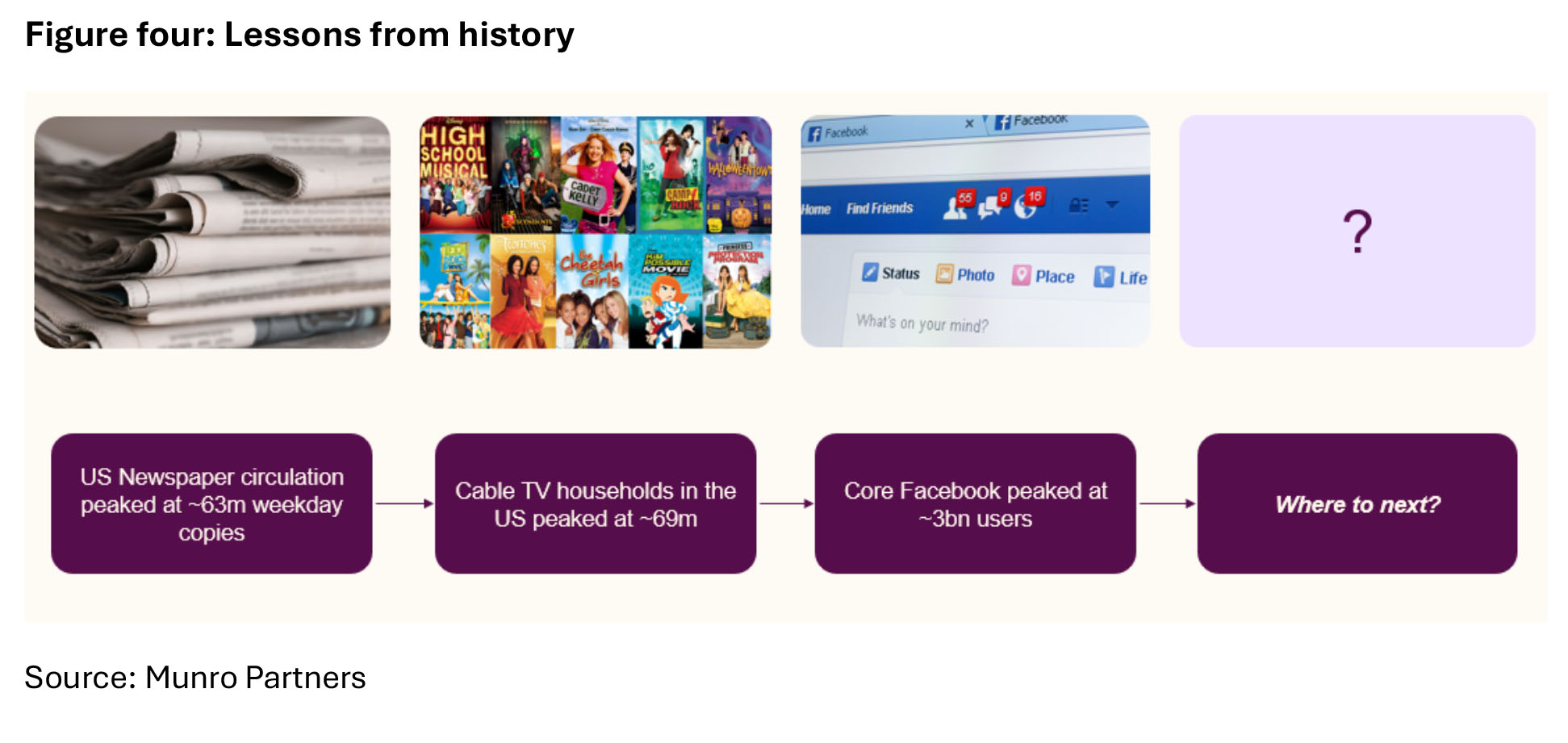
Where are the eyeballs?
- The Superbowl had 126 million viewers in 2025
- Reddit has 500 – 700 million monthly visitors
- 584 million people listened to podcasts in 2025
- 89% of US households have at least one streaming subscription
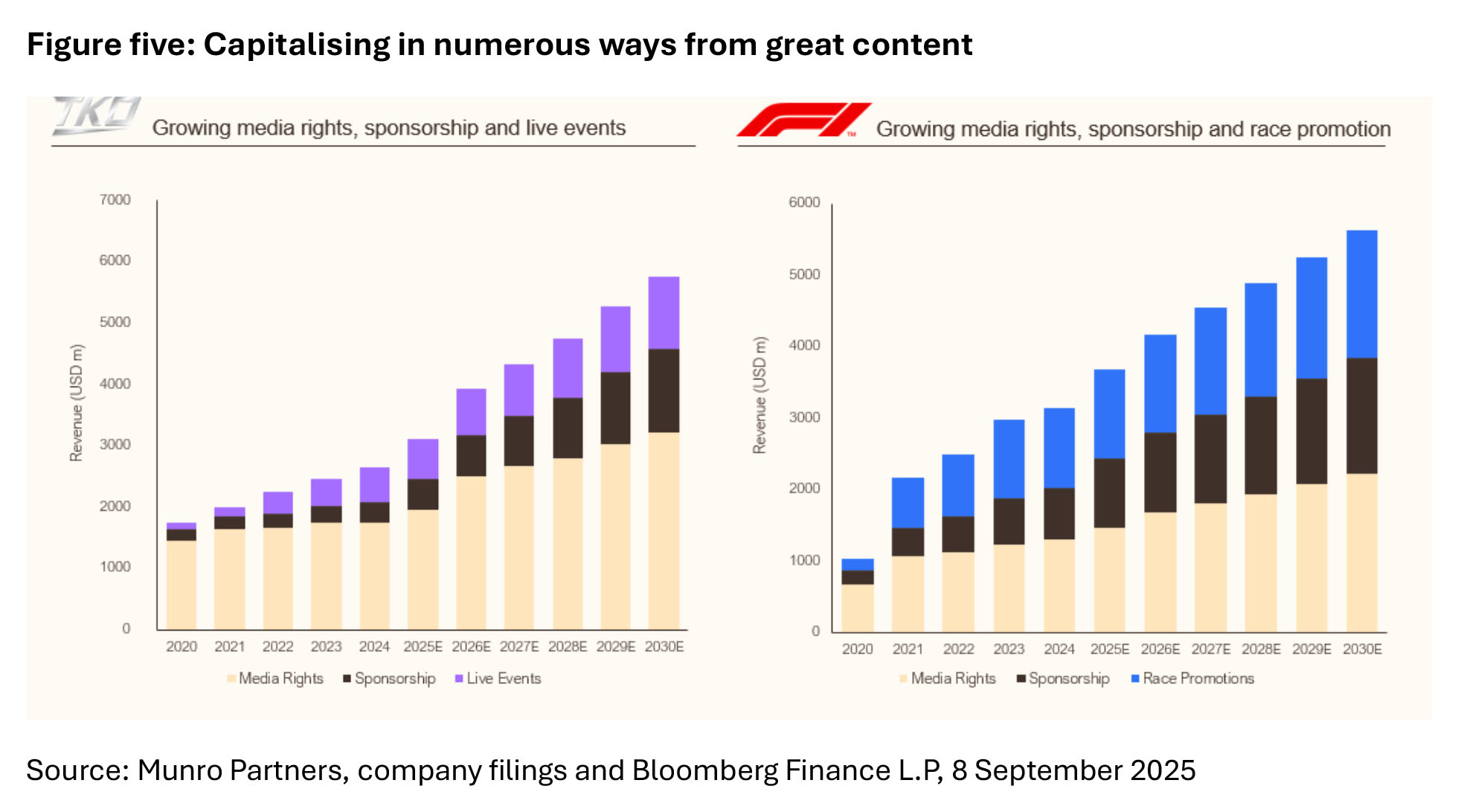
As illustrated in figure five, companies can capitalise on great content through selling media rights, sponsorship and live events.
Stock story: TKO Group Holdings (NYSE: TKO)
TKO is a scaled combat-sports platform formed by the combination of Ultimate Fighting Championship (UFC) and World Wrestling Entertainment (WWE) under the control of Endeavor Group Holdings. As an investment, TKO offers exposure to premium live sports IP with strong pricing power, recurring media-rights revenue and diversified monetisation across ticketing, sponsorship and consumer products.
The UFC’s global media contracts and WWE’s long-term domestic rights agreements, which now include distribution on major streaming platforms, enhance visibility into forward cash flows. At the same time, integration synergies and disciplined cost controls support margin expansion.
For growth-oriented investors, the key thesis centres on TKO’s international expansion, continued escalation in sports-rights valuations and the durability of combat sports fandom among younger demographics.
Innovative Health
Innovative Health is characterised by overlapping S-curves of adoption, where breakthrough technologies move from early clinical validation to rapid scaling and, eventually, maturity – often as the next platform shift begins. The sector continues to present a resilient structural growth opportunity, supported by rising healthcare demand, increased adoption of minimally invasive treatments and strong innovation pipelines. It includes healthcare technologies such as diagnostics, biologics, consumer aesthetics and medical devices.
In diagnostics, advances in molecular testing, point-of-care platforms and AI-enabled imaging are compressing time-to-diagnosis and expanding testable conditions. In biologics, modalities such as monoclonal antibodies, cell and gene therapies and next-generation vaccines follow a similar arc: high initial R&D intensity and limited patient cohorts give way to label expansions, manufacturing scale-up and broader global access, supporting multi-year revenue inflections.
Consumer aesthetics also reflect a technology-driven S-curve, where minimally invasive energy-based devices and injectables gain acceptance through practitioner training, social media awareness and recurring treatment cycles, often creating durable cash-pay revenue streams less exposed to reimbursement risk. Meanwhile, medical devices evolve through iterative innovation such as robotics, structural heart interventions, neuromodulation and wearable monitoring. Improved clinical outcomes and workflow efficiency accelerate hospital adoption, followed by international penetration and adjacent indications.
Innovative Health can provide a source of non-correlated structural growth opportunities that help diversify investor returns. It is also expected that many companies in Innovative Health to be key beneficiaries of AI as new technologies help to improve patient outcomes.
Stock story: Eli Lilly (NYSE: LLY)
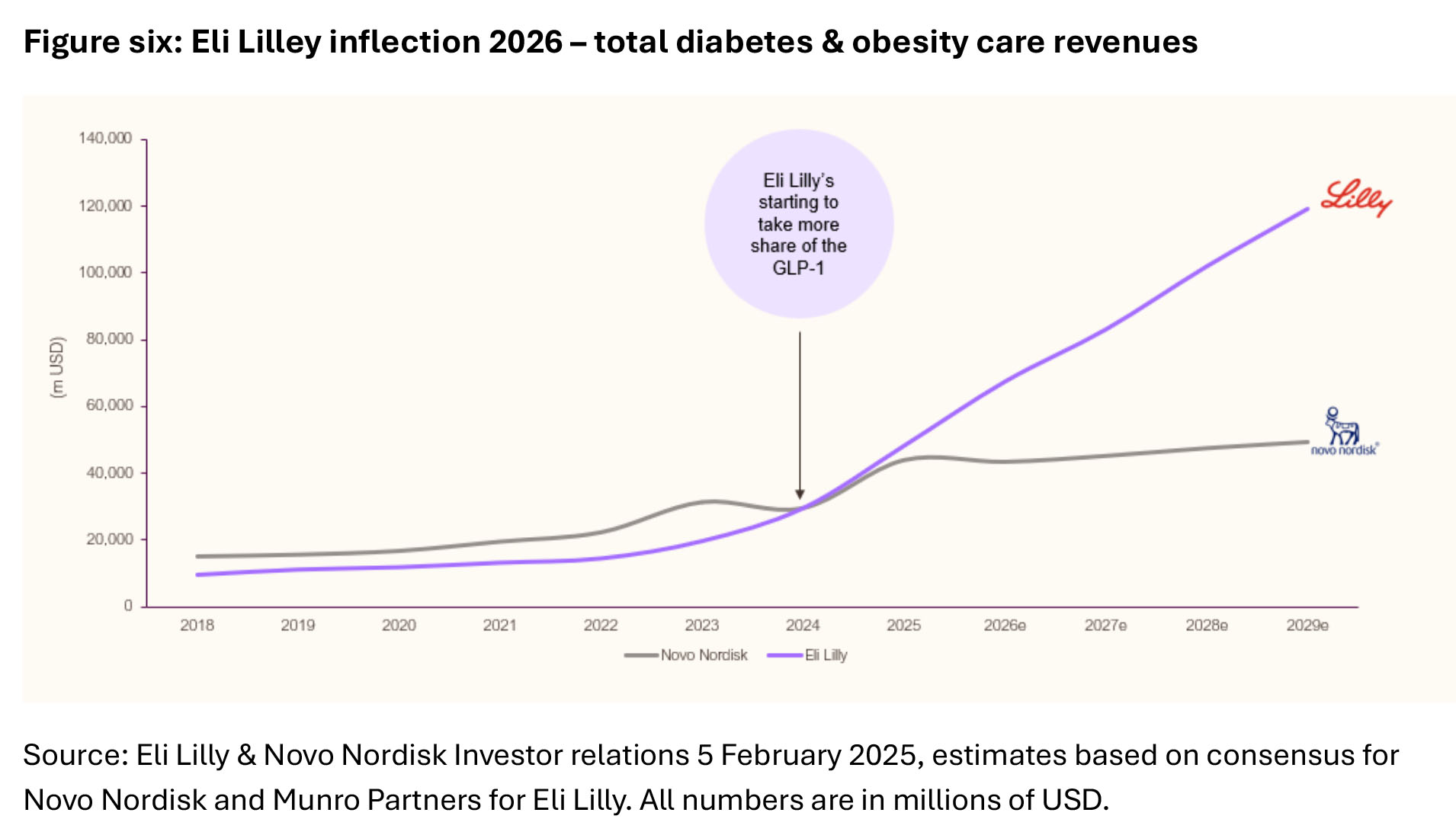
Ely Lilly is the leader in the glucagon-like peptide-1 (GLP-1) therapeutic category, which spans weight-loss and metabolic disease treatments such as Zepbound and Mounjaro. After years of strong uptake driven by compelling clinical outcomes, the GLP-1 class is now at a pivotal inflection point as broader US access expands with meaningful Medicare coverage, transforming the revenue outlook from niche, cash-pay and employer-covered markets toward mass-market, reimbursed demand.
Under a landmark policy framework set to roll out this year, Medicare beneficiaries in the US will be able to obtain these medications at significantly reduced cost sharing, which materially increases the addressable patient base beyond commercially insured cohorts and retirees with diabetes coverage to include older adults with obesity.
This development not only supports improved long-term patient affordability and adherence but also de-risks payer barriers that historically constrained GLP-1 penetration. Combined with Eli Lilly’s robust pipeline – including next-generation oral GLP-1 candidates under regulatory review – the expanding coverage landscape reinforces the structural growth trajectory of Eli Lilly’s franchise (figure six), offering investors visibility into multi-year earnings power underpinned by durable clinical demand and expanding payer participation.
Ultimately, growth investing presents a compelling strategy for investors aiming to maximise their long-term returns by focusing on companies with high potential for substantial structural earnings expansion. This approach offers several distinct advantages that can significantly bolster a portfolio’s performance over time.
By prioritising future potential over current dividends, investors can achieve significant capital appreciation as these companies scale and dominate their markets. This strategy allows participants to benefit directly from innovation-driven sectors, positioning themselves on the cutting edge of technological and economic shifts. Crucially, growth investing enables the capture of substantial gains from companies at the beginning of their S-curve – that pivotal moment where a business transitions from a niche player to an industry leader. For those willing to navigate the inherent volatility, the reward is the opportunity to own the transformative industry titans of tomorrow.
Take the FAAA accredited quiz to earn 0.5 CPD hour:
CPD Quiz
The following CPD quiz is accredited by the FAAA at 0.5 hour.
Legislated CPD Area: Technical Competence (0.5 hrs)
ASIC Knowledge Requirements: Securities (0.5 hrs)
please log in to start this quiz
——–
Notes:
[1] Hendrik Bessembinder, “Do stocks outperform Treasury bills?” Journal of Financial Economics, vol. 129, no. 3, 2018, pp. 440-457
The information included in this article is provided for informational purposes only and is general advice only. It does not take into account an investor’s own objectives. The information contained in this article reflects, as of the date of publication, the current opinion of Munro Partners and is subject to change without notice. Sources for the material contained in this article are deemed reliable but cannot be guaranteed. We do not represent that this information is accurate and complete, and it should not be relied upon as such. Any opinions expressed in this material reflect our judgment at this date, are subject to change and should not be relied upon as the basis of your investment decisions. All reasonable care has been taken in producing the information set out in this article however subsequent changes in circumstances may occur at any time and may impact on the accuracy of the information. Neither Munro Partners, GSFM Pty Ltd, their related bodies nor associates give any warranty nor makes any representation nor accepts responsibility for the accuracy or completeness of the information contained in this article.
CPD Quiz
The following CPD quiz is accredited by the FAAA at 0.5 hour.
Legislated CPD Area: Technical Competence (0.5 hrs)
ASIC Knowledge Requirements: Securities (0.5 hrs)
please log in to start this quiz——–
Notes:
[1] Hendrik Bessembinder, “Do stocks outperform Treasury bills?” Journal of Financial Economics, vol. 129, no. 3, 2018, pp. 440-457
The information included in this article is provided for informational purposes only and is general advice only. It does not take into account an investor’s own objectives. The information contained in this article reflects, as of the date of publication, the current opinion of Munro Partners and is subject to change without notice. Sources for the material contained in this article are deemed reliable but cannot be guaranteed. We do not represent that this information is accurate and complete, and it should not be relied upon as such. Any opinions expressed in this material reflect our judgment at this date, are subject to change and should not be relied upon as the basis of your investment decisions. All reasonable care has been taken in producing the information set out in this article however subsequent changes in circumstances may occur at any time and may impact on the accuracy of the information. Neither Munro Partners, GSFM Pty Ltd, their related bodies nor associates give any warranty nor makes any representation nor accepts responsibility for the accuracy or completeness of the information contained in this article.


Have feedback on this article? Contact Us
Earn CPD Points
 CPD: US middle market private credit – the investment case
In today’s rapidly shifting investment landscape, traditional sources of fixed income are struggling to meet the yield and diversification needs of investors. They are also becoming more closely correlated with [...]
 CPD: A new global order and implications for investors
The new global order differs from its predecessor in four ways, as outlined in the following article from GSFM’s investment partner TD Epoch. For decades, the US has been unrivalled [...]
 CPD: Is your approach to client risk profiling putting you at risk?
Introduction The shockwaves that followed the announcement of ‘Liberation Day’ tariffs by Donald Trump brought an abrupt and unsettling end to a three-year bull market. Major global indices plummeted by [...]
 CPD: Ethics and the advice practice
When last published, the FAAA’s Value of Advice Index[1] saw trust in financial advice at an all-time high, which reinforces the importance of ethical practice. This article, proudly sponsored by [...]
 CPD: Retirement income strategy choices
There’s a wide variety of income strategies used across the market, with an equally wide variety of labels attached to these strategies. Each varies in complexity, its ability to mitigate [...]