Bhanu Singh
This week’s move – with the S&P 500 approaching 2026 highs – is a timely reminder of how markets process uncertainty. Even amid heightened geopolitical tension, markets have once again demonstrated their forward‑looking nature, rapidly absorbing new information and repricing risk.
While headlines dominated by conflict can feel overwhelming, history suggests investors should be cautious about drawing long-term conclusions from short-term market reactions.
Markets are forward-looking. Prices move in response to changes in information. When unexpected developments arise that investors deem to be poor for markets, markets often drop.
But the flip side is markets always set prices for positive expected returns. Once the news gets reflected in market prices, investors can still expect positive returns even amid worrisome circumstances.
Bhanu Singh, CEO of Dimensional Fund Advisors Australia, notes:“Market volatility is a sign of a well-functioning market. Market prices are continuously responding to changes in expectations and new information. So, even while the news headlines may be concerning, investors have good reasons to stay invested because prices are always set to provide positive expected returns.”
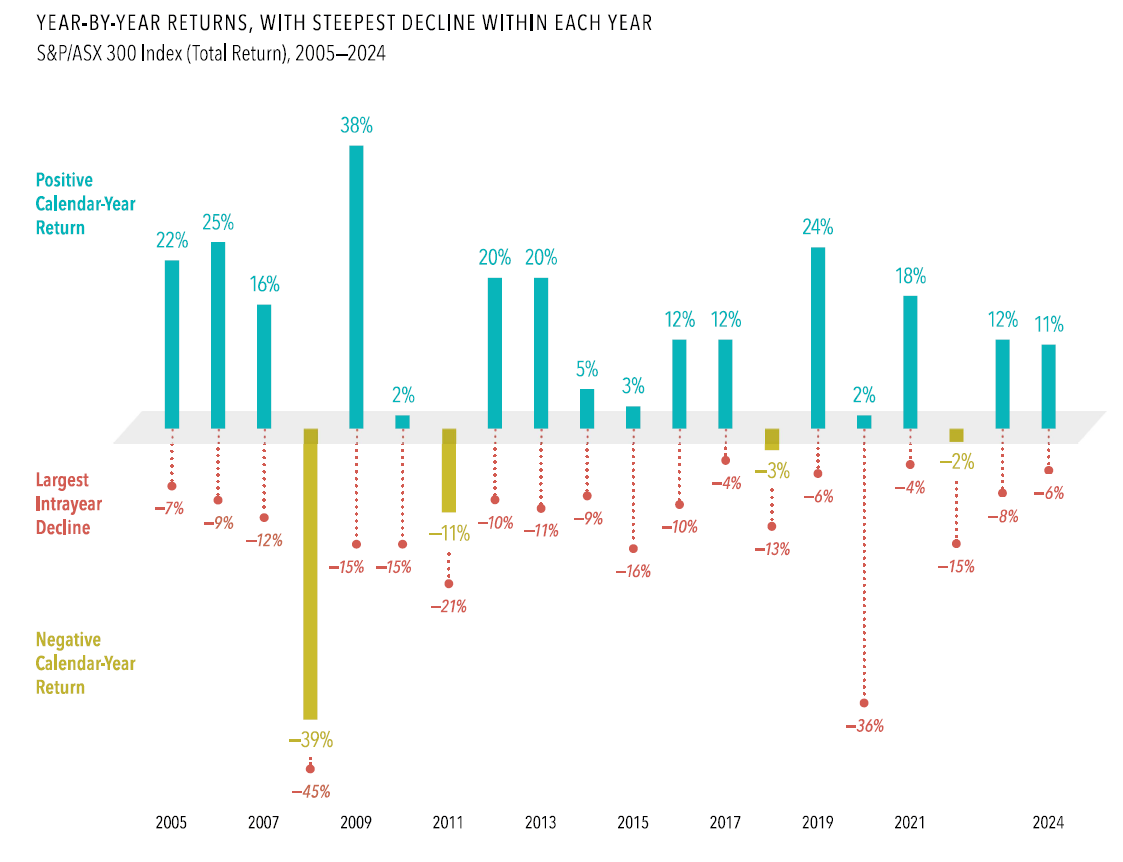
Australian equity market history supports this perspective. Intrayear declines have ranged from approximately 4% to as much as 45%, yet many years that experienced sharp pullbacks still finished with positive full‑year returns. In fact, Australian stocks posted gains in 16 of the past 20 calendar years (Figure 1).
Figure 1:
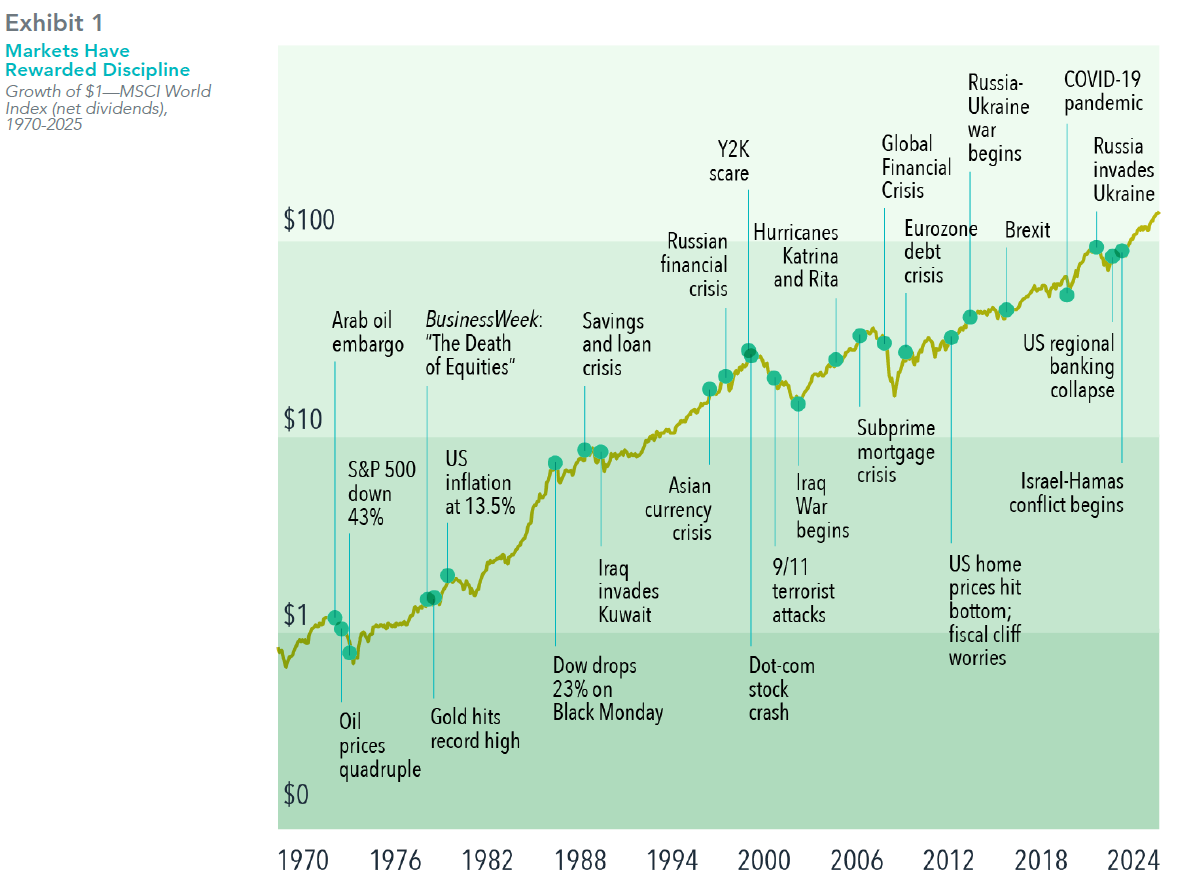
This resilience extends globally. Global equity markets have continued an upward climb even in the face of economic and political upheavals. We don’t have to look far for illustrative examples. During the past few years, stock markets have had positive returns despite multiple wars being fought around the world (Figure 2).
“Investors in global equity portfolios inevitably face periods of geopolitical tensions and uncertainty,” Singh says.
“While the temptation to react to market highs and lows can be strong, particularly with the benefit of hindsight, staying invested through periods of uncertainty has historically tended to be the best bet for long-term investors. Tuning out the noise, maintaining discipline, and staying the course has been the most effective strategy for long‑term investors.”
Figure 2: