
Dwelling approvals; Balance of Payments; Government Finance
-
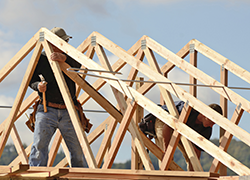
Building approvals up in January.
Dwelling approvals soar: Dwelling approvals rose by 6.8 per cent in January. Approvals are up 34.6 per cent over the year. Approvals rose to 17,104 in February – a record high and well above the decade average of 13,408.
- The all-important reading on private sector house approvals rose by 8.3 per cent in January to near four-year high, while ‘lumpy’ apartment approvals rose by 4.7 per cent.
- Trade sector adds to economic growth: Net exports (exports less imports) will add 0.6 percentage points to economic growth in the December quarter. The terms of trade (ratio of export prices to import prices) rose by 0.7 per cent in the December quarter. The current account deficit narrowed from $12,539 billion to $10,139 million.
- More assets overseas: For the first time on record, the value of assets Australians own overseas exceeds the amount of assets owned by foreign investors in Australia.
- CommSec estimates that the economy grew by 0.8 per cent in the December quarter to be up 2.7 per cent over the year.
What does it all mean?
- The recovery in new home building is nothing short of sensational. Building approvals are now 27 per cent above decade averages, and are at record highs. It is pretty clear that housing construction will be a strong driver of the Australian economy over the coming year. More importantly, the key forward indicator of residential building – private sector house approvals – surged by over 8 per cent in January and is just shy of the best levels in four years.
- The latest data confirms that the housing sector is the shining light of the Australian economy. And with interest rates low, population rising and housing affordability still attractive, housing looks well placed to fill the void left by the pullback in mining investment. In fact the latest result will help ease Reserve Bank concerns when it comes to the disappointing planned business investment data released last week. Interestingly, dwelling approvals have now lifted to a rolling annual total of 182,000, well above the average of 158,000 approvals recorded since the global financial crisis.
- The ongoing lift in housing approvals and rising new home sales, will support confidence and provide policymakers with a degree of encouragement – especially in combating excessive house prices. More homes being built over the medium term will keep a lid on aggressive house price growth. Simply, supply (construction of new homes) is lifting to meet demand, and will likely put downward pressure on prices. In short, no change in interest rate settings is required in the near term.
- The ongoing current account deficit and record foreign debt increase Australia’s vulnerability to shocks and support calls for a lower Aussie dollar. However, the good news is that export receipts continue to lift, although debt serviceability deteriorated for the third straight quarter from the best levels in 30 years.
- For the first time (ever?) Australians own more foreign assets than foreigners own here in Australia. Certainly the high Aussie dollar is a key factor causing Aussie consumers, businesses and fund managers to diversify their asset holdings.
What do the figures show?
Building Approvals:
- Dwelling approvals rose by 6.8 per cent in January after a 1.3 per cent fall in December. Approvals are up 34.6 per cent over the year.
- The current number of dwelling approvals (17,514) is well above the decade average (13,472) and five-year average (13,757).
- House approvals rose by 8.6 per cent in January (private sector up 8.3 per cent). Meanwhile ‘lumpy’ apartment approvals rose by 4.7 per cent in January after falling by 0.9 per cent in December.
- House approvals are up 26.1 per cent over the past year while apartments are up 46.3 per cent.
- Across states in January: NSW approvals rose by 5.4 per cent; Victoria rose 10.4 per cent; Queensland rose 1.2 per cent; South Australia rose 10.5 per cent; Western Australia rose 5.6 per cent; Tasmania rose 10.5 per cent.
- The value of all commercial and residential building approvals fell by 3.8 per cent in January after rising by 3.1 per cent in December. Residential approvals fell by 1.4 per cent with new building down 2.1 per cent and alterations & additions up 4.5 per cent. Commercial building fell by 7.2 per cent after rising by 9.0 per cent in January.
Balance of Payments
- The broadest measure of Australia’s external position – the current account – improved in the December quarter (smaller deficit). The current account deficit narrowed from $12,539 million to $10,139 million in the quarter. The balance of goods and services was in surplus by $247 million after a $2,672 million deficit in the December quarter.
- For the first time, Australians own more assets overseas than foreign investors own here in Australia. At the start of the December quarter, net foreign equity in Australia was $27 billion. But transactions reduced foreign equity by $5 billion; price changes cut foreign equity by $18 billion; exchange rate changes reduced the total by $21.5 billion; and other changes cut the total by $5.6 billion. At the end of the December quarter, net foreign equity was negative $23.1 billion.
- In the December quarter exports of goods and services rose by 3.2 per cent in current price terms with volumes up by 2.4 per cent and prices up 0.8 per cent. Imports of goods and services fell by 0.4 per cent in current prices with volumes down by 0.6 per cent while prices rose by 0.2 per cent.
- The trade sector (exports less imports) will add 0.6 percentage points to economic growth in the December quarter.
- The terms of trade (ratio of export prices to import prices) rose by 0.7 per cent in the December quarter after a 3.1 per cent fall in the September quarter.
- Net foreign debt rose by $34.3 billion to a record $852.9 billion in the December quarter.
- The debt servicing ratio (net income on foreign debt to goods and services credits) lifted again (worsened) from the 30-year low of 6.4 per cent in the March quarter 2013 to 7.3 per cent in the December quarter. It was the third straight quarter that the servicing ratio has deteriorated.
Government Finances
- Government consumption spending rose by 0.3 per cent in the December quarter after rising by 1.0 per cent in the September quarter. And total public investment lifted by 4.3 per cent in the December quarter after soaring by 39.6 per cent in the September quarter. Overall, spending by the government sector rose by 1.2 per cent in the December quarter after lifting by 7.2 per cent in the September quarter.
- The Bureau of Statistics’ monthly Building Approvals release contains figures on local council approvals to build residential structures such as homes and units as well as commercial premises such as offices and shops. Approval is one of the first stages of the construction ‘pipeline’ and is thus a key leading indicator of future activity. An increase in approvals would point to stronger future activity for construction-related companies.
- The quarterly Balance of Payments figures have few short-term effects on financial markets. The importance of the data is merely to highlight Australia’s trading position with the rest of the world as well as the contribution of foreign trade (exports less imports) to the latest estimates of economic growth.
- Investors remain keen about putting their money to work in the housing market. Certainly there are plenty of grounds for optimism with rising population, low interest rates, government grants for new construction and tight housing markets.
- The good news is that investors aren’t just buying established dwellings and driving up home prices, but money is being ploughed into new house and apartment developments and adding to housing supply and economic activity more generally. It is clear that home construction will play a key role in driving the broader economy in 2014, taking over from the mining sector. And arguably more industries and regions will feel the benefit of increased home building rather than mining construction.
- The outlook for home builders, developers and building material suppliers continues to brighten. But for housing-dependent businesses, conditions will vary depending on their ability to capitalise on the strength in apartment building rather than free-standing houses.
What is the importance of the economic data?
- The Bureau of Statistics’ monthly Building Approvals release contains figures on local council approvals to build residential structures such as homes and units as well as commercial premises such as offices and shops. Approval is one of the first stages of the construction ‘pipeline’ and is thus a key leading indicator of future activity. An increase in approvals would point to stronger future activity for construction-related companies.
- The quarterly Balance of Payments figures have few short-term effects on financial markets. The importance of the data is merely to highlight Australia’s trading position with the rest of the world as well as the contribution of foreign trade (exports less imports) to the latest estimates of economic growth.
What are the implications for interest rates and investors?
- Investors remain keen about putting their money to work in the housing market. Certainly there are plenty of grounds for optimism with rising population, low interest rates, government grants for new construction and tight housing markets.
- The good news is that investors aren’t just buying established dwellings and driving up home prices, but money is being ploughed into new house and apartment developments and adding to housing supply and economic activity more generally. It is clear that home construction will play a key role in driving the broader economy in 2014, taking over from the mining sector. And arguably more industries and regions will feel the benefit of increased home building rather than mining construction.
- The outlook for home builders, developers and building material suppliers continues to brighten. But for housing-dependent businesses, conditions will vary depending on their ability to capitalise on the strength in apartment building rather than free-standing houses.


