
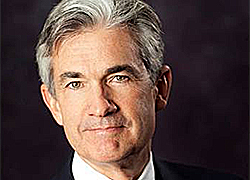
Jay Powell
Andrew Szczurowski, Portfolio Manager, Global Income Group and Eric Stein, Co-Director of Global Income at Eaton Vance, a global investment manager believe “Powell as a perfect fit for President Trump’s pro-growth agenda, as he will likely continue on the gradual policy normalization path that Yellen put in place, with a deregulatory kicker for the economy.
They say:
The long awaited and highly anticipated nomination for the next chair of the Federal Reserve ended up going to who the market has been predicting the past few weeks: Jerome (Jay) Powell.
Frankly, the announcement was anticlimactic. We were hoping President Trump would line up all the potential candidates on live TV to create a little more drama before making his selection!
While you may not have heard of Jay Powell until recently, he is not new to the Federal Open Market Committee (FOMC). In fact, he has been a governor at the Fed since 2012. And believe it or not, Jay Powell was actually an appointee of the Obama administration, despite being a Republican.
Furthermore, Powell is not an economist. He is a lawyer by trade and has experience in the private sector as an investment banker and partner at the Carlyle Group. Powell also served as an assistant secretary and undersecretary of the Treasury Department under President George W. Bush.
While many Republicans had been lobbying for John Taylor, the selection of Powell allows Trump to make his own mark on the Fed, and also proceed with his agenda without an overly hawkish Fed chair potentially derailing the economy.
Senate confirmation shouldn’t be a problem for Powell. He was confirmed in 2012 by a wide margin (74-21), while all but one of the no votes
came from Republicans. Given that this is a Republican president appointing him now, we expect most of those no Republican votes to turn to yes, and a number of Democrats to vote no for show (though he will likely have more bipartisan support than any candidate other than Janet Yellen).
So what does it all mean for the bond and stock markets?
Well, first things first. Janet Yellen is still the chair until February 2018, so she will lead the next two FOMC meetings. That said, we see Powell as a much friendlier pick for the markets compared with Taylor or Kevin Warsh, who are seen as more hawkish. While Powell is a Republican, his views on monetary policy are not that dissimilar from Chair Yellen, so we expect continuity with current policy.
In fact, given that Powell is less married to the Phillips curve[1] than Yellen, he could end up more dovish on some fronts. One important difference between Yellen and Powell – and the reason markets favored him – is his deregulatory bend. There is also hope that that Powell will remove some of the red tape put in place from the Volcker Rule and other post-crisis regulations. While he’ll likely have more of a deregulatory impulse than Janet Yellen, given that he has been at the Fed for five years, he may be less of a deregulator than Warsh or Taylor may have been.
We see Powell as a perfect fit for President Trump’s pro-growth agenda, as he will likely continue on the gradual policy normalization path that Yellen put in place, with a deregulatory kicker for the economy. We don’t expect any changes to the balance sheet unwind plan that Yellen started last month.
Ultimately, Powell’s appointment wouldn’t do anything to change our view that the Fed is going to hike rates again at the December meeting. What will be important to watch now is who is nominated for the vice chair position opening at the Fed. If John Taylor gets the nod, it could scare the bond market a bit.
——-


