
Australian private capital assets grow to $68 billion
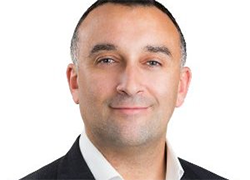
Yasser El-Ansary
The Australian private capital industry reached a record $68 billion in assets under management (AUM) at June 2019, up from $60 billion the previous year, according to the Preqin & Australian Investment Council Yearbook 2020.
Significantly, Australia stands out as an appealing investment destination, with the private capital market continuing to display one of the most attractive risk/return profiles in the world, demonstrating its potential for long-term, stable returns for investors.
Private equity (PE) and venture capital (VC) also followed the trend for increased AUM in 2019, rising to a new record high of $33 billion, an increase of 16% on 2018.
PE deal activity was robust in the food and healthcare sectors, with consumer discretionary representing the largest share (52%) of aggregate buyout deal value in 2019, up from 11% in 2018, while healthcare accounted for 37%, a 30% increase on the prior year. Buyout deals involving Healthscope, Navitas and Arnott’s Biscuits Limited headlined the volume of activity in these sectors.
Meanwhile, VC funds raised a total of $632 million for investment in Australia which represents the second-highest annual total in the past decade. The IT sector continued to dominate in terms of aggregate venture capital deal value (51%) and number of transactions (59%).
“The industry is well-placed to withstand the ongoing disruptions arising from COVID-19, with dry powder levels for private equity and venture capital now totalling $13 billion. Current investments in healthcare, technology and agriculture, are likely to respond well in the post-COVID-19 market rebound which will be vitally important to the nation’s overall economic recovery,” said Australian Investment Council Chief Executive, Yasser El-Ansary.
“The period ahead will present a unique opportunity for Australia to redesign its economy on the back of this current crisis. The role that private capital investment can play in structurally transforming industry sectors and driving new innovation, and at the same time accelerating productivity and business competitiveness, is very significant,” he added.
The Yearbook data confirms that in the decade to June 2019, the industry experienced a significant (119%) increase in combined Australian-focused private capital investment across the PE, VC, private debt, real estate, agriculture and infrastructure sectors.
“While at a macro level, Australia is recognised for its natural resources, private capital is going from strength to strength with some of the largest deals recorded in the healthcare and consumer discretionary sectors,” said Mark O’Hare, Chief Executive at Preqin. “The private equity and venture capital spaces have seen a significant uptick in activity, and investors are increasingly seeing Australia as a growth market with significant potential.
“Looking ahead, Australia is well-positioned to be at the forefront of the future of private capital. It is home to almost half of the APAC signatories to the UN’s ESG framework. Investors in the country are pursuing diverse and flexible investment strategies to take advantage of emerging sectors. The economy is fundamentally strong, and seems ideally placed to recover from the current volatility. With some of the largest institutional investors and pension funds in the world, Australia will be an exciting market to watch on the world stage.”
The Yearbook uses figures compiled by leading international alternative assets data provider Preqin, and looks at fundraising, investments and exits across the Australian private capital industry.
Key highlights
- Australian private equity and venture capital firms had a combined $33 billion in assets under management ($25 billion PE and $8 billion VC) as of June 2019
- The aggregate value of private equity-backed buyout deals in Australia in 2019 was $16 billion
- Public-to-private transactions accounted for 53% of total Australian buyout deal value in 2019
- Australia-focused PE AUM recorded a third consecutive year of growth reaching a new high of $25 billion at June 2019
- Australia-focused funds with 2010-2017 vintages, generated the highest median net IRR of 15.0% and lowest median risk at 7.7% standard deviation of net IRR compared to America which had the highest risk at 15.5% and a return of 13.2%
- 60% of Australian private debt-backed deals in 2019 focused on senior debt
- Superannuation funds represent the largest proportion (47%) of domestic investors in private capital
- 150 of Asia-Pacific’s 378 signatories to the UN Principles for Responsible Investment are located in Australia. Superannuation funds account for 60% of the 150 signatories.
——-


