
Investor confidence plummet amid market uncertainty
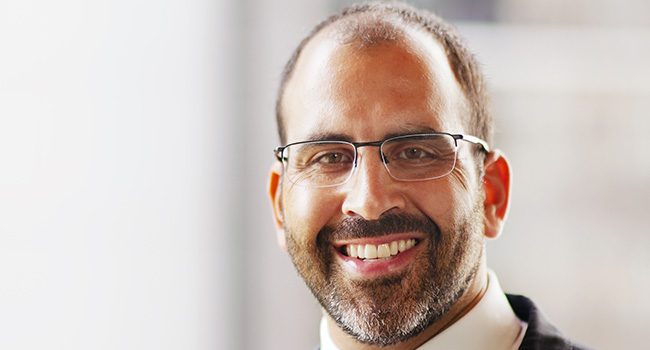
Amir Ghandar
A new survey shows investor confidence in local and international capital markets is now lower than it was at the depth of the COVID pandemic.
Plunges in the sharemarket, ongoing global political unrest, inflationary challenges and associated broader economic uncertainty all led to the concerning results in the survey conducted from 10-15 June 2022.
The annual Chartered Accountants Australia and New Zealand (CA ANZ) Investor Confidence Survey comes off the back of further Australian interest rate rises this week.
The survey was completed by more than 1,000 retail investors holding more than $10,000 in shares, in addition to other investments such as managed funds, property and superannuation portfolios.
“Investor confidence in local and international capital markets is at the lowest levels we’ve seen since this survey was launched four years ago,” CA ANZ Assurance and Reporting Leader, Amir Ghandar said.
“The quadruple whammy of the pandemic, turbulent market conditions around supply chains, inflation, and national and international interest rate increases have put investor confidence on the ropes.”
When it comes to investing in crypto-assets, younger and older investors have polarised views:
- 71% of the 18 – 44 age group are confident to invest in crypto-assets, almost as confident as they are investing in the capital market (79%)
- only 26% of 45 – 64 age group are confident investing in crypto-assets.
“Younger investors say they believe in the buzz around crypto – what they’re hearing about it on the news, social media and from friends – ultimately they believe in the technology,” Mr Ghandar said.
“Older investors are spooked by crypto’s volatility and they perceive a lack of regulation and transparency.
“In a sense both are right – blockchain has enormous potential to revolutionise integrity and transparency – but cannot yet replace all the key roles for regulation and traditional market and information integrity mechanisms.”
The number of investors citing global political unrest as the biggest risk to the domestic economy has jumped by 10 per cent since last year now representing a quarter of investors.
In addition, retail investor confidence in capital markets is tumbling, with those reporting high confidence in both the domestic (39%) and international markets (24%) down by 10 per cent on last year.
“This drop in confidence begs the question, how can we provide more certainty and confidence for retail investors?” Mr Ghandar said.
“Obviously, market conditions are a factor. Another thing that investors have clearly stated is they want better, more simplified and tailored reporting as part of the solution – and they want this done digitally.”
Some of the key findings in relation to digital reporting included:
- 77% of the responding investors view financial reports as “somewhat to very” difficult to understand
- 86% believe digital financial reporting would improve this
- 70% “support or strongly support” mandating digital reporting in Australia.
Digital reporting enables customised infographics, tables, and graphs to present data in an easily understandable fashion. A common language is used to ‘tag’ each item being disclosed, making it machine readable, consistent and quick to navigate.
“Investors need a clear view out the front windscreen to make well-informed, considered decisions, so that they can keep their finances on the road,” Mr Ghandar said.
“They don’t currently have what they need. A substantial majority of retail investors see today’s financial reports as overly complex and difficult to understand.
“That’s why CA ANZ has been pushing for mandated, consistent digital reporting, as well as simplified reporting overall, to enable a better view into company performance and prospects.”
The Survey also found that auditors remained the most trusted player of those that have roles in helping to advance investor protection, followed by stock exchanges, analysts and government regulators.
“In the good times, investors might be more likely to make choices based on advice from the media, friends, family and other advisors,” Mr Ghandar said.
“But when markets become volatile, as they currently are, investors are prone to stick with safer investment options and look for more credible and robust forms of information – often including a Chartered Accountant.”


