
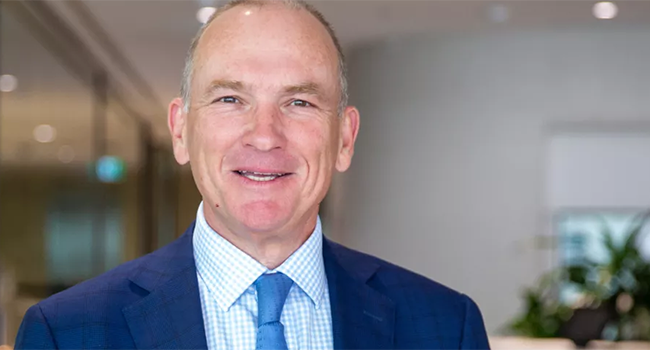
Paul Taylor
Market environment
In market parlance, you’d say that the market is climbing the wall of worry. That’s actually quite a positive sign, which might seem unusual. But when you keep having new risks and issues arise, and the market keeps going up, it’s telling you there’s a lot of money sitting on the sidelines that’s entering on the back of bad news, which is a pretty positive sign.
There has been a lot of risk into the market, whether it’s interest rate risk or inflation risk or geopolitical risk, recession risk, regulation, taxation – there’s definitely a lot more to worry about. And in that environment, it’s a good time to be thinking about an investment. When the risks are already priced in, typically that reflects a better longer term expected return.
Another positive signal is we’re seeing a lot more mergers and acquisitions in the market at the moment. Corporates tend to have a longer term view – they’re not looking at buying a business this year and selling a business next year. If they’re buying now it’s with the intention of holding it indefinitely, so they are seeing the current environment as a good long term entry point.
At the moment, I’ve got three stocks in the portfolio that are currently under takeover bid, which is unusual. Brookfield is leading a consortium that’s bidding for Origin Energy, Wesfarmers is bidding for Silk Laser. And Kirin, a Japanese beer and consumer goods food business that’s made a bid for Blackmores. So it’s quite unusual, but as I said before, it reflects they’re representing great long-term value.
Impact of rising interest rates
Growth in Australia is likely to come down in 2023 and it will be a weaker growth year. We are still of the view that it’s not going to take us into recession in Australia, but that’s certainly not guaranteed.
I think the RBA, in taking up rates another 25 basis points in its latest meeting, is following the data. So inflation has come down and that’s a good trajectory. But it’s still too high and the RBA is trying to work for the long term and get inflation down.
There is still a risk that rates could go up more, and a recession becomes more of a possible option. Our view at the moment is that probably the US and Europe go into a recession, but Australia still stays away from a recession. We’ve got counterpoints: our population is growing quite strongly; we’ve reopened to immigration which has a really positive impact on markets and the economy. Asia is doing much better than the US or Europe. I think our ties to Asia will help us avoid recession.
While inflation is coming down, we still think there’s a couple of reasons rates might remain a little bit higher, for structural reasons.
One is decarbonisation – as we go through the decarbonisation process, that adds costs to the system.
The other is logistics and supply chain, and de-globalisation. There’s a policy now that a lot of companies go by, called China Plus One. Previously you had your factory in China but now through COVID and through de-globalisation disruptions, companies said, we need another factory somewhere else. So we’ll have China Plus One, maybe we’ll have that factory in Australia or we’ll have that factory in Vietnam, to help with logistics. But it adds costs into the system. It builds redundancy, which is good for guaranteeing supply, but it increases costs. Deglobalisation also has an element of inflation built in as well.
Sector views
Consumer staples is attractive in the current environment. Everybody needs food and drink, even if there’s inflation. It’s the same for health. If you’ve got to go to the hospital, you’ve got to go to the hospital. So people will pay that inflation.
By Paul Taylor, head of investments


