Figures released by SQM Research reveal national residential property listings rose in August by 2.0% to 224,530 properties, up from the 220,081 recorded in July 2023. The increase was driven by surges in new listings for most capital cities as the spring selling season gets underway. The rises were offset by weaker listing conditions in regional Australia.
Sydney recorded a 6.2% increase in total listings for the month of August, driven by a 10.5% increase in new listings. Sydney has recorded the largest number of new listings for any month of August since records began in 2009. Melbourne recorded a 5.9 increase in total listings driven by a 12.6% increase in new listings. Melbourne has recorded the largest rise in new listings for the month of August since 2016.
Canberra recorded the largest increase for any capital city with a 10.6% increase in total listings, driven by a 22.2% increase in new listings for the month.
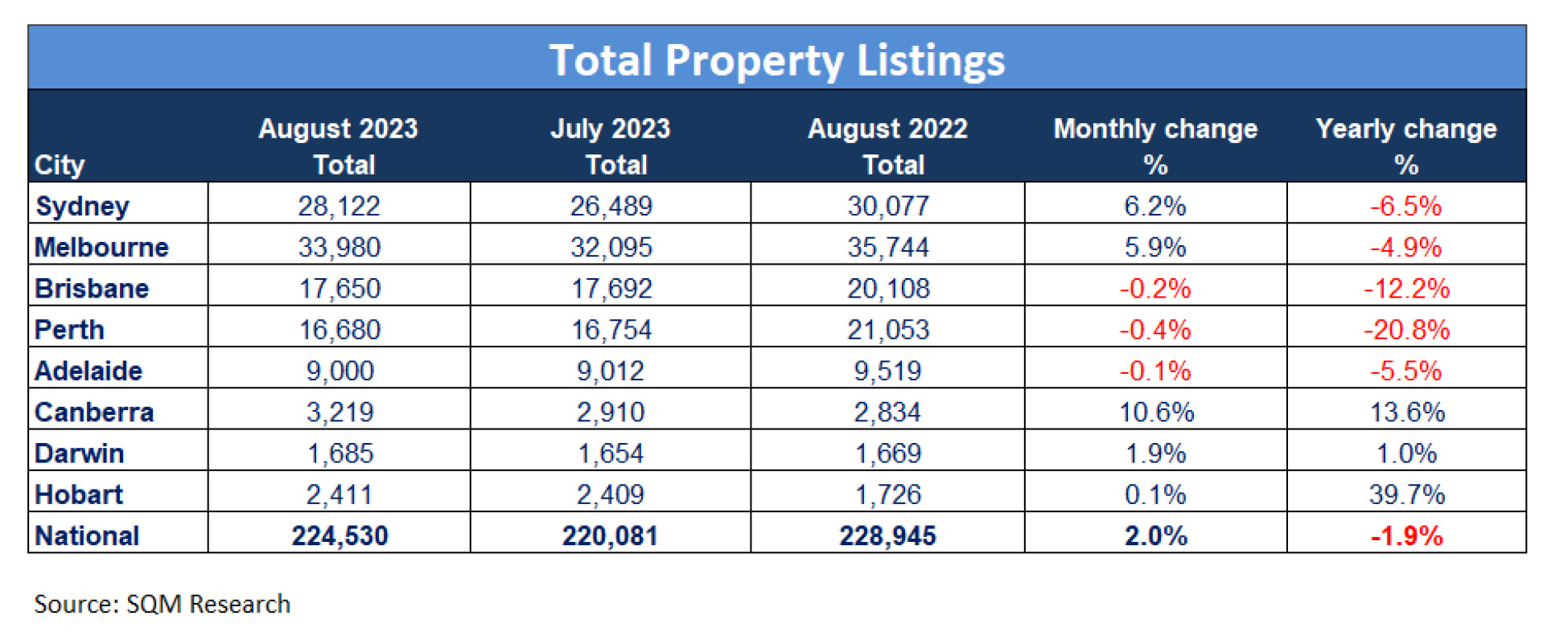
Over a 12-month period, residential property listings nationwide decreased by 1.9%. This was a common trend, with most cities seeing fewer total listings for the year. Yet, Hobart stood out by consistently reporting a notable increase of 39.7%.
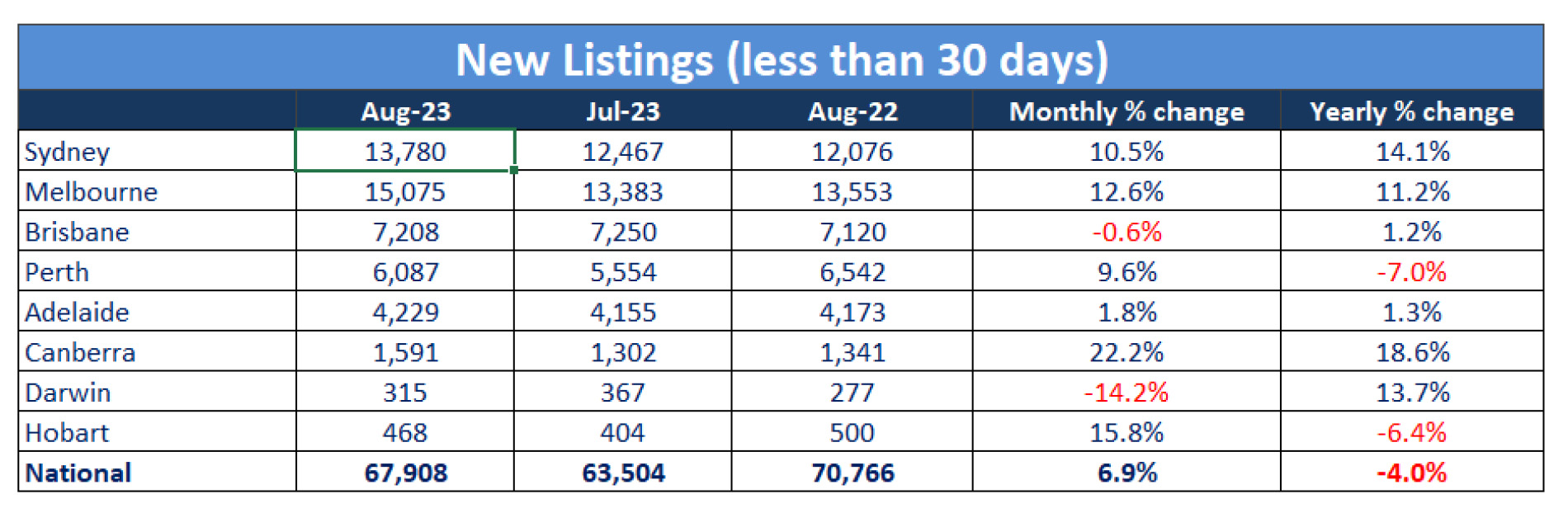
New listings
Nationally, new listings (less than 30 days) rose by 6.9% in August, adding 67,908 new property listings to the market. Notably, Sydney, Melbourne, and Canberra outperformed the national average with increases of 10.5%, 12.6%, and 22.2%, respectively. Hobart also saw a significant surge in new listings, with an increase of 15.8%. However, Brisbane and Darwin experienced a decline in new listing numbers, with decreases of 0.6% and 14.2%, respectively.
The overall national result was dragged down by a lackluster regional housing market. For example, North Coast NSW (encompassing Byron Bay) has recorded a 12.5% decline in new listings compared to August 2022.
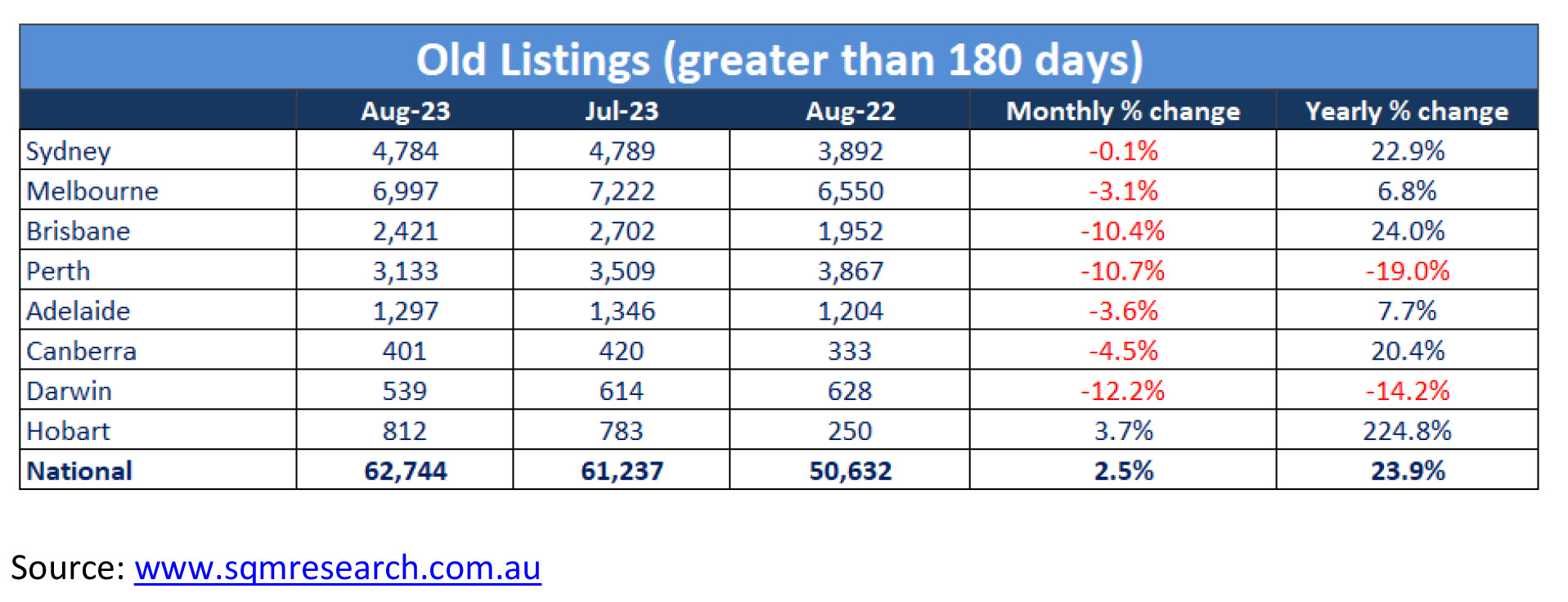
Old listings
Older listings (properties that have been on the market over 180 days) rose by 2.5% in August and risen by 23.9% over the past 12 months. Once again, this was driven by a soft regional housing market. Most cities recorded large decreases in older stock for the month except for Hobart.
Distressed listings
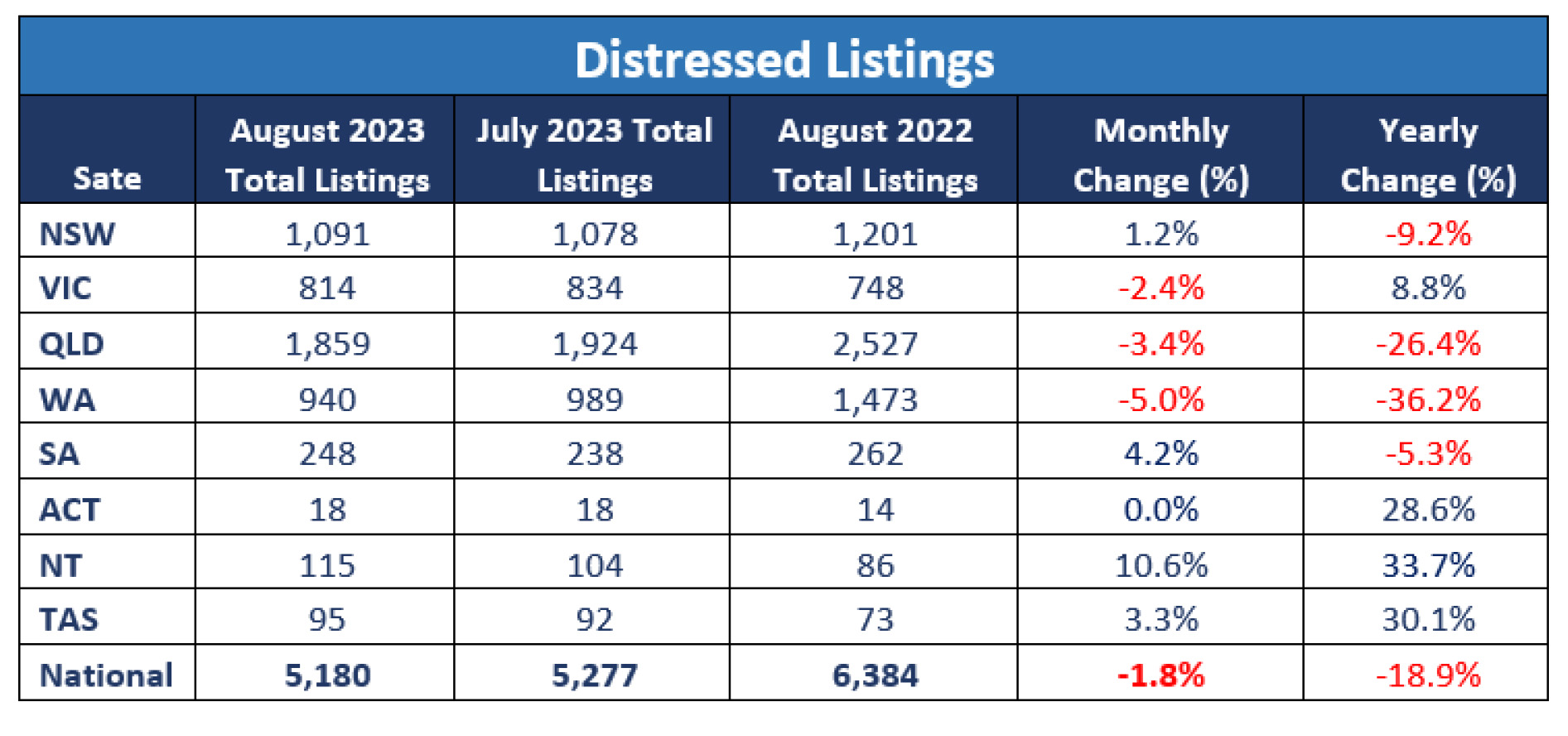
SQM Research’s latest release notes that as of August 2023, the number of residential properties selling under distressed conditions in Australia decreased to 5,180, a further drop of 1.8% from 5,277 distressed listings recorded in July 2023. The decrease in distressed selling activity was mainly driven by falls in Victoria (down 2.4%), Queensland (down 3.4%) and Western Australia (down 5.0%), compared to last month.
ACT, Tasmania, and the Northern Territory are recording significant rises in distressed selling activity, suggesting acute mortgage stress and possibly weakening state/territory economies. SQM Research will continue to closely monitor these states for any signs of further deterioration and spreading to other parts of Australia.
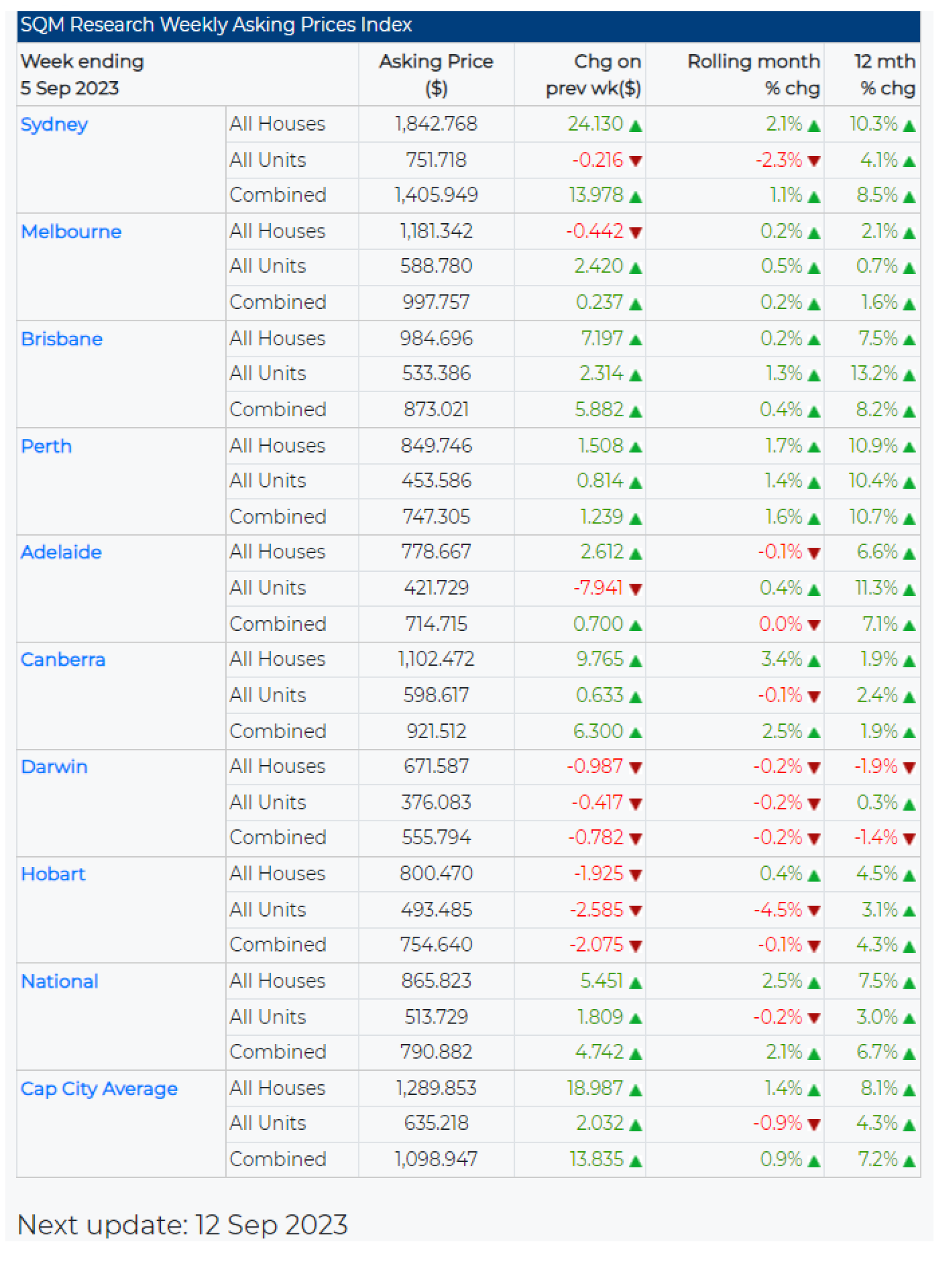
Asking prices
Property sellers were more confident over the month of August in the capital cities with asking prices rising by 0.9% to stand 7.2% higher compared to August 2022. Asking prices in Sydney rose by 1.1%. Melbourne rose by 0.2%, indicating a little more caution by Melbourne vendors. Perth recorded the fastest rises in asking prices, rising by 1.6% for the month to be up 10.7% for the past 12 months.
Louis Christopher, Managing Director of SQM Research said: “The capital cities by and large are having a strong start to the Spring selling season. SQM Research has just recorded the largest counts of new listings for Sydney for any month of August since our records began in 2009. Melbourne since 2016. And to date, we know the auction market is having a strong start in September with rising volumes and firm clearance rates holding over from winter. Page 5 of 5
So, confidence has been returning at least to our capital city housing markets. The same cannot be said for regional Australia it is best described for most regions as a dead market.
Therefore, we now have two very separate markets in Australia. Firstly, a stronger capital city housing market driven by very strong population growth rates and increasing confidence that we have reached the top of the interest rate cycle. In contrast, regional markets are struggling. Driven by population outflows and uncertainty surrounding local regional economies.
As for the fears surrounding the 2023 peak in fixed mortgage resets, the truth is this fear seems increasingly overblown. We have recorded yet another fall in distressed selling activity. Provided unemployment does not spike, it appears now very likely there will be no forced selling on mass over the coming months.”