
Economic and geopolitical volatility demands greater flexibility and action from advisers
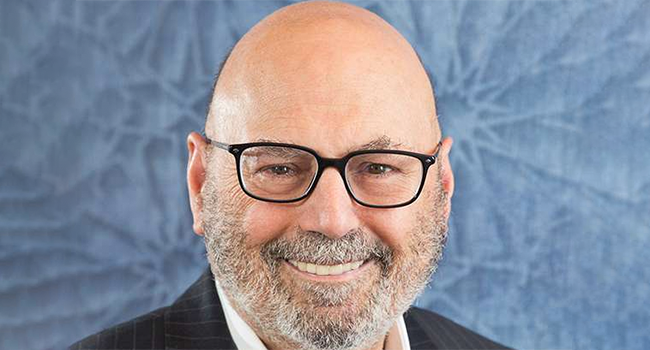
Arthur Sinodinos
Financial advisers must be increasingly nimble, agile and flexible in the current volatile economic and geopolitical environment, according to the Hon. Arthur Sinodinos AO, Partner and Chair of The Asia Group and former Liberal Minister and Assistant Treasurer.
Speaking at the Hannemann and Brown Wealth Symposium via video link from Washington D.C. this week, Sinodinos, who also served as Australia’s Ambassador to the United States from February 2020 to March 2023, urged advisers to prepare for ongoing disruption and look for potential investment opportunities arising from structural change.
“Disruption is the new constant and we need to be more nimble, agile and flexible in our responses to changing circumstances,” he said.
“We’re facing a conundrum around how long inflation will last and the latest talk is of a rate increase on Melbourne Cup day. In the US, inflation is high, the cost of living is going up, and rates are expected to be higher for longer than anticipated.”
Addressing some of Australia’s leading financial advisers, asset consultants and fund managers, Sinodinos said government intervention in industry policy, particularly in the US, was impacting and influencing businesses, citing the global clean energy transition and the Biden Administration’s CHIPS and Science Act, has underpinned significant investment in US semiconductor manufacturing, research and development.
He also pointed to the range of subsidies and tax incentives for electric vehicles and US investment in the critical minerals supply chain to boost sustainable practices and break America’s dependence on China.
“Governments are investing heavily in clean energy and this sector will continue to get a lot of attention,” Sinodinos said.
“The (US) government is marshalling capital into energy technologies. We’re also seeing a gold rush around critical minerals, which is firmly on the agenda in Washington, as is defence. Defence spending globally will only increase, particularly in areas like cyber, AI and electronic warfare.”
Sinodinos said structural changes would underpin growth in some sectors for decades to come, create opportunities for private companies and investors.
“Private companies are picking up on these trends and seeing an opportunity to invest in key areas, some in partnership with governments,” he said, citing the Australian government’s Redspice project, and the partnership with Microsoft to boost the cyber capabilities of the Australian Signals Directorate, which is responsible for signals intelligence, support to military operations, and information security.
“All this means that some sectors will be strong for some time.”


