National vacancy rates fall to 1.2% in July — rental squeeze intensifies
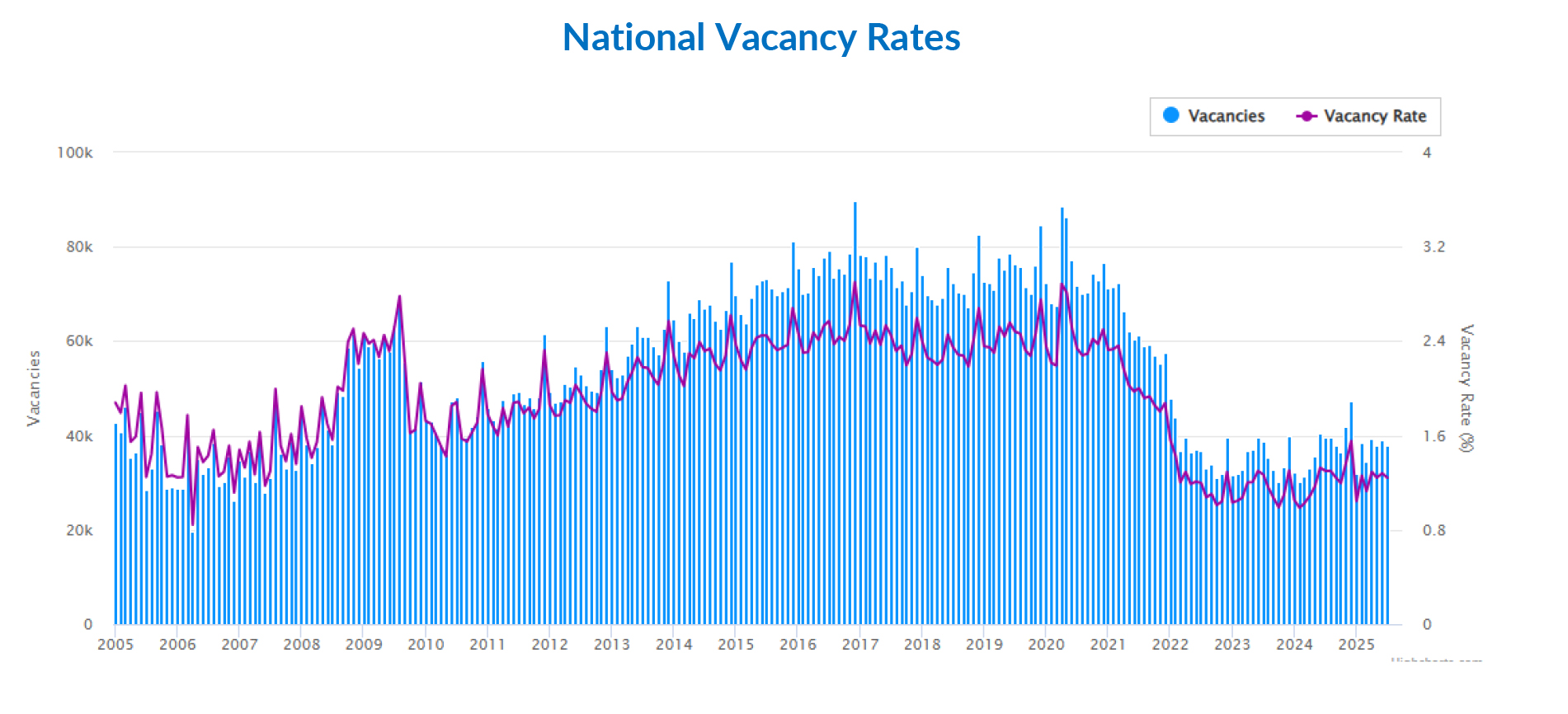
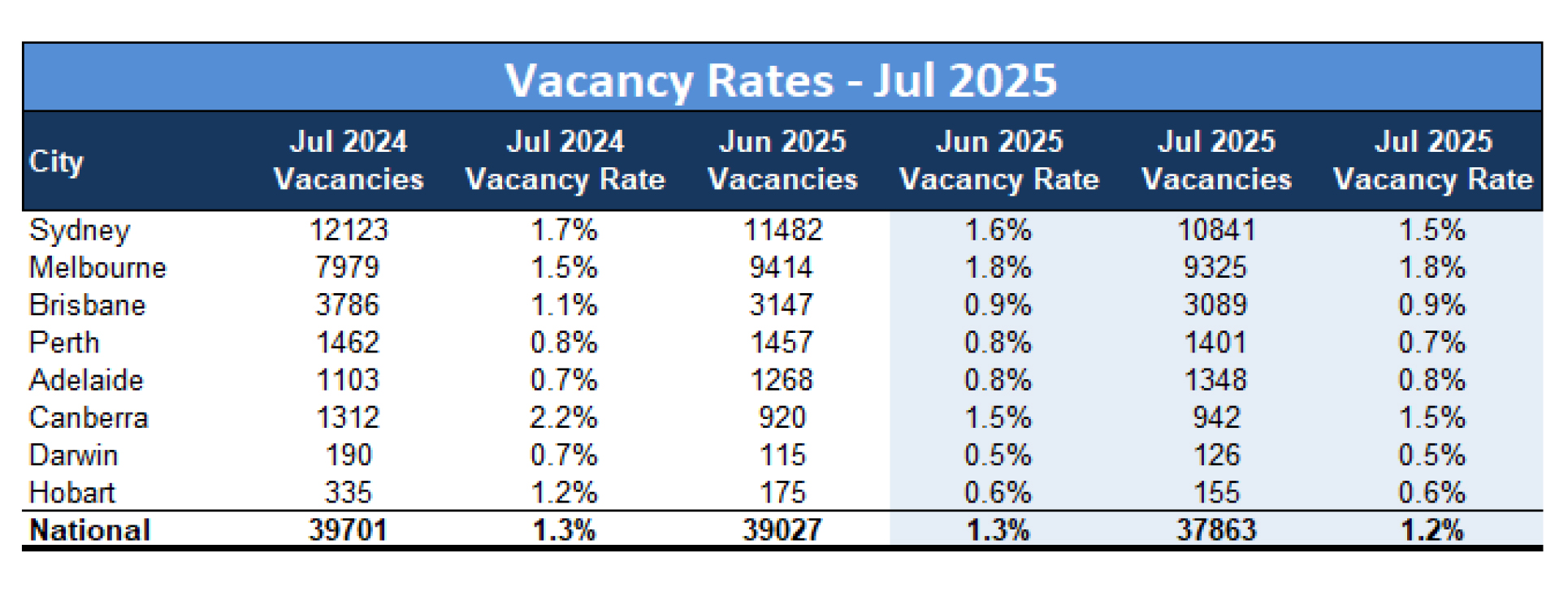
Australia’s rental market tightened further in July, with the national vacancy rate falling to 1.2%, down from 1.3% in both June 2025 and July 2024, according to the latest SQM Research data.
This drop leaves just 37,863 rental vacancies nationwide, compared to 39,027 last month and 39,701 a year ago, signalling sustained pressure on tenants and limited relief in sight.
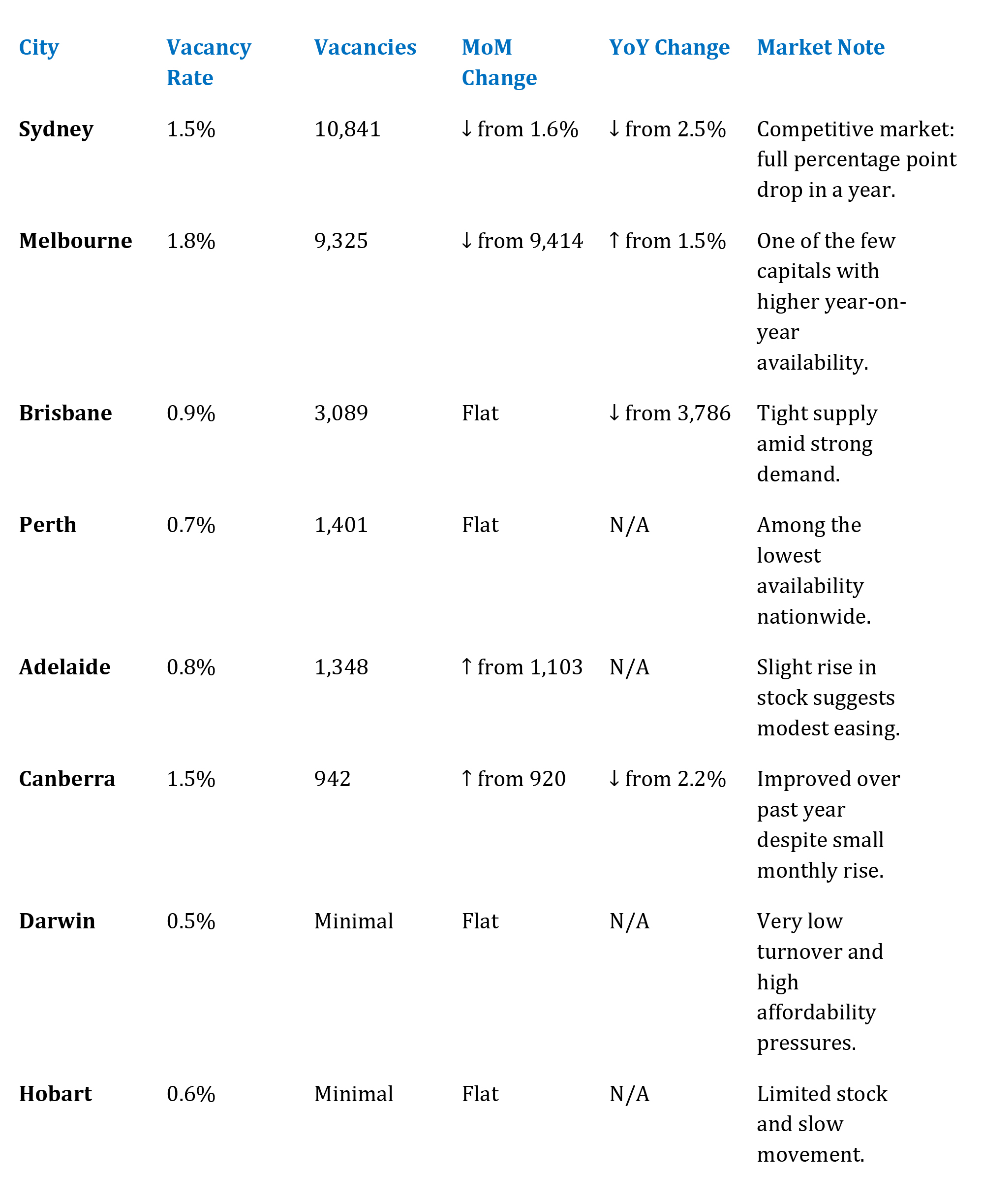
Capital City Highlights
The national trend points to sustained pressure on renters, particularly in Sydney, Brisbane, and Perth, where vacancy rates remain below 1.6%. While Melbourne and Adelaide show signs of stabilization, the overall picture suggests landlords continue to hold the upper hand, with limited supply driving competition and rental price growth.
As the spring leasing season approaches, all eyes will be on whether new housing supply can ease the squeeze—or if renters will face another round of tightening conditions.
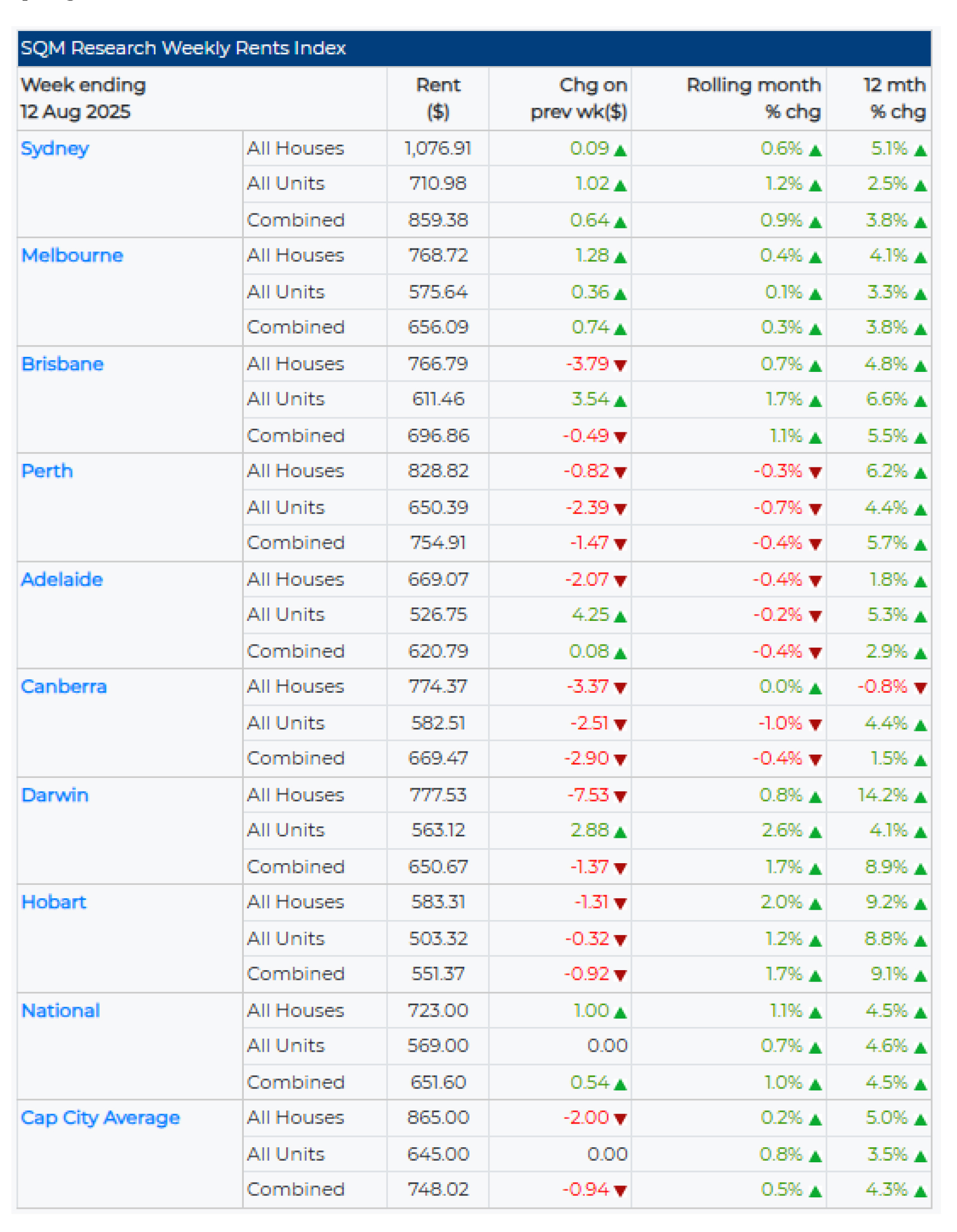
Australia’s rental market remains under pressure, with advertised rents rising nationally and several capital cities recording sharp annual increases, according to the latest SQM Research Weekly Rents Index.
For the week ending 12 August 2025, the national combined rent average reached $651.60—up 1.0% over the rolling month and 4.5% year-on-year. The capital city average sits even higher at $748.02, reflecting a 4.3% annual increase.
- Sydney remains the most expensive capital, with combined rents averaging $859.38 per week. House rents rose 5.1% over the past year, while units increased 2.5%. The rolling monthly growth of 0.9% suggests continued upward momentum.
- Melbourne recorded a 3.8% annual rise in combined rents, with houses up 4.1% and units up 3.3%. Weekly movements were modest, indicating a stabilising trend.
- Brisbane saw strong growth in unit rents, up 6.6% annually and 1.7% over the month. Combined rents rose 5.5% year-on-year, despite a slight weekly dip.
- Perth posted a 5.7% annual increase in combined rents, though both house and unit rents declined slightly over the past week and month.
- Adelaide showed mixed signals, with unit rents up 5.3% annually but house rents rising just 1.8%. Combined rents increased 2.9% year-on-year.
- Canberra recorded subdued growth, with combined rents up just 1.5% annually. Unit rents fell 1.0% over the month, while house rents remained flat.
- Darwin led the nation in annual house rent growth, surging 14.2%. Combined rents rose 8.9% year-on-year, driven by a 2.6% monthly increase in unit rents.
- Hobart followed closely, with combined rents up 9.1% annually. House rents rose 9.2%, while units climbed 8.8%, reflecting strong demand and limited supply.
Commentary
“Vacancy rates remain tight across most capital cities, and this is continuing to place upward pressure on rents,” said Louis Christopher, Managing Director of SQM Research. “While there are short-term fluctuations—particularly in Perth and Canberra—the broader trend is clear: rental affordability is deteriorating, especially in Sydney, Brisbane, and Hobart. Unless we see a meaningful uplift in rental supply, particularly in the inner and middle rings of our major cities, the market will remain challenging for tenants heading into spring.”