
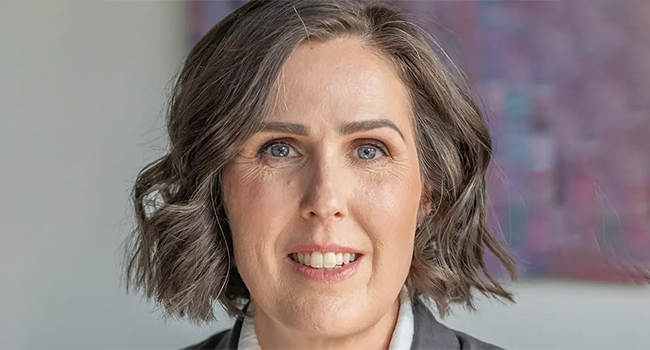
Catherine Evans
Kit Legal is warning advisers that routine work, such as setting up a self-managed super fund, making payments for a client or providing a registered office address, may bring their firm within Australia’s expanded Anti-Money Laundering and Counter-Terrorism Financing (AML/CTF) regime. The new obligations will take full effect on 1 July 2026.
Founder and Head of Legal Catherine Evans says the greatest risk is advisers assuming their role keeps them in a very limited scope where only the licensed entity is regulated. “I still hear advisers say I’m just setting up the structure, or I’m just the adviser. That distinction is becoming increasingly irrelevant. If you are facilitating the establishment of companies, trusts, transactions or the movement of money, you are part of the controls ecosystem.”
Existing reporting entities, including self-licensed advisers, have operated under the new framework since 31 March 2026. Historically self-licensed advisers have operated under a reduced scope known as ‘Item 54’ where only the licensed entity was providing designated services and required to enrol with AUSTRAC. But from 1 July, new designated services and new reporting entities come into the regime in full. Evans says AUSTRAC’s expectations are already higher than much of the advice profession has appreciated. The new designated services capture many corporate authorised representative entities that were not previously regulated.
A sensible starting point, she says, is knowing which services are regulated, and this is where most firms underestimate the complexity. “The designated services are worded broadly, and AUSTRAC’s guidance does not always map neatly to how advice businesses operate.
“If you recommend an SMSF and refer the client to their accountant, you are likely not providing a designated service. But if you facilitate the set-up, by completing forms or using a document provider, then you almost certainly are.”
Holding authority over a client’s account to make payments, or providing a registered office address, are each designated services in their own right. “None of these are unusual arrangements in an advice practice,” Evans says. “They are everyday occurrences, and precisely the kinds of services this regime is designed to capture.”
What has surprised many integrated professional services firms is the group-level reach. Where an advice business has an associated accounting arm, both entities may be caught and need to be separately enrolled, and corporate authorised representatives providing designated services may also need to enrol with AUSTRAC in their own right. “The days of assuming the licensee handles all of this are gone,” Evans says.
Once one or more services are regulated, the obligations are extensive, spanning a money-laundering and terrorism-financing risk assessment, policies and controls, personnel due diligence, training, governance and annual reporting to AUSTRAC.
The most common mistake, Evans says, is treating this as a documentation exercise. “A policy gets written, filed away, and never touched again. But the framework only holds up when it is embedded in how the business operates. What does the team do day to day? How are concerns escalated? How are decisions recorded? That is what AUSTRAC, and an independent evaluation, will examine.”
Nor is compliance set-and-forget. Customer due diligence continues throughout the client relationship, and suspicious matter reporting is triggered by reasonable suspicion, not proof, with a report due within three business days. AUSTRAC has already signalled concern that the advice industry is lodging too few of these reports.
A low risk profile does not reduce the legal obligations, Evans adds. “Risk shapes how you comply with parts of the framework; it does not determine whether you comply. This is where many otherwise well-run firms find themselves exposed.”
The firms that manage this well, she says, are not those trying to minimise the issue. “With 1 July weeks away, there is still time to get this right. But not much, because when the questions come, confidence will not come from knowing your clients well. It will come from being able to show your workings.”


