
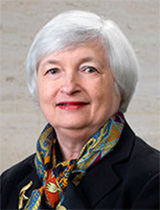
Janet Yellen
Principal Global Investors Chief Global Economist, Bob Baur, comments on U.S. monetary policy, China’s latest trade data and the synchronised global upturn.
In a recent Wall Street Journal interview, President Trump said, ‘I do like a low-interest rate policy, I must be honest with you,’ quite a natural feeling from a real-estate baron who likely thrives on borrowed money. Then-Federal Reserve (Fed) Chair Ben Bernanke first took the fed funds rate to its lowest ever range of 0% to 0.25% during the financial crisis. But, current Fed Chair Janet Yellen was the ultra-dove, keeping the super-low interest rates and staying extremely reluctant to raise them.”
Is Yellen “toast” next year?
Not necessarily; President Trump did not suggest that Yellen would automatically be replaced when her term as Fed Chair expires in February 2018, saying “I like her, I respect her.” The President also noted it was “very early” in the process of rethinking Fed policy, especially with three new Fed board members to be appointed before then. Of course, these comments don’t square with then-candidate Trump’s criticisms of the Fed before last November’s election. But, a more accommodative monetary policy for longer might make the President’s growth goals easier to attain and provide a boost in later elections. Time will tell.
Global Upturn: Synchronized, Strengthening
The world began to recover from 2015’s near-recession as early as the first quarter of last year. The real recession was in manufacturing, energy, and industrial goods as oil and commodity prices plunged, inventories got too large, China had a hard landing, and the U.S. dollar surged. Markets began to reflect the opportunities for better growth late in the first quarter last year as energy, emerging market, and basic-materials stocks outperformed through the summer. After the July low in interest rates, banks, financials, and industrials led markets higher. Cyclical securities, those that benefit the most from better growth, had the best returns in 2016. The consensus didn’t catch on to the better prospects until the U.S. election forced investors to realise a global economic bounce was in motion.
Consolidation
March trade data suggest that growth in China is still picking up because imports are soaring. The late breaking first-quarter GDP report from China beat expectations in all categories, confirming the quickening. Real GDP growth picked up a tick to 6.9%; but, nominal growth surged to 11.8%, the best in years, well above the fourth quarter.
Even in Europe
With business surveys near six-year highs and unemployment trending lower, speculation is growing about when the ECB’s forward guidance of “low interest rates for longer” will be changed. So far, there has been no substantive discussion about an exit strategy. But, if the Eurozone’s better growth continues into the summer and beyond, the first indications of a policy change will likely occur by September, or before if the upcoming French election contains no big surprises.


