
Plato Investment Management has released data showing the Australian and global stocks that would see outsized impacts from key risk scenarios applied to the firms’ portfolios.
Dr David Allen, portfolio manager of the Plato Global Alpha Fund says investors shouldn’t ignore the global macroeconomic and geopolitical turbulence that’s underscored the start to CY 2026.
“I don’t think you can deny the current macro and geopolitical uncertainty carries real investment implications. The myriad of major developments simply can’t be ignored, in fact such turbulence should now be a long-term structural consideration for investors.
Allen says the major structural shifts require a systematic approach to risk management.
“Trying to trade or time major macro and geopolitical developments is a great way to destroy your capital. Even for expert investors, it’s our strong view that attempting to forecast macroeconomic or geopolitical shocks is a poor basis for investment decision-making.
“We believe whole-of-portfolio systematic risk processes are the only way to ensure you can continue to be exposed to the exceptionally strong growth on offer in global equities, while managing risk in what really is a shifting global order”
The $3.2 billion Plato Global Alpha Fund applies daily stress tests to its portfolio and Allen says the number of scenarios the portfolios are tested against has now increased to 96 (from 57 in 2024).
“Using thousands of data points, our proprietary risk management system runs these tests, like the way systemically important banks stress-test their loan books, said Dr Allen.
“We are not making predictions about these events, and certainly not trying to time the market. We are simply investing our clients’ capital where we see exceptional long and short opportunities, while at the same time ensuring if any of the 96 stress events do occur, that capital will not be impacted by outsized drawdowns.
“For us, it should be a big concern if your global equities portfolio is not being regularly stress tested in 2026.”
Since inception in September 2021, the Plato Global Alpha Fund has returned +25.36% per annum after fees, outperforming the MSCI World by 13% per annum, with downside capture of just 62% (to 31 December 2025).
The fund now manages $3.2 billion on behalf of Australian investors.
Plato has released data from four of its current stress test scenarios, showing how company share prices would be impacted should the scenarios materialise.
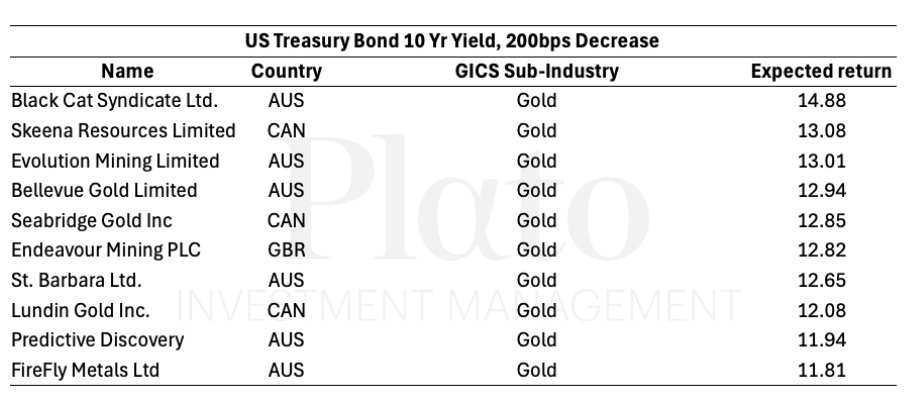
1. Acceleration of U.S. rate cuts: Australian global miners to rise more
Dr David Allen commented: “In the scenario of rapid rate cuts, gold miners, many of which are Australian, dominate the winners, though the magnitude of upside is notably smaller than 12 months ago, perhaps reflecting already elevated gold prices.”
2. Return of full-scale trade wars
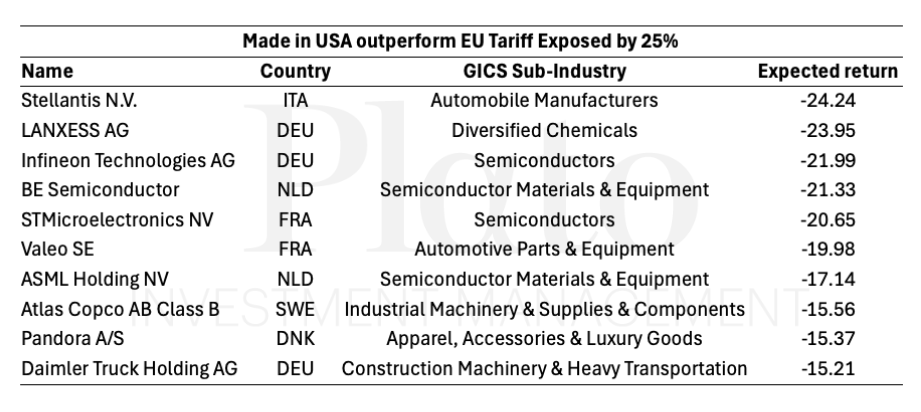
Dr David Allen commented: “Trade wars have been a portfolio stress event now for several years. Of note, the threat of intensifying trade wars is back with the US and Europe locking horns over Greenland.
“European stocks face outsized declines should a full-scale trade war between the US and Europe erupt. Autos and Semis will likely bear the brunt.”
3. Rapid AUD devaluation
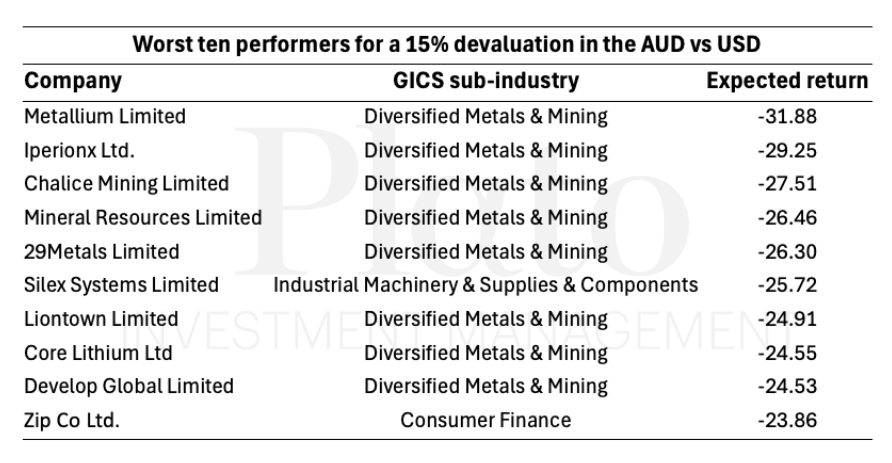
Dr David Allen commented: “It is not implausible that an increasingly assertive U.S. foreign policy in the Western hemisphere encourages China to act more forcefully in its own backyard. Prediction market Polymarket currently assigns a 9% probability to a Chinese invasion of Taiwan by year-end. Following Maduro’s capture, Chinese social media lit up with suggestions that U.S. actions provided a blueprint for Taiwan, content viewed hundreds of millions of times.
“From a market perspective, Australia and the AUD would be crushed. This is an underappreciated risk, certainly for Australian investors with a strong home bias.”
4. A Significant ASX correction
Dr David Allen commented: “The ASX 200 has risen roughly 46% over the past three years, including dividends. One might reasonably assume earnings growth has been robust. In fact, aggregate ASX 200 earnings have fallen by approximately 15% over that period.
“This disconnect raises an obvious question: which stocks are most exposed if the ASX corrects sharply?”


