
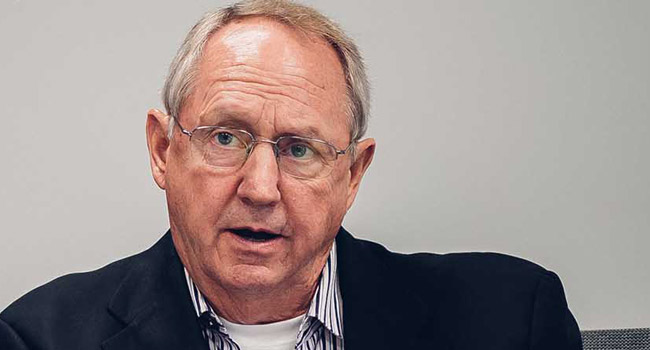
Bob Baur
Recovery from the pandemic recession is in progress around the world. It’s well underway in China and parts of Southeast Asia and getting a good start in the Eurozone and United States, according to Principal Global Investors Chief Global Economist Dr Bob Baur.
According to Dr Baur, the fast, sharp economic recoil from the pandemic plunge is likely over, although several countries are continuing to experience high or fast rising daily cases, especially India, much of Latin America, Indonesia and the Philippines.
US rebound dampened
The US economy had advanced in May and June, following the record collapse in March and April. However, concerns about new cases have slowed this recovery.
“We’d been expecting a V-shaped bounce that would last perhaps two to four months as U.S. businesses reopened and people started back to work. But widespread concern about the pickup in daily new U.S. COVID-19 cases since late June dampened the rebound’s vigour, likely limiting the V to two months. The good news is that daily new U.S. COVID-19 cases may have peaked July 23 as the seven-day moving average has been falling since then, down to 61,964 on August 1. If that does prove to be the peak, the U.S. recovery will likely stay on track but at a more muted pace than in May and June,” said Dr Baur.
Dr Baur cautioned that a full recovery from the recession may be “challenging and lengthy”. “Millions of workers are still on furlough or permanent layoff. Many small businesses won’t reopen, especially in leisure and hospitality, with even large chains facing huge losses. The COVID-19 virus is proving resilient and lasting and may require major changes as we learn to live with it. We’re optimistic that the revival from the cavernous losses of March and April will last through 2021, but it will likely be at a more measured pace than the bounce since early May. As a result, the U.S. economy may not exceed its prior peaks in either GDP or employment until sometime in 2022,” he said.
Dynamic revival in China
Dr Baur said that industrial output had returned to the prior year’s level in June, and industrial profits showed a second month of growth at 11.5% over the prior year. Official purchasing manager indices (PMI) from the National Bureau of Statistics for manufacturing edged up to 51.1 in July up from a February plunge to 35.7, the worst on record. The non-manufacturing PMI slid 0.2 to a still-strong 54.2, which put the composite PMI at 54.1, the second best since mid-2018.
Real estate and stocks also performed well with construction PMI a robust 60.5 and year-to-date property investment up 1.9% from the same period last year. Chinese stock indices were world leaders in July with the Shenzhen Composite Index up a healthy 14.2%.
“Households in China stay more restrained, likely from a lingering fear of COVID-19 activity. China is experiencing a mild flareup of new cases in the last few days that may keep consumer spending from normalizing for a while. June retail sales were still 1.3% below June 2019. Vehicle sales, though, have been very strong. China was the first economy to exit the pandemic recession and its revival has been dynamic. We expect it to continue,” said Dr Baur.
Recovery in greater Europe is underway
The Eurozone composite PMI, at 54.8 in July was the best since mid-2018. Eurozone consumer sentiment is still low but rising. After a nearly incomprehensible 40.3% annualised plunge in second quarter Eurozone GDP, Dr Baur expected the upsurge in the third quarter to reach well into double digits.
“Several things are helping in the Eurozone. New cases of COVID-19 are staying low and the end of the lockdown seems to have gone fairly smoothly. The robust rebound in China has given Eurozone businesses a lift in confidence given the area’s healthy exports to China. Further, wage subsidization plans have kept unemployment from rising very much.
“Perhaps most importantly, the political leadership of the European Union (EU) has created an economic recovery plan that encompasses what may be the first step toward a fiscal union. The Recovery and Resilience Fund is a €750 billion addition to the EU budget. The money will be borrowed in the name of the EU and the funds will be available for loans and grants to member countries. The purpose of the Fund is to finance investment projects that will raise a country’s long-term growth potential. It’s a real step toward coordinated fiscal policy. This Fund establishes the principle that the EU can borrow funds and repay the debt with taxes it collects from member countries. Euro-area recovery should continue,” explained Dr Baur.
Extended difficulties in Japan
As the number of daily new COVID-19 cases in Japan is spiking, Dr Baur predicted a “sluggish and prolonged” recovery for Japan.
“The pandemic extended the difficulties the Japanese economy was having trying to recover from an October hike in the value-added tax. Now, however, just as data began to improve a bit, the number of daily new COVID-19 cases is spiking, reaching a new high of 1464 on August 1 according to Worldometer,” said Dr Baur.
Read the full Economic Insights for the month of August here.


